If you have ever watched a 175-grain projectile climb out of a standard-length action at 3,000 feet per second and still be drifting less than two MOA in a full-value wind at 500 yards, you already understand why the 7mm PRC took the long-range hunting world by storm. Introduced by Hornady in 2022, this cartridge was engineered from the ground up to launch the highest ballistic-coefficient 7mm bullets ever chambered in a factory hunting round — and to do it without forcing you into a heavy magnum-length action. It is the cartridge that finally gave the 7mm caliber the platform it always deserved.
This guide covers everything you need to know about the 7mm PRC: where it came from, what the verified numbers actually say, which bullets to run, and — just as importantly — where it shines and where it falls short.
What the Name Means
The “7mm” refers to the nominal bullet diameter — precisely .284 inches (7.21 mm), the same bullet diameter as the legendary 7mm Remington Magnum and the .284 Winchester. The “PRC” stands for Precision Rifle Cartridge, Hornady’s family of modern, high-BC, short- and standard-action cartridges that includes the 6.5 PRC, the 7mm PRC, the 300 PRC, and the 6mm PRC.
It is worth being clear up front: the 7mm PRC is not a short-action cartridge. Despite its compact case, it is a standard long-action round (SAAMI max COAL 3.340″), which is one of its biggest practical advantages — it fits standard long actions like the Remington 700 footprint, unlike the .300 PRC which demands a magnum action. And it is not simply a necked-up 6.5 PRC; it is a purpose-designed case optimized for the .284 bullet diameter.
Origin and History: Hornady’s Own Cartridge
The 7mm PRC was developed by Hornady Manufacturing’s Ballistic Development Group and is Hornady’s own proprietary cartridge design — not a wildcat or a military round. Hornady’s load-data documentation describes it as “an efficient, capable, and balanced 7mm magnum” drawn from “years of cartridge design experience,” built for extreme long-range shooting and extended-range hunting.
SAAMI approved the 7mm PRC in 2022, standardizing it with a 180-grain bullet traveling at 2,950 fps and a Maximum Average Pressure of 65,000 psi. Hornady’s public introduction document is dated June 16, 2022, and the cartridge reached the market as a new product in 2023.
The design goals were specific and deliberate:
- Launch long, heavy-for-caliber, high-BC bullets that older 7mm cartridges couldn’t fit in a factory magazine
- Fit a standard-length action — no magnum action required
- Non-belted case headspacing on the shoulder for consistent accuracy
- Temperature-stable magnum-speed propellants for consistent velocity and longer barrel life
The market response was immediate. Within two years, the 7mm PRC had become a top-tier PRS/NRL competition cartridge and a favorite for long-range elk and mule deer hunters who wanted 7mm performance without the .300 PRC’s recoil or the 7mm Rem Mag’s legacy geometry.
Specifications: The Numbers Behind the Cartridge
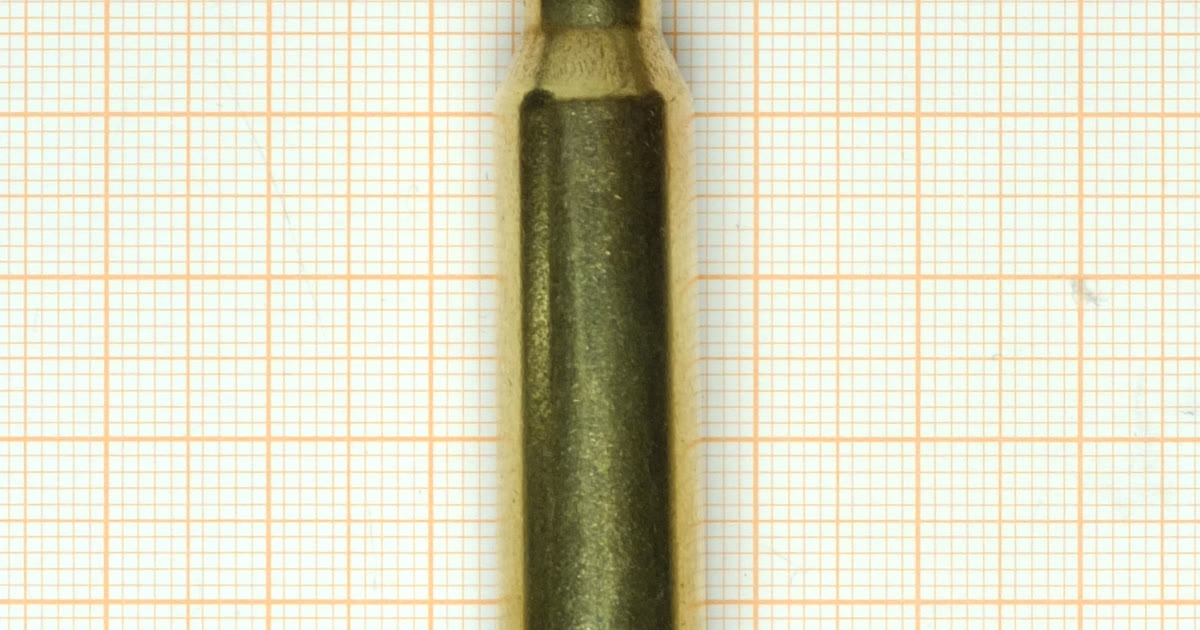
The 7mm PRC is a standard long-action, bottlenecked, rimless, non-belted cartridge that headspaces on the shoulder. Here are the key dimensions and pressure figures, confirmed against primary sources:
| Specification | Value |
|---|---|
| Bullet diameter | .284 in / 7.21 mm |
| Neck diameter | .280 in (cartridge) |
| Body diameter | ~.518 in / 13.15 mm (CIP max) |
| Base / rim diameter | ~.532 in / 13.51 mm (non-belted, headspaces on shoulder) |
| Case length | 2.280 in (trim 2.270 in) |
| Overall length (COAL) | 3.340 in / 84.84 mm |
| Shoulder angle | 30° (Hornady) / 35° (CIP) — see note |
| Rifling twist | 1:8 in (203.20 mm) |
| SAAMI MAP | 65,000 psi |
| CIP Pmax | 4,400 bar (~63,800 psi) |
| CIP proof | 5,060 bar |
Note on shoulder angle: Hornady’s load-data PDF lists a 30° shoulder angle while the official CIP TDCC drawing lists 35°. This is a genuine discrepancy between two primary sources; the chamber drawing you load against should govern your specific build.
Note on pressure: SAAMI MAP of 65,000 psi is confirmed against the SAAMI 7mm PRC archive and Hornady’s public introduction. CIP figures are from the official CIP TDCC drawing.
Parent Case and Lineage
The 7mm PRC is part of Hornady’s Precision Rifle Cartridge (PRC) family, which includes the 6.5 PRC, the 7mm PRC, the 300 PRC, and the 6mm PRC. Hornady positions the 7mm PRC squarely between the 6.5 PRC and the 300 PRC.
The PRC family uses a non-belted, large-head case that headspaces on the shoulder — a deliberate break from the belted magnums of the past. Hornady does not publish an official “parent case” lineage for the PRC family; it is a Hornady-designed case from the ground up. The geometry is built to seat long, high-BC bullets while staying within standard-action magazine length.
Misconceptions Worth Clearing
| Misconception | Reality |
|---|---|
| “It’s a short-action cartridge” | False. The 7mm PRC is a standard long-action round (SAAMI COAL 3.340″). It fits standard long actions — a key advantage over the magnum-action .300 PRC. |
| “It’s just a necked-up 6.5 PRC” | False. It is a purpose-designed case optimized for the .284 bullet diameter, not a simple neck change. |
| “It needs a magnum action” | False. Standard long action. Lighter, shorter, and cheaper than the .300 PRC platform it competes with. |
Ballistics: What the Numbers Actually Do
The 7mm PRC’s reputation is built on its ability to launch high-BC bullets fast and keep them fast. Here are the major factory loads:
| Manufacturer | Load | Bullet Weight (gr) | Muzzle Velocity (fps) | Muzzle Energy (ft-lbs) | G7 BC |
|---|---|---|---|---|---|
| Hornady | Precision Hunter | 175 ELD-X | 3,000 | 3,498 | 0.347 |
| Hornady | Match | 180 ELD-M | 2,975 | ~3,540 | ~0.360 |
| Hornady | Outfitter | 162 ELD-X | ~3,100 | ~3,450 | ~0.320 |
| Federal | Terminal Ascent | 170 | ~2,950 | ~3,285 | n/a |
Published Downrange Trajectory — 175 gr ELD-X (100-yd Zero)
| Distance (yd) | Velocity (fps) | Energy (ft-lbs) | Drop (in) | Wind Drift (MOA) |
|---|---|---|---|---|
| 0 | 3,000 | 3,498 | 0.0 | 0.00 |
| 100 | 2,865 | 3,189 | 0.0 | 0.39 |
| 200 | 2,732 | 2,902 | 2.3 | 0.80 |
| 300 | 2,604 | 2,635 | 7.9 | 1.24 |
| 400 | 2,478 | 2,387 | 18.1 | 1.69 |
| 500 | 2,356 | 2,157 | 33.2 | 2.16 |
| 600 | 2,237 | 1,944 | 53.3 | 2.66 |
| 700 | 2,121 | 1,748 | 78.7 | 3.19 |
| 800 | 2,008 | 1,568 | 110.2 | 3.74 |
Trajectory Comparison at 500 Yards (100-yd Zero)
| Cartridge | Velocity (fps) | Energy (ft-lbs) | Drop (in) | Wind Drift (MOA) |
|---|---|---|---|---|
| 7mm PRC 175gr ELD-X | 2,356 | 2,157 | 33.2 | 2.16 |
| 6.5 PRC 143gr ELD-X | 2,364 | 1,775 | ~24.7 | ~2.36 |
| .300 Win Mag 190gr ELD-X | 2,370 | 2,367 | ~26.3 | ~2.07 |
| 7mm Rem Mag 175gr ELD-X | 2,326 | 2,080 | ~30.5 | ~2.22 |
| 6.5 Creedmoor 140gr ELD-X | 2,140 | 1,412 | ~29.0 | ~2.52 |
The 7mm PRC delivers the most retained energy of any hunting cartridge in this comparison at 500 yards. Its trajectory is modestly flatter than the 7mm Rem Mag (same bullet, ~50 fps advantage), while the 6.5 PRC and .300 Win Mag show flatter drop curves thanks to higher-BC bullets — but neither matches the 7mm PRC’s terminal energy at distance.
Recoil (Formula-Derived, 8-lb Rifle)
| Cartridge | Bullet (gr) | Velocity (fps) | Recoil Energy (ft-lbs) |
|---|---|---|---|
| 7mm PRC | 175 | 3,000 | ~30.0 |
| 7mm Rem Mag | 175 | 2,950 | ~29.6 |
| .300 Win Mag | 190 | 2,900 | ~33.4 |
| 6.5 PRC | 143 | 2,940 | ~18.5 |
| 6.5 Creedmoor | 140 | 2,710 | ~13.5 |
The 7mm PRC produces recoil nearly identical to the 7mm Rem Mag — meaningful but manageable. It is noticeably sharper than the 6.5 PRC and roughly 2.2× the 6.5 Creedmoor. A good muzzle brake tames it substantially.
Barrel Length and Barrel Life
- Velocity loss per inch: Approximately 80–100 fps per inch shortened from the 24″ test barrel (general magnum-class estimate; no manufacturer-specific table published).
- Barrel life: Expect roughly 1,500–2,500 rounds before significant accuracy loss (community consensus; no manufacturer spec). The 65,000 psi operating pressure accelerates throat erosion versus lower-pressure cartridges.
- Practical implication: For hunting use (200–500 rounds/year), barrel life is rarely a concern. For competitive shooting at high volume, expect to rebarrel every 2–3 seasons.
Energy Retention
| Distance (yd) | 7mm PRC 175gr (ft-lbs) | % Retained |
|---|---|---|
| 0 | 3,498 | 100% |
| 200 | 2,902 | 83% |
| 400 | 2,387 | 68% |
| 500 | 2,157 | 62% |
| 600 | 1,944 | 56% |
| 700 | 1,748 | 50% |
The 7mm PRC retains over 2,000 ft-lbs at 500 yards — sufficient for all North American big game at extended ranges. It crosses the 1,500 ft-lb elk threshold at roughly 800 yards, which is exactly the extended-range envelope Hornady designed it for.
Bullet Types: Choosing the Right Projectile
The 7mm PRC was designed around long, high-BC bullets. The standard 1:8″ twist stabilizes the full factory range from ~139 gr up to the 190 gr A-Tip Match, so you have room to work.
Hunting Bullets
| Bullet | Weight (gr) | G1 BC | Intended Use |
|---|---|---|---|
| Hornady ELD-X | 162 | 0.631 | Medium game, versatile |
| Hornady ELD-X | 175 | 0.689 | Elk, large game — best factory hunting option |
| Nosler AccuBond | 165 | ~0.486 | Elk, large game — bonded, deep penetration |
| Nosler Partition | 150 | ~0.410 | Large game — proven terminal performance |
| Barnes LRX | 165 | ~0.520 | All game, lead-free zones — solid copper |
| Swift A-Frame | 160 | ~0.440 | Large game — bonded construction |
| Federal Terminal Ascent | 175 | ~0.550 | Elk, large game — bonded, high BC |
Match and Precision Bullets
| Bullet | Weight (gr) | G1 BC | Intended Use |
|---|---|---|---|
| Hornady ELD Match | 180 | 0.777 | PRS/NRL, F-Class — the bullet the cartridge was designed around |
| Berger Hybrid Target | 180 | 0.680 | PRS/NRL, F-Class — J4 target jackets |
| Berger ELD Match | 175 | ~0.530 | PRS/NRL — popular competition choice |
| Sierra MatchKing | 175 | ~0.530 | PRS, long-range — boat-tail hollow point |
| Lapua Scenar | 160 | ~0.460 | F-Class, PRS — premium match bullet |
Long-Range Hunting Bullets
| Bullet | Weight (gr) | G1 BC | Intended Use |
|---|---|---|---|
| Hornady ELD-X | 175 | 0.689 | Elk at 600+ yards — best factory hunting option |
| Federal Terminal Ascent | 175 | ~0.550 | Elk at 600+ yards — bonded, high BC |
| Berger Hybrid Target | 180 | 0.680 | Varmint to elk (single-shot) — match construction |
| Nosler AccuBond LR | 165 | ~0.520 | Elk, long-range — bonded, high BC |
BC note: G7 BC is the relevant metric for modern secant-ogive bullets (ELD-X, ELD-M, CX); G1 values are legacy measurements that overstate performance for modern spitzers. Hornady’s Heat Shield tip technology maintains BC integrity at magnum velocities where traditional polymer tips can deform from aerodynamic heating.
Hunting Applications by Species
| Species | Recommended Bullet | Effective Range | Notes |
|---|---|---|---|
| Whitetail deer | 140–165 gr (Partition, AccuBond, ELD-X) | 0–400 yd | Overkill at close range; excellent at 300+ |
| Mule deer | 150–175 gr (AccuBond, ELD-X, Terminal Ascent) | 0–500 yd | High BC helps on mountain shots |
| Elk | 165–180 gr (ELD-X, AccuBond, Terminal Ascent) | 0–600 yd | Primary elk cartridge; bonded preferred |
| Moose | 165–180 gr (Partition, A-Frame, AccuBond) | 0–400 yd | Bonded, heavy bullets for penetration |
| Black bear | 150–175 gr (A-Frame, Partition, AccuBond) | 0–300 yd | Bonded for close-range penetration |
| Grizzly / brown bear | 160–180 gr (A-Frame, Partition) | 0–200 yd | Legal minimum varies; bonded essential |
| African plains game | 150–175 gr (Partition, AccuBond, Barnes LRX) | 0–400 yd | Legal in many countries; verify local rules |
| Sheep / goat | 165–180 gr (ELD-X, AccuBond, Berger) | 0–600 yd | High BC for long mountain shots |
| Pronghorn / antelope | 140–165 gr (AccuBond, ELD-X) | 0–500 yd | Excellent; manageable recoil |
The 7mm PRC’s sweet spot is exactly where modern hunting is heading: ethical kills on elk and mule deer at 500–800 yards, where its high-BC bullets and retained energy separate it from the pack. For dangerous game (Cape buffalo, elephant), it falls short of legal and energy minimums — look to the .375 H&H class instead.
Protection and Defense: An Honest Assessment
The 7mm PRC is a precision hunting cartridge, not a defense round — and it is worth being straight about that rather than overselling it.
Home defense: Not practical. A 7mm PRC at 3,000+ fps will pass cleanly through most interior walls, creating a serious over-penetration liability in confined spaces. The muzzle blast is loud (roughly 155–160 dB from a 24″ barrel), the rifle is long and slow to maneuver in hallways and doorways, and typical magazine capacity is only 3–4 rounds. It is simply overpowered for the role.
Rural property defense: This is where it earns its keep. For coyote, feral hog, and predator control at 200–500+ yards across open ground, the 7mm PRC is excellent — flat shooting, hard hitting, and accurate. It is not a traditional “defense” role, but for protecting acreage and livestock at distance, it is a legitimate tool.
Law enforcement / tactical: No meaningful adoption. The cartridge is overbuilt for typical engagement distances, with excessive penetration risk, loud report, and limited capacity. There is no real tactical niche here.
Target Shooting and Competition
The 7mm PRC has become a top-tier PRS/NRL competition cartridge since its 2022 introduction — arguably its fastest-growing use case. Dominant bullets are the Berger 180 Hybrid Target, Hornady 180 ELD Match, and Berger 175 ELD Match, pushed to 2,950–3,100 fps from 26″ barrels.
Its advantages over the 6.5 Creedmoor are higher-BC bullets and less wind drift at 1,000+ yards; its advantages over the .300 PRC are less recoil and a standard-length action. Typical PRS builds run a 26″ barrel, 1:8″ twist, in a long-action chassis.
In F-Class, it is competitive in F-Open (Berger 180–195 gr, 30″ barrels, single-shot), though it remains less common than the .284 Winchester due to newer adoption and brass cost.
Accuracy potential: Sub-MOA is standard with quality rifles and match ammo. Many shooters report 0.3–0.5 MOA groups with handloads; factory Hornady Precision Hunter typically delivers 0.75–1.0 MOA.
Rifle Platforms
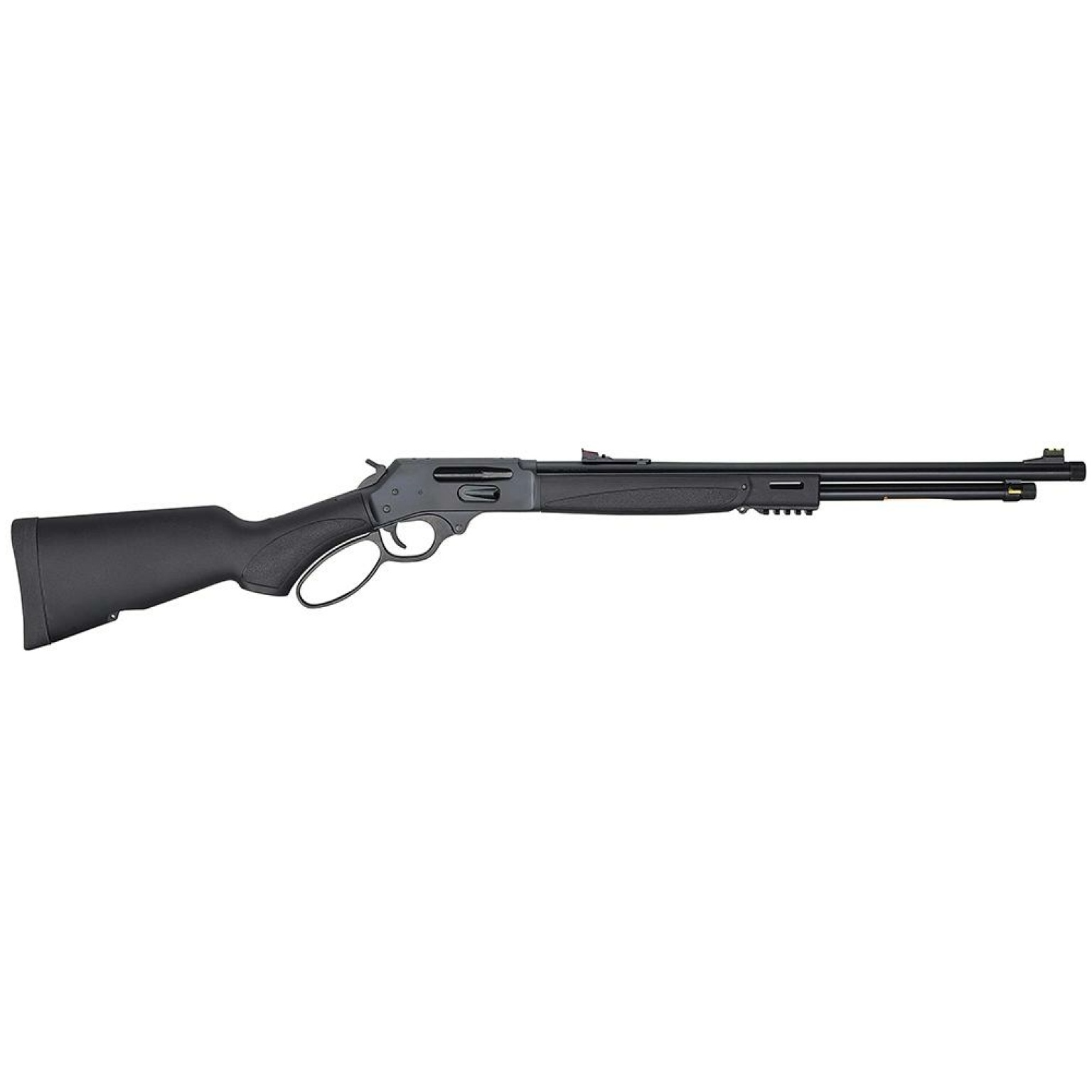
Because the 7mm PRC fits a standard long action, it is chambered across a wide range of production and custom rifles — no magnum-length action required.
| Manufacturer | Model | Action | Twist | Barrel |
|---|---|---|---|---|
| Christensen Arms | Ridgeline / Mesa / Modern Precision | Long | 1:8″ | 22–26″ |
| Bergara | B-14 HMR / B-10 HMR | Long | 1:8″ | 24–26″ |
| Kimber | (current catalog) | Long | 1:8″ | 24″ |
| Ruger | (current lineup) | Long | 1:8″ | 24″ |
| Weatherby | (current lineup) | Long | 1:8″ | 24–26″ |
| Tikka | (current lineup) | Long | 1:8″ | 24–26″ |
Custom and semi-custom builders (Kinetic Research Group, Defiance, Bighorn, NULA, Surgeon) all offer 7mm PRC in long actions, typically with 26″ Bartlein or Krieger barrels at 1:8″ twist in PRS chassis. A typical custom build runs $3,500–$6,000+.
Action-length note: The 7mm PRC’s standard-long-action footprint is a genuine advantage over the .300 PRC — lighter, shorter, and cheaper rifles with similar performance.
Ammunition Market and Reloading
Factory 7mm PRC ammunition sits in the premium tier (roughly $2.50–$4.00 per round as of 2024–2026), significantly more expensive than 6.5 Creedmoor or .308. Availability has improved since the 2022 launch but remains tighter than established calibers. Hornady brass runs about $1.00–$1.50 per piece.
Top powders for reloading:
| Powder | Best For | Notes |
|---|---|---|
| H4350 | 168–180 gr match | Temperature stable; most popular |
| RL26 | 175–195 gr | High velocity; popular in PRS |
| N560 | 168–180 gr | Vihtavuori; temp stable |
| H1000 | 180–195 gr | Slower; for the heaviest bullets |
| Varget | 150–168 gr | Good for lighter hunting bullets |
The cartridge’s case capacity (roughly 95 gr water capacity) is optimized for 160–185 gr bullets, which is exactly where its accuracy and BC potential peak.
Honest Pros and Cons
Pros:
- Launches the highest-BC 7mm bullets ever chambered in a factory hunting round
- Fits a standard long action — lighter, shorter, cheaper than the .300 PRC
- Most retained energy of any hunting cartridge in its comparison class at 500 yards
- Top-tier PRS/NRL competition cartridge with sub-MOA accuracy
- Non-belted, shoulder-headspacing design for consistent accuracy
- Temperature-stable propellants for consistent velocity
- Modern, purpose-built case geometry — no legacy compromises
- Strong factory ammunition support from Hornady and Federal
- 1:8″ twist stabilizes the full bullet range
- Ethical on elk and mule deer at 500–800 yards
Cons:
- Premium ammunition pricing ($2.50–$4.00/rd) — expensive to shoot
- Recoil nearly identical to the 7mm Rem Mag — meaningful, not mild
- Barrel life ~1,500–2,500 rounds; a concern for high-volume shooters
- Overpowered and over-penetrating for home defense
- Limited magazine capacity (3–4 rounds in typical long-action magazines)
- No meaningful law-enforcement or tactical adoption
- Not legal or adequate for African dangerous game
- Newer cartridge — brass and load data still maturing
- Overkill for close-range whitetail
- Shoulder-angle discrepancy between Hornady and CIP documentation
Bottom Line
The 7mm PRC is the cartridge that finally gave the 7mm caliber the modern platform it deserved. It does one thing exceptionally well — launching high-BC bullets fast and flat at extended ranges — and it does it better than any factory hunting round in its class. For the long-range elk hunter, the PRS competitor, or the mountain shooter who needs to make a 600-yard shot honest, it is a legitimate, well-engineered choice.
It is not a do-everything cartridge. It is too loud, too penetrating, and too expensive to be a home-defense round, and it is overbuilt for close-range whitetail. But judged for what it was designed to do — extended-range precision hunting and competition — it delivers exactly what Hornady promised.
If the 7mm PRC is on your short list, browse the factory and handloaded 7mm PRC ammunition available at Patriotic Firearms and build your load around the high-BC bullets this cartridge was made for.
Sign up for the Patriotic Firearms newsletter for more in-depth caliber guides, load data, and gear reviews delivered to your inbox.
Sources and Methodology
All specifications and pressure figures in this guide were verified against primary sources wherever possible. Confirmed figures come from the Hornady 7mm PRC load-data PDF and product page, the SAAMI 7mm PRC archive page, the official CIP TDCC drawing, and Hodgdon Powder Company load data. The trajectory, wind-drift, and energy tables use published manufacturer and calculator data (Hornady 4DOF, longrangescience.com) at a 100-yard zero under standard atmosphere.
Recoil figures are computed using the standard free-recoil momentum formula (8-lb rifle, 4,700 fps powder-gas velocity) and are labeled as estimates. Barrel-life and velocity-loss-per-inch figures reflect community consensus, as no manufacturer-specific table was published. Bullet BCs marked with a tilde (~) are from secondary sources and should be treated as approximate. The Hornady/CIP shoulder-angle discrepancy is noted in the specifications section.
About the author: Nathan Grill is a lifelong firearms enthusiast and writer covering cartridges, gear, and the shooting sports for Patriotic Firearms.
Disclaimer: This guide is for informational purposes only. Always verify current factory load data, local hunting regulations, and legal minimums before selecting a cartridge for a specific game animal or use case.