The .30-06 Springfield Complete Guide: Specs, Ballistics, Bullet Types & Real-World Uses
Published: October 2, 2026
Introduction
Few cartridges carry the name recognition of the .30-06 Springfield. For nearly half a century it was the round that American soldiers carried into two world wars and a Korean conflict, and for just as long it has been the do-everything rifle cartridge in the hands of hunters across this country. The “thirty-aught-six” does not chase trends — it simply works, on deer in the timber and elk in the high country, on a ranch against predators, and on the target range out to surprising distances.
This guide covers the verified specifications, the factory and military ballistics that made the cartridge famous, every major bullet type and what it is for, and an honest look at the .30-06’s strengths and limits for hunting, protection, and long-range shooting. Whether you are picking a first big-game rifle or deciding if the old classic still earns its place in the safe, this is the reference you need.
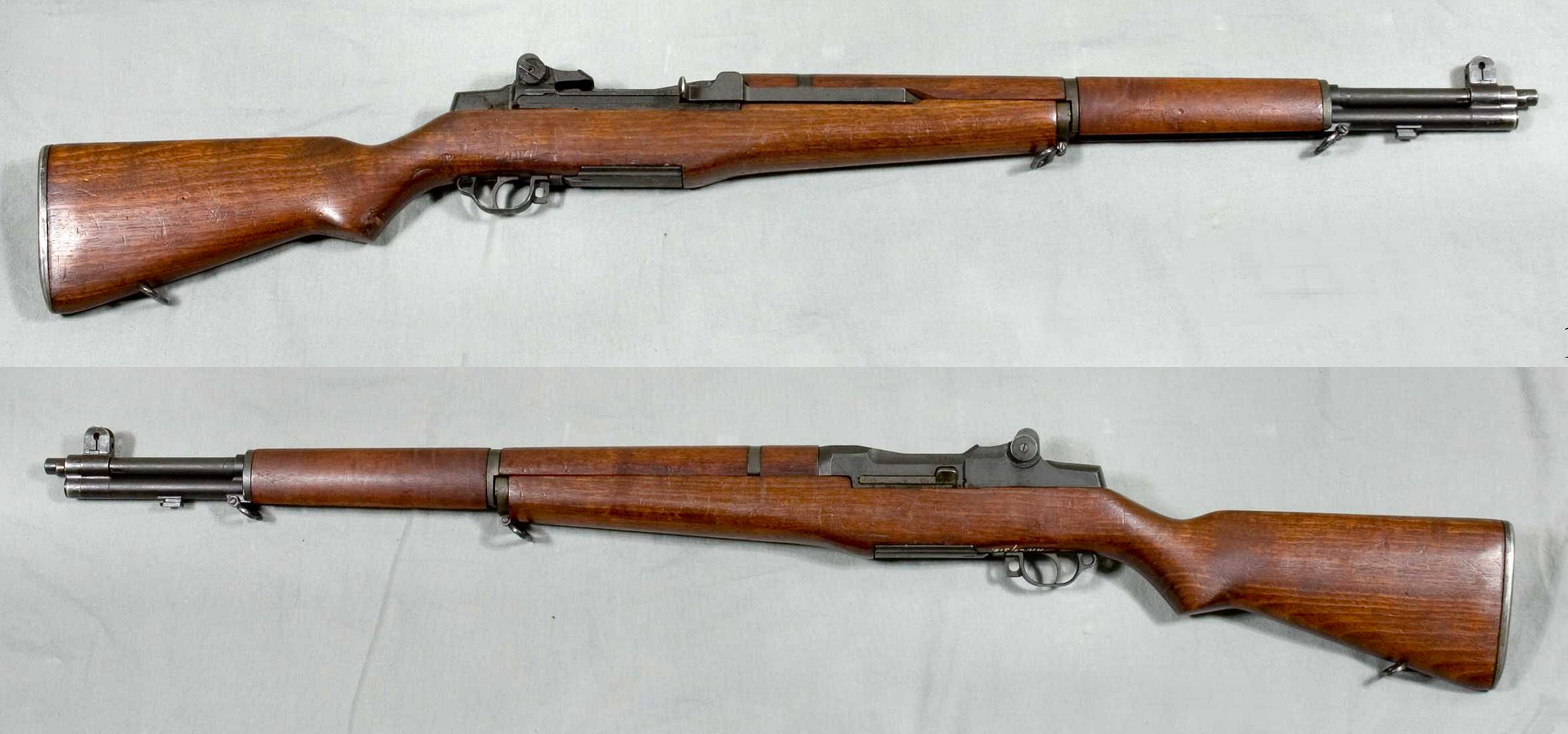
The M1 Garand — the semi-automatic rifle that made the .30-06 a legend in two world wars.
How the “Thirty-Aught-Six” Got Its Name
The name is a piece of American military shorthand, and once you know it you never forget it.
- “.30” — the nominal caliber of the bullet, in inches.
- “06” — the year the cartridge was adopted by the U.S. Army: 1906.
- Pronunciation — “thirty-aught-six” (or “thirty-oh-six”), with “aught” being old military slang for “zero.”
- Metric designation — 7.62×63mm, and Winchester’s commercial name was “.30 Gov’t ’06.”
The cartridge was developed from the earlier .30-03 Springfield case. Engineers shortened the neck slightly to seat a pointed spitzer (flat-based 150-grain) bullet, which gave a flatter trajectory than the round-nose bullets of the day. That single change created one of the most influential rifle cartridges ever fielded.
In doing so, the .30-06 replaced the .30-03 Springfield, the 6mm Lee Navy, and the .30-40 Krag as the U.S. military’s standard rifle round.
A Military Pedigree That Built the Legend
The .30-06’s military service is the reason it is so abundant and trusted today.
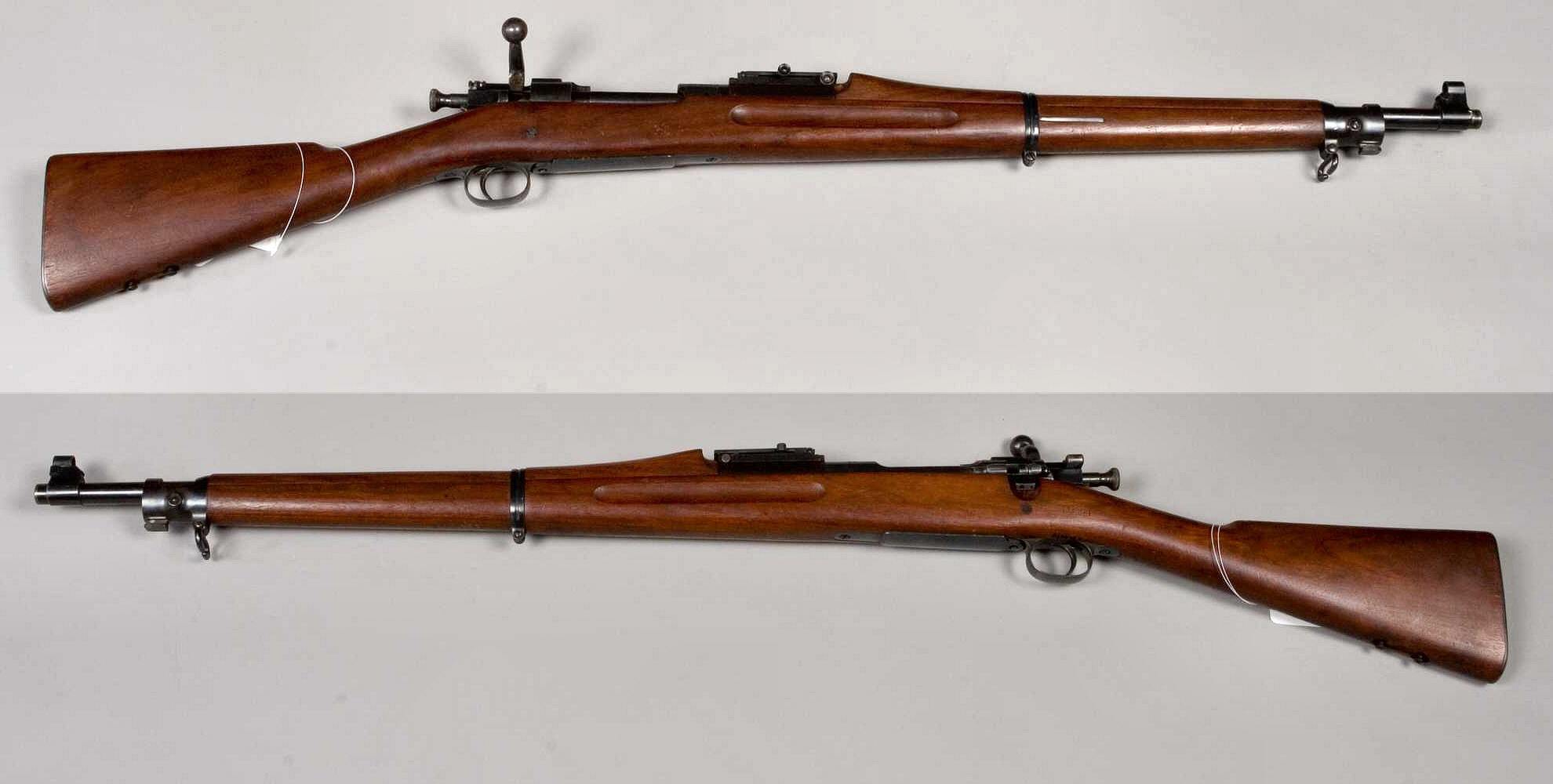
The bolt-action M1903 Springfield — the original home of the cartridge.
- Service rifles: the bolt-action M1903 Springfield and M1917 Enfield, the semi-automatic M1 Garand and M1941 Johnson, the Famage Mauser, and the Browning Automatic Rifle (BAR).
- Machine guns: the M1917 and M1919 Browning series, with earlier converted Gatling guns declared obsolete in 1911.
- Timeline: the primary U.S. rifle and machine-gun cartridge for roughly 50 years. The M2 Ball load served until it was replaced by the 7.62×51mm NATO in 1954, with the broader NATO transition to 7.62×51 and 5.56×45 arriving in 1957.
- Production tail: Frankford Arsenal stopped production in 1961, Lake City produced it into the late 1970s, and limited new batches appeared in 1993 and 2002.
The first commercially produced sporting rifle chambered for the cartridge was the Winchester Model 1895 lever-action in 1908 — and today every major gun maker chambers the .30-06 in at least one rifle.
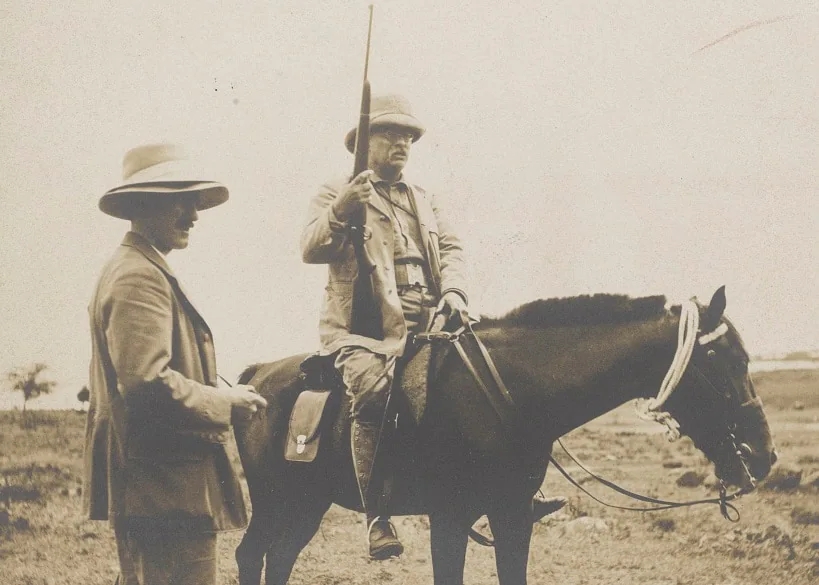
Theodore Roosevelt with his modified M1903 — the cartridge’s most famous patriotic advocate.
Looking for a .30-06 rifle, barrel, or ammo? Browse the full selection at Patriotic Firearms.
Verified Specifications
The following dimensions and pressures are drawn from SAAMI and CIP standards.
| Dimension | Inches | mm |
|---|---|---|
| Bullet diameter | .308 in | 7.8 mm |
| Land diameter | .300 in | 7.6 mm |
| Neck diameter | .3404 in | 8.65 mm |
| Shoulder diameter | .4425 in | 11.24 mm |
| Base diameter | .4708 in | 11.96 mm |
| Rim diameter | .4740 in | 12.04 mm |
| Rim thickness | .049 in | 1.2 mm |
| Case length | 2.494 in | 63.3 mm |
| Overall length (COAL) | 3.34 in | 85 mm |
| Case capacity | 68 gr H₂O | 4.4 mL |
| Rifling twist | 1 in 10 | 250 mm |
| Primer | Large rifle | — |
| Pressure Standard | Maximum |
|---|---|
| SAAMI | 60,000 psi (410 MPa) |
| CIP | 58,740 psi (405 MPa) |
| Maximum CUP | 50,000 CUP |
Parent-case note: The .30-06 case is the parent of an entire family of cartridges, including the .270 Winchester, .25-06 Remington, .280 Remington, .308 Winchester, .280 Ackley Improved, 6.5-06, .338-06, .35 Whelen, .400 Whelen, .44 AMP, and even the .50 BMG. That lineage is a testament to how well the original case was designed.
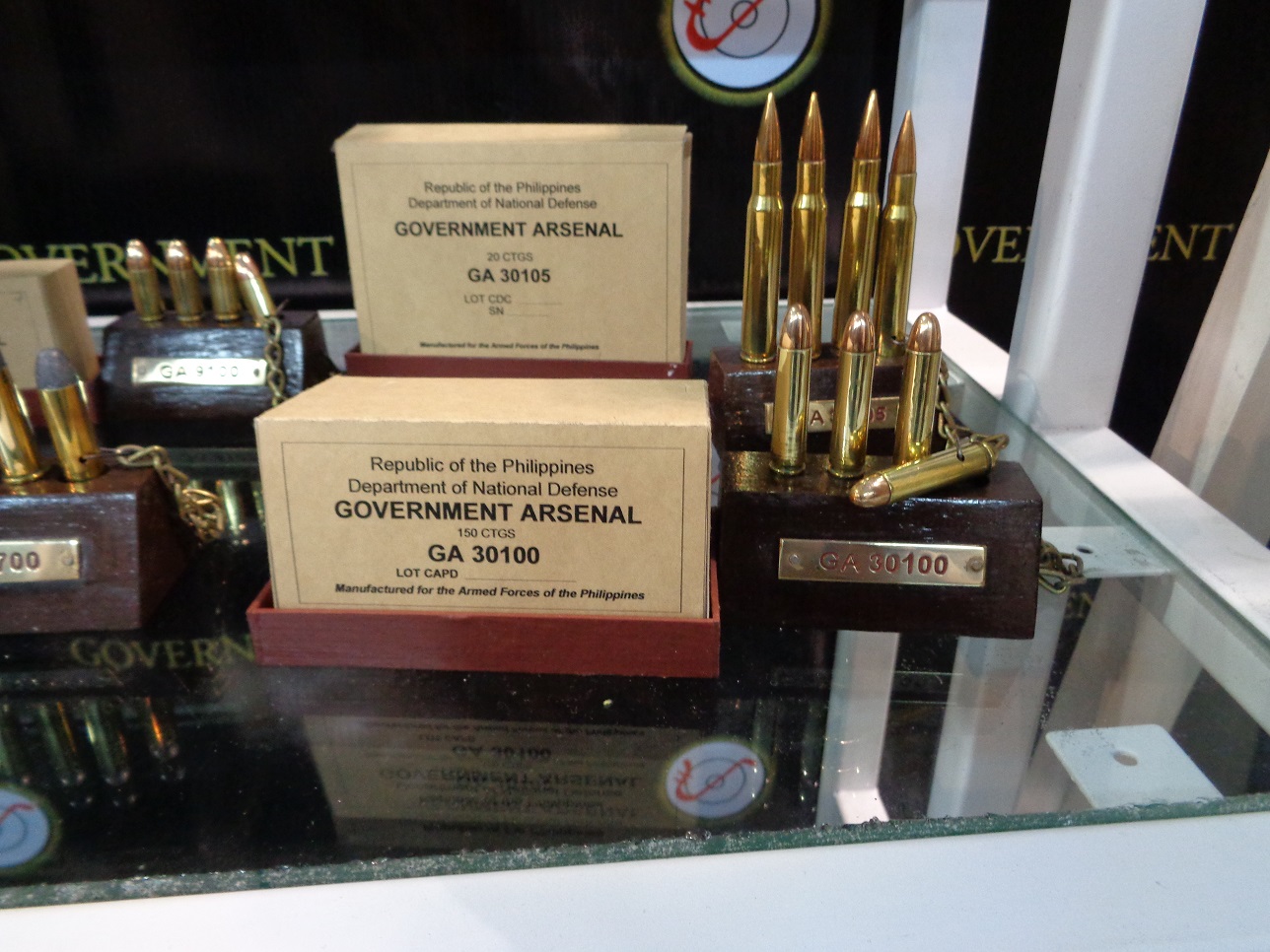
The .30 Carbine (left) and .30-06 Springfield (right) — same bullet diameter, very different power.
Ballistics: What the Cartridge Actually Does
The .30-06 is a full-power, long-action cartridge that pairs a flat trajectory with serious energy. The factory numbers below use a 24-inch test barrel and are drawn from Federal Cartridge, Accurate Powder, and SAAMI data.
Representative Factory Loads
| Bullet / Type | Muzzle Velocity | Muzzle Energy |
|---|---|---|
| 150 gr Nosler Ballistic Tip | 2,910 fps | 2,820 ft-lbs |
| 165 gr BTSP | 2,800 fps | 2,872 ft-lbs |
| 180 gr Core-Lokt Soft Point | 2,700 fps | 2,913 ft-lbs |
| 200 gr Partition | 2,569 fps | 2,932 ft-lbs |
| 220 gr Round Nose | 2,500 fps | 3,036 ft-lbs |
Commercial .30-06 ammunition spans 110 to 220 grains in solid bullets, and as light as 55 grains with a sub-caliber sabot. Many hunting loads clear 3,000 ft-lbs of energy at the muzzle — a benchmark that puts the .30-06 in serious big-game territory.
The Military Loads That Made History
- M1906 — 150 gr flat-base spitzer, G1 BC ~0.405, 2,700 fps, 2,429 ft-lbs.
- M1 Ball — 173/174 gr boat-tail, G1 BC ~0.494, 2,647 fps, 2,675 ft-lbs.
- M2 Ball — 152 gr gilding-metal jacket, 2,805 fps, 2,656 ft-lbs.
The M1 Ball’s boat-tailed, high-BC bullet is a quiet reminder that the military was chasing long-range performance from this case more than a century ago.
Trajectory
A 150-grain load leaving the muzzle at roughly 2,950 fps produces a maximum point-blank range just short of 300 yards when zeroed for that envelope. Heavier 165- and 168-grain bullets with higher ballistic coefficients buck crosswinds more efficiently and hold more downrange energy — at the cost of a slightly rounder trajectory. The trade-off is the same one every hunter faces: flat-shooting light bullets versus wind-bucking heavy bullets.
Recoil
Recoil is very manageable for a full-power cartridge. In an 8-pound rifle:
- 150 gr @ 2,910 fps ≈ 17.6 ft-lbs
- 165 gr @ 2,900 fps ≈ 20.1 ft-lbs
Most shooters begin to develop a flinch somewhere around 20 ft-lbs, which means the .30-06 sits right at the sweet spot — plenty of power without the punishing kick of the magnums. That shootability is a big part of why the round stays accurate under field pressure.
Bullet Types & Ammunition Selection
The .30-06’s versatility comes from its enormous bullet lineup. Here is how to choose.
Round Nose / Flat Base
The legacy military and lever-action profile. Feeds reliably and is easy to cast, but has a lower ballistic coefficient and a slower, more curved trajectory. Best for brush hunting and classic rifles.
Soft Point (SP) & Controlled-Expansion
The workhorse hunting bullets. Core-Lokt, Partition, AccuBond, and Swift A-Frame designs expand reliably while retaining weight for deep penetration. Heavier weights (180–220 gr) are the go-to for elk, moose, and bear.
Polymer / Ballistic Tip
High-BC, flat-shooting bullets like the Nosler Ballistic Tip, Hornady ELD-M, and A-MAX. These extend effective range and improve accuracy, making them ideal for open-country deer and elk shots.
FMJ / Ball
Full-metal-jacket rounds (Wolf 145 gr FMJ, Lapua 123 gr FMJ) for target shooting, training, and plinking. They do not expand, so they are not for hunting.
Bonded & Solid Copper
Barnes TTSX and bonded soft points deliver deep penetration and high weight retention — excellent for dangerous game and heavy-boned animals where you need the bullet to stay together.
Common Factory Loads Worth Knowing
Remington Core-Lokt PSP (125/150 gr), Barnes 150 gr TTSX (3,000 fps), Nosler 165 gr Partition and 180 gr Ballistic Tip, Federal 180 gr, HSM 210 gr Match/Hunting VLD, DoubleTap 180 gr Swift Scirocco and 210 gr AccuBond Long Range, Swift A-Frame 180 gr, CorBon 130/168/180 gr, Buffalo Bore 168 gr TTSX, and Lapua 123/170/185/200 gr.
Twist Rate & Bullet Weight
The standard 1:10 twist stabilizes the full range of common .30-06 bullets from 150 to 220 grains, which is why the cartridge handles such a wide spread of projectiles without complaint.
Real-World Uses
Hunting
This is the .30-06’s home turf. It is ethical on whitetail, mule deer, elk, moose, black bear, and brown bear with proper shot placement and a quality controlled-expansion bullet.
- Medium game (150 gr): deer and sheep.
- Elk, moose, black bear (165–220 gr): modern 180-grain premium bullets at ~2,700 fps are adequate for elk out to roughly 350–400 yards.
- Brown / grizzly bear: the Alaska Department of Fish & Game endorses a .30-06 loaded with 200- or 220-grain Nosler or similar premium bullets for brown bear on the Alaska Peninsula and Kodiak Island.
- Large game: bison and sambar deer at close to medium range.
With modern bullets, the .30-06 is commonly considered effective to roughly 500 yards on deer-to-elk-size game, though most hunters rightly limit themselves to the range they can place a shot with confidence.
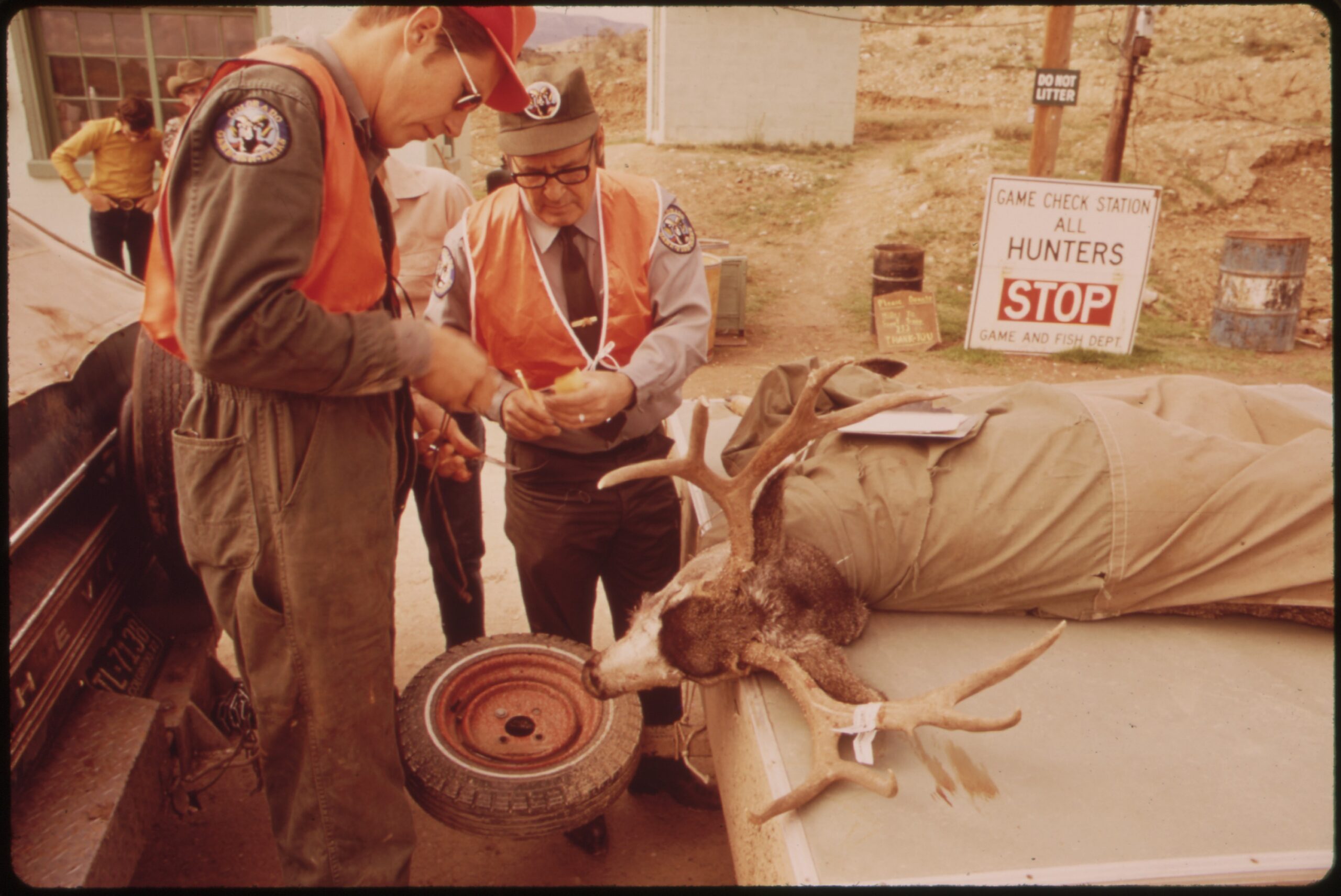
Big-game harvest check — the .30-06 has put venison on countless tables.
Legality note: Many states set a minimum caliber or bullet requirement for big game. Always verify your state’s current-year hunting digest before you go — regulations change annually.
Protection & Defense
The .30-06 is not a purpose-built defense round, but it has a legitimate role in rural and homestead protection. The same expanding hunting loads that drop a deer also serve as a brush-and-field defense cartridge against dangerous game and predators, and the cartridge’s wide availability and manageable recoil support a “one rifle for everything” mindset.
The honest caveats: in a full-power .30-caliber rifle, over-penetration and report are real concerns for close-quarters home defense. The .30-06 carries far more energy than a pistol or a 5.56 carbine, so it passes through interior walls readily and can put a round well beyond your target. For that reason it is better suited to rural homestead, predator, and livestock protection than to room-by-room defense. (This assessment rests partly on field consensus rather than a single primary source — treat it as informed guidance, not gospel.)
Long-Range Target Shooting
The .30-06 can be a capable long-range cartridge thanks to inherent accuracy, manageable recoil, and abundant components — but it is not a dedicated long-range round like the 6.5 Creedmoor or .300 Winchester Magnum. High-BC 165–220 grain bullets push its envelope, and it remains a viable option for shooters who already own the rifle. (Secondary-source assessment — UNVERIFIED against a dedicated long-range test.)
Other Uses
- Wildcat parent: the .30-06 case spawns popular wildcats like the 22-06 (varmint), 6.5-06, .25-06, .270, .280 Ackley Improved, .338-06, and .35 Whelen, each optimized for velocity, trajectory, or recoil.
- Reduced-recoil handloads: light handloads make the platform shooter-friendly for youth, recoil-sensitive shooters, and extended practice. (Secondary-source assessment — UNVERIFIED.)
- Collecting: an active community collects military-surplus and headstamped .30-06 cartridges.
Honest Pros and Cons
Pros:
- Full-power performance with a flat trajectory and a huge bullet lineup
- Manageable recoil for a full-power cartridge — highly shootable
- Enormous ammo availability and a deep reloading data shelf
- Proven military and hunting pedigree spanning more than a century
- Parent case for a wide family of wildcat cartridges
Cons:
- Long-action only — no short-action platform
- Over-penetration is a real liability in home-defense use
- Not as flat-shooting or low-recoil as modern short-action alternatives like 6.5 Creedmoor
- Heavier rifles and longer actions than the .308 it helped inspire
Frequently Asked Questions
Is the .30-06 still worth it in 2026?
Absolutely. It remains one of the most versatile big-game cartridges ever made, with ammo available everywhere and performance that still meets modern hunting demands.
What is the best .30-06 bullet for deer?
A 150-grain soft point or polymer-tip bullet is ideal for deer-size game at typical hunting ranges.
Can a .30-06 kill an elk?
Yes. A 165–220 grain controlled-expansion bullet, with good shot placement, is a proven elk cartridge out to roughly 350–400 yards.
Is the .30-06 good for home defense?
It is powerful but over-generous for close-quarters defense due to over-penetration. It is better suited to rural and homestead protection than to room defense.
What is the difference between .30-06 and .308?
The .30-06 is a longer, more powerful long-action cartridge with greater case capacity; the .308 is a shorter, lighter-action round that achieves similar performance in a more compact package.
Bottom Line
The .30-06 Springfield is the cartridge that raised a military and fed a nation of hunters. It is ethical on everything from whitetail to brown bear, shootable enough to keep you on target under pressure, and available in every corner of the firearms market. It is not the flattest-shooting or lightest-kicking round on the block, but for a single rifle that can hunt, protect a homestead, and put rounds downrange with authority, the “thirty-aught-six” is still very hard to beat.
Ready to gear up? Find .30-06 rifles, ammo, and gear at Patriotic Firearms.
Shop Now at PatrioticFirearms.com →
Join 10,000+ patriotic shooters who get firearms news, reviews, and exclusive deals delivered straight to their inbox.
Sign Up for the Patriotic Firearms Newsletter →
No spam. Unsubscribe anytime.
About the Author
Nathan Grill is the firearms editor at Patriotic Firearms, where he covers rifles, ammunition, and the Second Amendment with a focus on practical, patriotic, and non-partisan reporting.