The .270 Winchester Complete Guide: Specs, Ballistics, Bullet Types & Real-World Uses
Published: October 4, 2026
Meta Description: Complete .270 Winchester guide: verified CIP/SAAMI specs, factory ballistics, every bullet type, and honest real-world uses for hunting, protection, and long-range shooting.
Keywords: 270 winchester complete guide, 270 winchester ballistics, 270 for hunting, 270 bullet weights, 270 vs 30-06, best 270 ammo
Few cartridges have shaped the American hunting tradition the way the .270 Winchester has. For a century it has been the go-to round for hunters who want a flat trajectory, a manageable kick, and enough punch to cleanly take deer, elk, and everything in between. Developed in the early 1920s and still factory-loaded by every major American ammunition maker today, the .270 is a genuine icon of the long-action sporting rifle — and a cartridge that rewards understanding.
This guide walks through where the .270 came from, its verified specifications, what its factory loads actually do downrange, how its bullet types behave, and where the round truly fits — and does not fit — across hunting, protection, and target shooting.
Where It Came From: The .270’s Origin Story
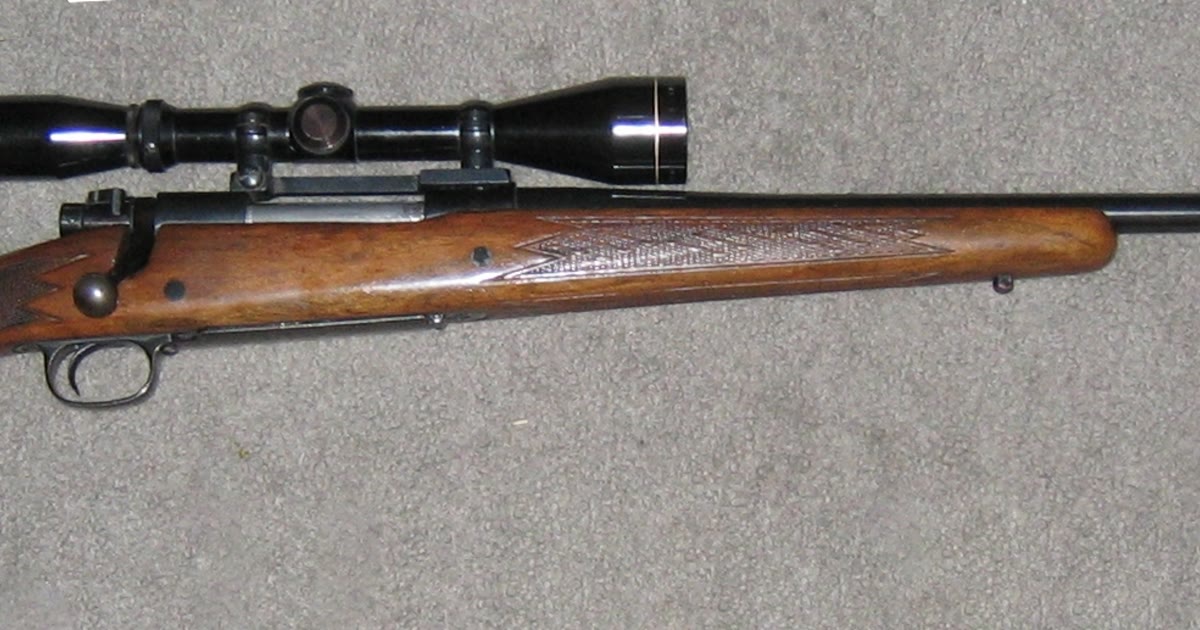
The .270 Winchester was developed in 1923 by the Winchester Repeating Arms Company and introduced to the public in 1925, chambered in the bolt-action Winchester Model 54 — Winchester’s first successful civilian centerfire bolt-action rifle. It was originally marketed as the “270 WCF” (Winchester Center Fire).
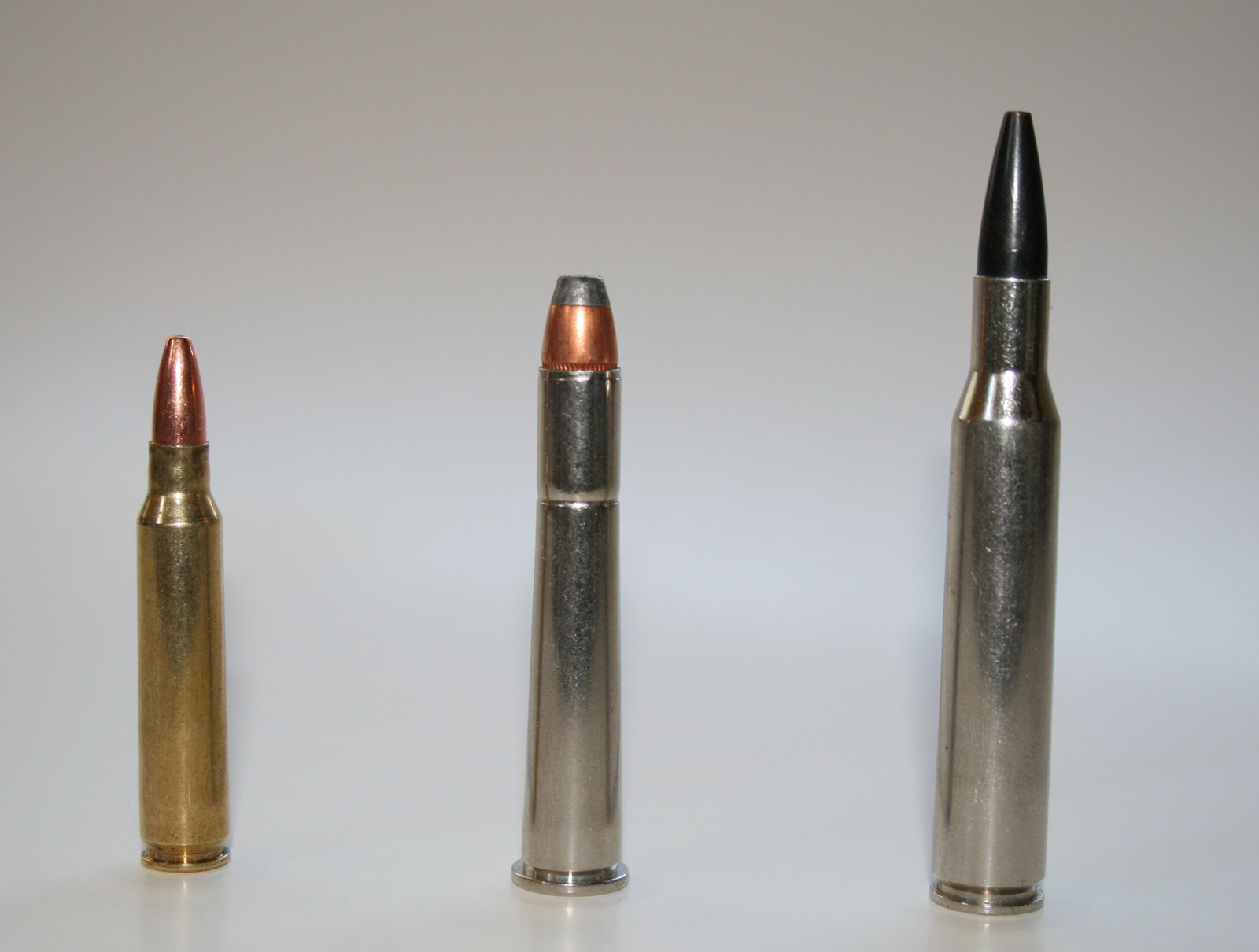
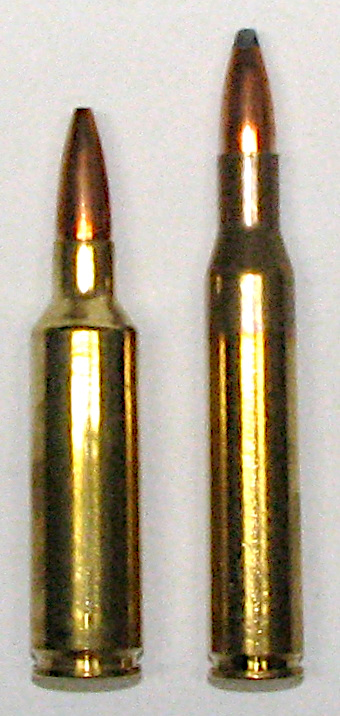
Mechanically, the .270 is a necked-down member of the famous “06 family.” Winchester took the .30-03 Springfield case — the direct parent of the .30-06 — and necked it to accept a smaller .277-inch bullet while keeping the long-action, full-length case geometry. That single change produced a cartridge that threw a lighter, faster projectile than its .30-caliber siblings, with a noticeably flatter trajectory.
Adoption was not instant. The .30-06 was already dominant, especially in the flood of sporterized M1903 Springfields after the Great War, and the .270 was initially seen as a “light” alternative. That changed as telescopic sights became common and as Winchester’s legendary Model 70 (introduced in 1936) made the .270 a flagship long-range deer and elk round. From there it climbed to become one of the most popular big-game cartridges in North America — a status it has held for decades.
Key historical facts:
- 1923 — Developed by Winchester.
- 1925 — Introduced in the Winchester Model 54 as “270 WCF.”
- Original factory load — 130-grain spitzer at an advertised ~3,140–3,160 fps from a 24-inch barrel.
- Modern status — Still factory-loaded by Winchester, Federal, Hornady, Remington, Barnes, Browning, and others.
The Numbers: .270 Winchester Specifications
The following dimensions come from the CIP Technical Document for the Control of Cartridges (TDCC), the primary European standardization drawing for the cartridge, cross-checked against Wikipedia and SAAMI data.
Dimension Table (CIP TDCC)
| Dimension | Inches | Millimeters |
|---|---|---|
| Bullet diameter | .277 in | 7.0 mm |
| Land (bore) diameter | .270 in | 6.9 mm |
| Neck diameter | .308 in | 7.8 mm |
| Shoulder diameter | .441 in | 11.2 mm |
| Base diameter | .470 in | 11.9 mm |
| Rim diameter | .473 in | 12.0 mm |
| Case length | 2.540 in | 64.5 mm |
| Overall length (COL) | 3.340 in | 84.8 mm |
| Rifling twist | 1 in 10 in | 254 mm |
| Case capacity | 67 gr H2O | 4.3 cm³ |
| Primer | Large rifle | — |
A note on the shoulder angle: The CIP drawing lists several angular values, but it does not label a single “shoulder angle” the way popular references do, so a precise single-figure shoulder angle is best treated as not firmly established from the primary drawing.
Pressure Standards
| Standard | Max Average Pressure | Proof Load |
|---|---|---|
| SAAMI (piezo, modern) | 65,000 psi | — |
| CIP (drilled-case piezo, Pmax) | 4,300 bar / 62,366 psi | — |
| CIP proof (PK) | — | 4,945 bar / 71,721 psi |
| CIP extra proof (PE) | — | 5,375 bar / 77,958 psi |
Why the numbers look different: SAAMI and CIP both publish “maximum” pressures, but they measure them differently. SAAMI’s modern figure is a piezo-electric transducer reading in psi; CIP uses a drilled/perforated-case piezo transducer with its own correction factors. The legacy CUP (Copper Unit of Pressure) crusher gauge is yet another method. These are not numerically interchangeable for the same physical pressure — a .270 load safe in a SAAMI-spec rifle should still be checked against CIP proof marks on European-built rifles, and vice versa.
Twist Rates and Barrels
| Twist Rate | Typical Barrel | Stabilizes (approx.) |
|---|---|---|
| 1:10 in | 22–24 in (standard) | 110–150 gr (factory standard) |
| 1:9 in | 22–24 in (custom/target) | 130–165 gr |
| 1:8 in | 22–26 in (custom) | 150–175 gr |
The standard 1:10 twist was matched to the original 130-grain spitzer and comfortably stabilizes the 130–150 grain bullets that make up the bulk of factory .270 ammo. Heavier 165–175 grain bullets — rarely loaded by factories in .270 — generally want a faster twist for reliable stabilization.
Naming caution: Do not confuse the .270 Winchester with the .270 Weatherby Magnum (magnum-length, much faster) or the .270 Winchester Short Magnum (WSM) (short-action, introduced 2002). They share a bullet diameter but are entirely different cartridges.
Factory Ballistics: What the Loads Actually Do
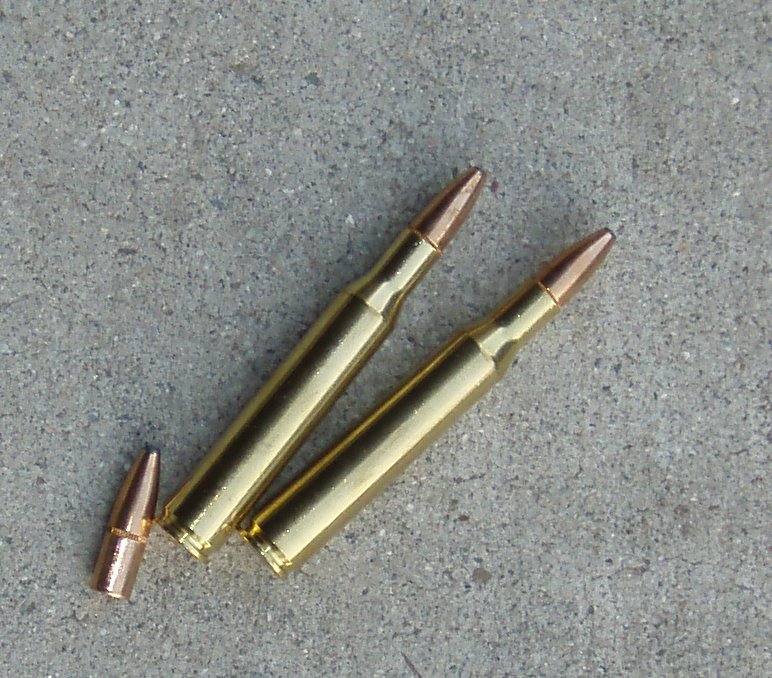
The .270’s reputation rests on velocity. The 130-grain class clusters tightly around 3,050–3,060 fps, the round’s traditional sweet spot, while modern high-BC bullets push the efficiency envelope further than the old cup-and-core designs ever could.
Five-Load Comparison (manufacturer / verified aggregator data, 24″ test barrels)
| Manufacturer | Load | Bullet | Type | Muzzle Velocity | Muzzle Energy | G1 BC |
|---|---|---|---|---|---|---|
| Winchester | Ballistic Silvertip | 130 gr | Polymer tip | 3,050 fps | 2,685 ft-lbs | 0.433 |
| Hornady | Precision Hunter | 145 gr | ELD-X polymer tip | 2,970 fps | 2,839 ft-lbs | 0.536 |
| Federal | Premium Nosler Partition | 150 gr | Dual-core partition | 2,830 fps | 2,667 ft-lbs | 0.465 |
| Barnes | VOR-TX | 130 gr | TTSX BT all-copper | 3,060 fps | 2,702 ft-lbs | 0.420 |
| Remington | Core-Lokt PSP | 130 gr | Cup-and-core | 3,060 fps | 2,702 ft-lbs | 0.414 |
A few more confirmed loads: Federal 130 gr Trophy Bonded Tip (3,060 fps, BC 0.440), Hornady 140 gr Superformance SST (~3,090 fps advertised), and Browning 150 gr Silver Series soft point (~2,706 ft-lbs).
Honest velocity note: Manufacturer figures are quoted from 24-inch test barrels. Independent chronograph testing commonly shows 40–90 fps less on some loads, especially from shorter hunting barrels. Treat advertised velocities as a ceiling, not a guarantee.
Trajectory and Downrange Energy
The .270’s combination of high muzzle velocity and, in modern loads, high ballistic coefficient gives it a notably flat trajectory and strong retained energy for a non-magnum cartridge — historically the reason it was grouped with the .300 H&H as one of the flattest-shooting rounds of its era. The 145-grain ELD-X, with a G1 BC of 0.536, holds velocity and energy better at distance than the lighter 130-grain cup-and-core bullets, and cuts wind drift more sharply as well.
Recoil
Free-recoil energy (computed with the standard formula, 8-lb rifle, powder charges estimated):
| Cartridge | Bullet | Velocity | Recoil Energy (approx.) |
|---|---|---|---|
| .270 Winchester | 130 gr | 3,050 fps | ~15.5 ft-lbs |
| .270 Winchester | 150 gr | 2,830 fps | ~15.0 ft-lbs |
| .30-06 Springfield | 150 gr | 2,910 fps | ~17.9 ft-lbs |
| .308 Winchester | 150 gr | 2,800 fps | ~15.8 ft-lbs |
The headline: the .270 delivers noticeably less recoil than the .30-06 while producing similar or better downrange energy on medium game. That “soft-kicker, hard-hitter” balance is a big part of why generations of hunters have loved it.
Effective / Ethical Range (terminal-ballistics based)
| Application | Effective Range | Notes |
|---|---|---|
| Whitetail / mule deer | 300–400 yd | 130 gr soft points produce hydrostatic shock down to ~2,600 fps impact |
| Elk (large-bodied) | 250–300 yd | 150 gr Partition at ~2,900 fps effective on ~150 kg game |
| Sheep / thin-skinned open-country | 300–500 yd | Flat trajectory suits long open shots |
Terminal studies note that conventional 130-grain soft points lose hydrostatic shock below roughly 2,600 fps impact; between 2,600 and 2,400 fps the wound channel narrows but kills remain reasonably fast, and below ~2,400 fps (roughly 275 yards on some loads) kills become delayed. Range discipline and bullet choice matter more than the caliber badge.
Bullet Types: Choosing the Right Projectile
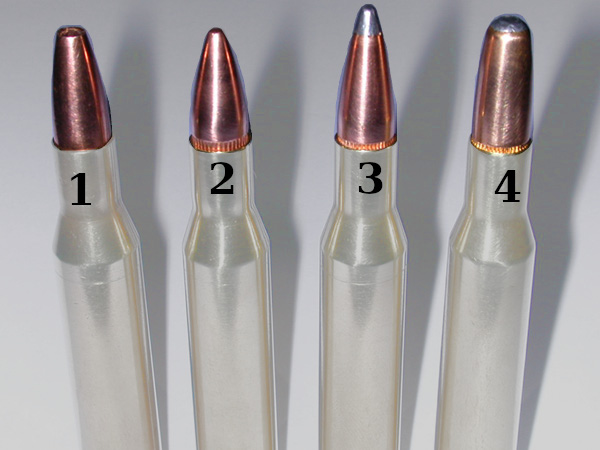
The .270’s bullet lineup is built almost entirely around hunting. Here is how the major designs break down.
Hunting Bullets (Deer & Elk)
| Bullet / Load | Weight | Type | Best For |
|---|---|---|---|
| Hornady 145 gr ELD-X (Precision Hunter) | 145 | Polymer tip, controlled expansion | All-range hunting |
| Hornady 140 gr SST (Superformance) | 140 | Polymer tip | Deer / elk |
| Federal 130 gr Trophy Bonded Tip | 130 | Bonded polymer tip | Big game |
| Federal 150 gr Premium Nosler Partition | 150 | Dual-core partition | Elk / large game |
| Federal 150 gr Fusion | 150 | Soft point | Deer |
| Nosler 140 gr AccuBond | 140 | Bonded polymer tip | Medium game |
| Nosler 150 gr Partition | 150 | Dual-core partition | Elk / large game |
| Barnes 130 gr TTSX BT (VOR-TX) | 130 | Monolithic all-copper | Deer / elk |
| Barnes 129 gr LRX | 129 | Monolithic polymer tip | Long-range hunting |
| Remington 130 gr Core-Lokt PSP | 130 | Cup-and-core | Deer |
| Winchester 130 gr Ballistic Silvertip | 130 | Polymer tip | Deer |
| Winchester 130 gr Copper Impact | 130 | Lead-free polymer tip | Lead-free zones |
| Browning 140 gr Long Range Pro Tipped GameKing | 140 | Polymer tip | Long-range hunting |
| Browning 150 gr Silver Series SP | 150 | Soft point | Deer / elk |
Terminal behavior highlights (from terminal-ballistics studies):
- 130 gr GameKing — very explosive even at lower velocity; best on game under ~80 kg.
- 130 gr Core-Lokt — controlled expansion, dependable on deer.
- 150 gr Partition — outstanding at ~2,900 fps; emphatic up to ~150 kg; one of the best .270 bullets for elk-sized game.
- 150 gr SST — excellent all-rounder when loaded to ~2,900 fps; uniform performance on light game at extended range.
- 150 gr Berger VLD — best on ~90–150 kg game at extended range; expansion near 2,000 fps becomes target-resistance dependent.
- 140 gr AccuBond — strong all-round medium-game bullet.
Construction Glossary
- Soft Point (SP): Exposed lead core at the nose for reliable expansion at hunting velocities (Federal Fusion, Browning Silver Series).
- Bonded: Jacket chemically bonded to the core for controlled expansion plus deep penetration (Federal Trophy Bonded Tip, Nosler AccuBond).
- Partition: Nosler dual-core design — a front soft core for rapid expansion separated by a partition wall from a rear hard core for deep penetration (Federal Premium Nosler Partition).
- Monolithic (All-Copper): Single-piece copper bullet with no lead core; expands into petals with high weight retention (Barnes TTSX/LRX).
- Polymer Tip: Aerodynamic plastic tip that improves ballistic coefficient and initiates expansion (Hornady ELD-X/SST, Winchester Ballistic Silvertip, Browning Long Range Pro).
- ELD-X (Extremely Low Drag – Expanding): Hornady’s match-accurate all-range hunting bullet with high BC and controlled expansion at practical hunting distances.
- VLD (Very Low Drag): Berger secant-ogive design for reduced drag; expansion at extended range depends on target resistance.
- Cup-and-Core: Traditional jacketed soft point with controlled expansion (Remington Core-Lokt).
Light-Game and Youth Loads
Not every .270 shooter is after elk. The Sierra 110-grain spitzer and similar light bullets serve as reduced-recoil or youth loads, and 140-grain HPBT bullets can stretch to lighter game around 300 yards. These let newer or smaller-framed hunters step into a full-power rifle without the full bite of a 150-grain load.
Real-World Uses
Hunting — The .270’s Home Turf
This is what the .270 was built for, and it still does it exceptionally well. The round is ethical on whitetail deer, mule deer, elk, pronghorn, sheep, and black bear with proper shot placement and a quality controlled-expansion bullet.
- Deer and thin-skinned open-country game: 130-grain polymer-tip or soft-point bullets are the classic choice, and the flat trajectory suits the long, open shots common in western deer and sheep country.
- Elk and larger game: step up to 140–150-grain bonded, partition, or monolithic designs. The 150-grain Partition at ~2,900 fps is repeatedly cited as one of the best .270 bullets for elk-sized (~150 kg) game.
- Ethical range discipline: conventional 130-grain soft points lose hydrostatic shock below roughly 2,600 fps impact (around 275 yards on some loads). Heavier, higher-BC bullets extend that window, but wind and terminal limits still cap honest shots.
Legality note: Many states set a minimum caliber or bullet requirement for big game. Always verify your state’s current-year hunting digest before you go afield — regulations change annually.
Protection and Home Defense — An Honest Look
Here is where the .270’s reputation needs a reality check. The .270 Winchester is a hunting cartridge, not a defensive round, and it is generally considered overpowered for typical home-defense distances.
- Over-penetration is the headline liability. The .270 carries substantially more energy than 5.56 NATO or 9mm, so it passes through interior walls more readily and can put a round in the next room. Controlled-expansion hunting bullets reduce but do not eliminate through-and-through risk.
- Recoil slows follow-up shots. The .270 generates meaningfully more free recoil than defensive intermediate cartridges, which works against the rapid, accurate second hits that matter in a defensive encounter.
- A viable niche exists. In rural settings — property defense against predators or large animals where a high-powered rifle is appropriate and the backstop is controlled — the .270 can be a sensible tool.
Practical takeaway: For home defense, smaller calibers with controlled-expansion or barrier-predictable loads are usually the better choice. Reserve the .270 for hunting and open-country property defense where its power is an asset rather than a liability.
Target Shooting and Plinking
The .270 is not a dedicated target cartridge. Factory match-grade .270 ammo is uncommon, and the round’s recoil and cost limit high-volume target use compared with smaller calibers. That said, lighter 110–130-grain loads and reloadable brass make it usable for occasional practice and off-hand shooting — and a flat-shooting .270 is genuinely fun on a long, open range.
Other Uses
- Reloading: the .270 is one of the most popular bottleneck rifle cartridges to reload, with abundant new and once-fired brass and published data from every major bullet maker.
- Youth / reduced-recoil: light 110-grain loads give newer hunters a manageable entry into a full-power rifle.
- Historical significance: one of the most influential American sporting cartridges of the 20th century — it helped establish the modern high-velocity big-game rifle concept that hunters still chase today.
- Not a military round: the .270 has no military adoption; it is purely a commercial and hunting cartridge.
Honest Pros and Cons
Pros:
- Flat trajectory and high velocity — excellent for open-country, long-shot hunting
- Noticeably less recoil than the .30-06 with similar or better downrange energy on medium game
- Huge factory and reloading bullet selection from every major maker
- Proven, century-old track record on deer, elk, and big game
- Long-action case means reliable feeding in classic bolt-actions
Cons:
- Overpowered and over-penetrating for typical home-defense distances
- Not a dedicated target cartridge; factory match ammo is scarce
- 130-grain bullets are not ideal for the largest game; you must step up to 150-grain bonded/partition for elk
- Heavier 165–175-grain bullets need a faster twist than the standard 1:10
- Advertised velocities can run 40–90 fps above real-world chronograph results
Final Thoughts
A century after Winchester necked down a .30-03 case and called it the 270 WCF, the .270 Winchester remains exactly what it was always meant to be: a flat-shooting, hard-hitting, soft-kicking big-game cartridge that rewards a hunter who respects its limits. It is not a do-everything defensive tool, and it is not a benchrest target round — but for the open-country hunter who wants reach, authority, and a manageable report, few cartridges have earned their reputation more honestly.
Pick the right bullet for the game, keep your shots inside ethical velocity, and the .270 will still be punching tickets a hundred years from now.
Shop .270 Winchester Gear at Patriotic Firearms
Looking for a .270 rifle, factory ammo, or reloading components? Browse bolt-actions, hunting loads, and brass at Patriotic Firearms.
Shop .270 Winchester at PatrioticFirearms.com →
Stay Informed
Get the latest firearms news, gear reviews, and 2nd Amendment updates delivered to your inbox.
Sign up for the Patriotic Firearms newsletter →
About the Author
Nathan Grill is a lifelong firearms enthusiast and writer covering rifles, ammunition, and the American shooting tradition for Patriotic Firearms. His work focuses on honest, research-backed guides that help hunters and gun owners make informed decisions.
Disclaimer: This article is for informational and educational purposes only. Firearm laws and hunting regulations vary by state and change frequently. Always consult your local laws, current hunting digests, and a qualified professional before purchasing, carrying, or hunting with any firearm.