Few cartridges carry the sheer authority of the .300 Winchester Magnum. For more than sixty years it has stood as the benchmark long-range big-game round — the cartridge American hunters reach for when the shot is long, the animal is heavy, and the margin for error is thin. Introduced in 1963, it took the proven .375 H&H case head, trimmed the taper, and delivered magnum velocity in a standard-length action. The result was a flat-shooting, hard-hitting powerhouse that went on to earn a place not just on mountain slopes but in the hands of military snipers and long-range competitors alike.
This guide walks through where the .300 Win Mag came from, its verified specifications, what its factory loads actually do downrange, how its bullet types behave, and where the round truly fits — and does not fit — across hunting, protection, and long-range shooting.
Where It Came From: The .300 Win Mag’s Origin Story
The .300 Winchester Magnum was introduced in 1963 by the Winchester Repeating Arms Company, and its design goal was deceptively simple: deliver true magnum performance without forcing the shooter into an extra-long magnum action.
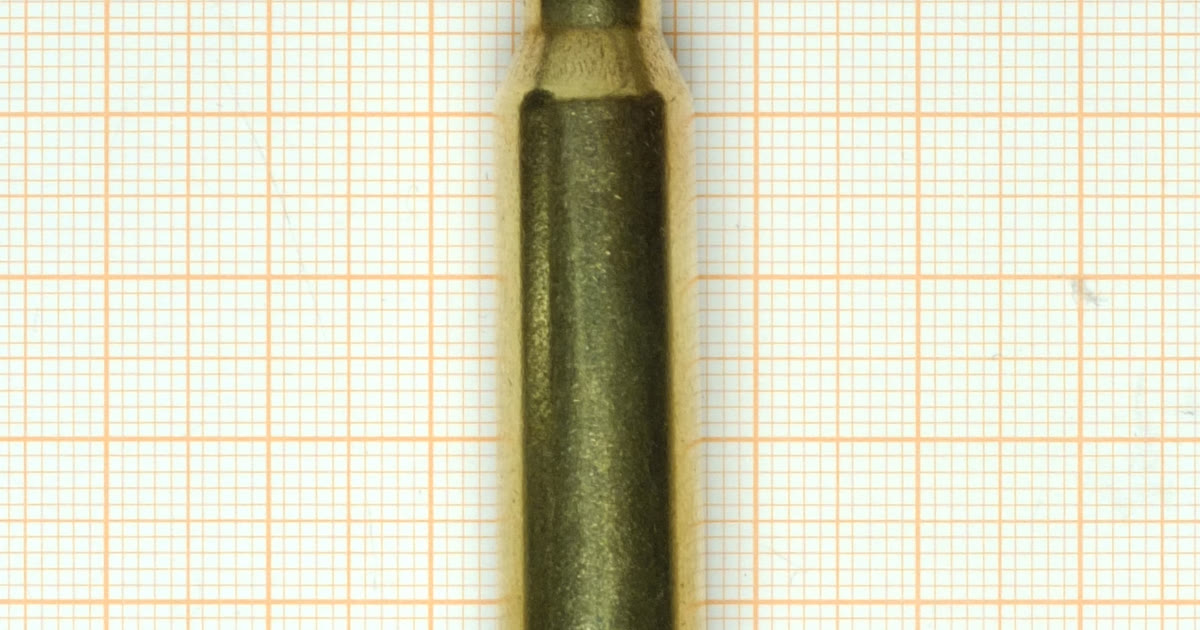
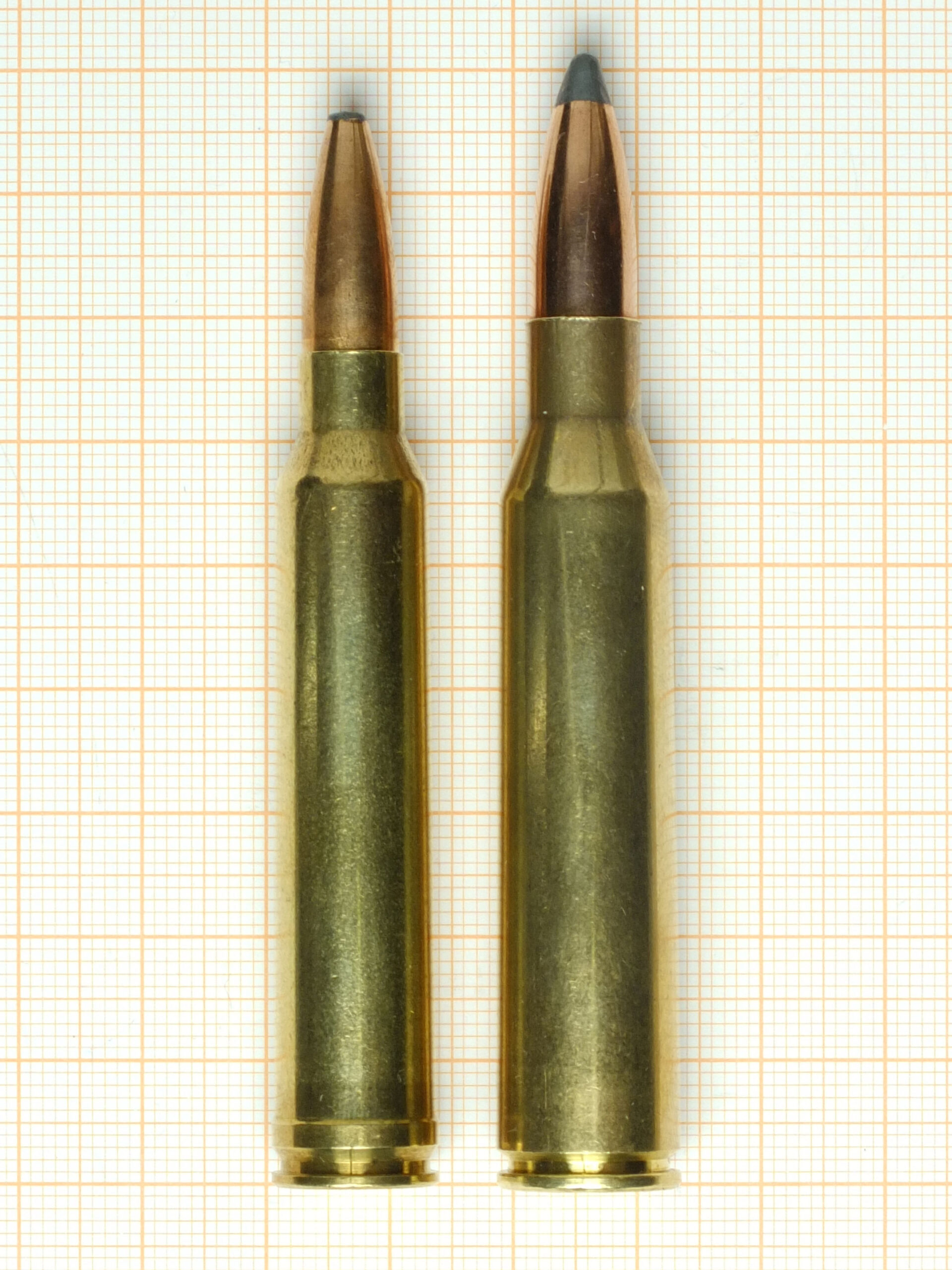
Mechanically, the .300 Win Mag is a belted, bottlenecked magnum that borrows the same case-head design as the .375 H&H Magnum, its parent cartridge. Winchester necked that case down to accept a .308-inch bullet and significantly reduced the body taper to maximize powder capacity. The belt — the raised ring near the case head — remains the headspacing datum inherited from the H&H lineage. Crucially, the overall package was sized to fit a standard-length (long) action, the same action length used by the .30-06, rather than the extra-long actions required by the .300 H&H and .375 H&H family. That single design decision made magnum velocity practical in a normal, handy rifle.
Adoption was swift. The .300 Win Mag quickly earned a reputation as a flat-shooting, hard-hitting big-game cartridge and a serious long-range option, and it remains factory-loaded by every major American ammunition maker today. Its metric designations — 7.62×67mmB and 7.62×66BR — reflect its .30-caliber bullet and magnum case dimensions.
Key historical facts:
- 1963 — Introduced by Winchester as a magnum that fits a standard-length action.
- Parent case — .375 H&H Magnum case head, necked down with reduced taper.
- Design win — Magnum velocity without the extra-long magnum action.
- Rechambering — Because its case is longer than the .308 Norma Magnum and .30-338 Winchester Magnum, rifles chambered for those rounds can readily be rechambered to .300 Win Mag.
- Modern status — Still factory-loaded by Winchester, Federal, Hornady, Barnes, Nosler, Remington, Browning, and others.
The Numbers: .300 Winchester Magnum Specifications
The following dimensions come from the CIP Technical Document for the Control of Cartridges (TDCC), the primary European standardization drawing for the cartridge, cross-checked against Wikipedia and SAAMI data.
Dimension Table (CIP TDCC)
| Dimension | Inches | Millimeters |
|---|---|---|
| Bullet diameter (nominal) | .308 in | 7.85 mm |
| Groove (rifling) diameter | .309 in | 8.00 mm |
| Neck diameter | .339 in | 8.63 mm |
| Shoulder diameter | .489 in | 12.42 mm |
| Base diameter | .513 in | 13.03 mm |
| Rim diameter | .532 in | 13.51 mm |
| Rim thickness | .050 in | 1.27 mm |
| Case length | 2.620 in | 66.55 mm |
| Overall length (COL) | 3.340 in | 84.84 mm |
| Shoulder angle | 35° | 35° |
| Rifling twist | 1 in 10 in | 250 mm |
| Case capacity | 94 gr H2O (Wikipedia) / 91.5 gr H2O (SAAMI) | 6.1 cm³ / 5.93 mL |
| Primer | Large Rifle Magnum | — |
A note on the belt: The .300 Win Mag is a belted cartridge. The belt is the headspacing datum inherited from its .375 H&H lineage. Exact belt width and diameter were not explicitly labeled in the primary CIP drawing excerpt, so those two figures are best treated as not firmly established from the primary source.
Pressure Standards
| Standard | Max Average Pressure | Proof Load |
|---|---|---|
| SAAMI (piezo, modern) | 64,000 psi / 440 MPa | — |
| SAAMI CUP (legacy crusher) | 54,000 CUP | — |
| CIP (drilled-case piezo, Pmax) | 430.00 MPa / 62,366 psi | — |
| CIP extra proof (PE) | — | 537.50 MPa / 77,958 psi |
Why the numbers look different: SAAMI and CIP both publish “maximum” pressures, but they measure them differently. SAAMI’s modern figure is a piezo-electric transducer reading in psi; CIP uses a drilled/perforated-case piezo transducer with its own correction factors. The legacy CUP (Copper Unit of Pressure) crusher gauge is yet another method. These are not numerically interchangeable for the same physical pressure — a .300 Win Mag load safe in a SAAMI-spec rifle should still be checked against CIP proof marks on European-built rifles, and vice versa.
Twist Rates and Barrels
| Twist Rate | Typical Barrel | Stabilizes (approx.) |
|---|---|---|
| 1:10 in | 22–26 in (standard) | 150–200 gr (factory standard) |
| 1:9 in | 24–26 in (custom/long-range) | 180–220 gr |
| 1:8 in | 24–28 in (custom/ELR) | 200–220 gr+ |
The standard 1:10 twist comfortably stabilizes the 150–200 grain bullets that make up the bulk of factory .300 Win Mag ammo. Heavier 200–220 grain bullets — favored for long-range target work and the largest game — generally want a faster twist (1:9 or 1:8) for reliable stabilization at distance.
Naming caution: Do not confuse the .300 Winchester Magnum with the .300 Weatherby Magnum (a different, faster Weatherby design), the .300 Winchester Short Magnum (WSM) (short-action, introduced 2001), or the .300 Norma Magnum and .300 Ruger Compact Magnum. They share a bullet diameter but are entirely different cartridges.
Factory Ballistics: What the Loads Actually Do
The .300 Win Mag’s reputation rests on velocity and retained energy. Standard bullet weights run 150 / 165 / 180 / 190 / 200 / 220 grains, with muzzle velocities spanning roughly 2,800–3,260 fps and muzzle energies in the 3,500–3,900 ft-lbs range depending on the load.
Five-Load Comparison (manufacturer / verified aggregator data, 24″ test barrels)
| Manufacturer | Load | Bullet | Type | Muzzle Velocity | Muzzle Energy |
|---|---|---|---|---|---|
| Winchester | Power Point | 150 gr | Soft point | 3,290 fps | 3,605 ft-lbs |
| Winchester | Fail Safe | 165 gr | Bonded solid/copper | 3,120 fps | 3,567 ft-lbs |
| Winchester | Power Point Plus | 180 gr | Soft point | 3,070 fps | 3,768 ft-lbs |
| Barnes | VOR-TX | 180 gr | TTSX BT all-copper | ~2,900 fps (est.) | ~3,360 ft-lbs (est.) |
| Hornady | Precision Hunter | 200 gr | ELD-X polymer tip | ~2,800 fps (est.) | ~3,480 ft-lbs (est.) |
A few more confirmed loads: Winchester 180 gr Power Point (alternate load, 2,960 fps / 3,501 ft-lbs), Winchester 200 gr (~3,607 ft-lbs), Federal 150 gr Fusion, and Nosler 180 gr AccuBond. Terminal-ballistics studies note that in 24–26″ sporting rifles, most 150 gr loadings achieve realistic velocities around 3,250 fps, while 180 gr loads achieve around 2,880 fps.
Honest velocity note: Manufacturer figures are quoted from long test barrels. Independent chronograph testing commonly shows 40–90 fps less on some loads, especially from shorter hunting barrels. Treat advertised velocities as a ceiling, not a guarantee.
Trajectory and Downrange Energy
The .300 Win Mag’s high muzzle velocity gives it a notably flat trajectory for a magnum. Representative verified data:
| Load | 100 yd | 200 yd | 300 yd | 400 yd | 500 yd | 1,000 yd |
|---|---|---|---|---|---|---|
| 150 gr Power Point (drop, in) | +3.0 | +3.4 | −1.2 | −11.4 | — | — |
| 180 gr (drop, in) | +1.4 | — | −6.4 | — | — | — |
| 180 gr energy (ft-lbs) | — | 2,361 | — | — | 2,023 | — |
| 200 gr energy (ft-lbs) | — | — | — | — | — | 1,350 |
The headline: the .300 Win Mag retains roughly 2,300+ ft-lbs at 200 yards across the 150–180 grain range and still carries about 2,000 ft-lbs at 500 yards on an 180 grain load — the long-range energy retention that defines the cartridge.
Energy Retention to 1,500 ft-lbs
| Bullet | Weight | Distance retaining 1,500 ft-lbs |
|---|---|---|
| Hornady ELD-X | 200 gr | ~550 yd |
| Nosler AccuBond | 180 gr | ~525 yd |
| Barnes TTSX | 180 gr | ~500 yd |
| Federal Fusion | 150 gr | ~450 yd |
High-BC bullets (ELD-X, AccuBond) hold lethal 1,500 ft-lbs energy about 100 yards farther than the lighter Fusion 150 grain — directly relevant to ethical long-range elk and moose shots.
Recoil
Free-recoil energy (verified aggregator figure for the .300; companion figures computed with the standard formula, ~8-lb rifle):
| Cartridge | Bullet | Velocity | Recoil Energy (approx.) |
|---|---|---|---|
| .300 Winchester Magnum | 180 gr | ~2,960 fps | ~31.5 ft-lbs |
| .30-06 Springfield | 150 gr | 2,910 fps | ~17.9 ft-lbs |
| .308 Winchester | 150 gr | 2,800 fps | ~15.8 ft-lbs |
The headline: the .300 Win Mag produces roughly 31.5 ft-lbs of recoil energy — meaningfully heavier than the .30-06 (~18 ft-lb) and .308 (~16 ft-lb). Comparative testing notes the .300 WM carries about 12 more ft-lb of force than the .30-06 at the same rifle weight. This is a real shootability trade-off for long sessions and rapid follow-up shots.
Effective / Ethical Range (terminal-ballistics based)
| Application | Effective Range | Notes |
|---|---|---|
| Whitetail / mule deer | 300–500 yd | 150–165 gr loads retain ample energy; flat trajectory |
| Elk / moose (large-bodied) | 400–600 yd | 180–200 gr bonded/partition/ELD-X retain 1,500+ ft-lbs to ~500–550 yd |
| Long-range target | 1,000+ yd | 200 gr ELD-X / match bullets; military load documented at 1,000 yd |
The .300 Win Mag’s ethical hunting envelope on large game extends to roughly 500–600 yards with modern high-BC 180–200 grain bullets, and its target envelope reaches 1,000+ yards with match loads — the reason it’s a favorite for long-range hunting and competition alike.
Bullet Types: Choosing the Right Projectile
The .300 Win Mag’s bullet lineup spans hunting, long-range target, and heavy-game work. Here is how the major designs break down.
Hunting Bullets (Deer, Elk & Large Game)
| Bullet / Load | Weight | Type | Best For |
|---|---|---|---|
| Winchester 150 gr Power Point | 150 | Soft point | Deer / medium game |
| Winchester 165 gr Fail Safe | 165 | Bonded solid/copper | Deep-penetration big game |
| Winchester 180 gr Power Point Plus | 180 | Soft point | Elk / large game |
| Barnes 150 gr TTSX BT (VOR-TX) | 150 | Monolithic all-copper | Deer / elk |
| Barnes 165 gr TTSX BT (VOR-TX) | 165 | Monolithic all-copper | Elk / large game |
| Barnes 180 gr TTSX BT (VOR-TX) | 180 | Monolithic all-copper | Elk / moose |
| Hornady 200 gr ELD-X (Precision Hunter) | 200 | Polymer tip, controlled expansion | Long-range big game |
| Federal 150 gr Fusion | 150 | Soft point | Deer |
| Nosler 180 gr AccuBond | 180 | Bonded polymer tip | Elk / large game |
| Woodleigh 180 gr Protected Point Magnum | 180 | Solid/soft-nose, magnum-rated | Large-bodied deer / elk |
| Woodleigh 200 gr Protected Point Magnum | 200 | Solid/soft-nose, magnum-rated | Very heavy / tough game |
Terminal behavior highlights (from terminal-ballistics studies):
- 165 gr Interlock BTSP — a good, basic general-purpose deer bullet that produces solid results without fuss.
- 165 gr SST — very violent; best on game of about 80–150 kg, with fast killing on light-framed game at moderate ranges and clean but slightly delayed killing at extended range.
- 165 gr caveat — the .300’s high energy puts 165 grain bullets under strain at close woods ranges; they are not reliable for raking/quartering shots on larger-bodied deer under 150 yards.
- InterBond / GMX (165 gr class) — recommended for closer work on medium-to-larger-bodied deer; deep-penetrating, with InterBond producing broad, fast-bleeding, fast-killing wounds.
- 180 gr (general) — the .300 excels on large body weights of about 90–320 kg (200–700 lb); bullet construction increases versatility.
- 180 gr Woodleigh Protected Point Magnum — a good general-purpose bullet for large-bodied deer, designed to work well at magnum velocities.
- 200 gr (general) — for large, heavy-bodied game; exceptionally deep penetration from select designs, but wound channels are not as wide or fast-bleeding as a wider bore, so shot placement is key.
- 200 gr Woodleigh Protected Point Magnum — ideal for tough game up to about 450 kg (1,000 lb).
Long-Range / Match / Target Bullets
| Bullet / Load | Weight | Type | Best For |
|---|---|---|---|
| Hornady 195 gr ELD Match | 195 | Match (ELD-M) | 1,000+ yd target |
| Hornady 200 gr ELD-X | 200 | Hunting/match crossover | Long-range hunt + target |
| Sierra MatchKing (HPBT) | 178–208 | Match | 1,000–1,500 yd target |
The .300 Win Mag is a serious long-range target and competition cartridge. It was favored by 1,000-yard competitive shooters for decreased wind drift compared with traditional cartridges, and heavy 178–208 grain projectiles can be effective out to and beyond 1,200 yards. One practical note for precision shooters: factory .300 Win Mag’s short overall length can cause powder cramping and long bullet jump unless handloaded in long-magazine rifles.
Construction Glossary
- Soft Point (SP): Exposed lead core at the nose for reliable expansion at hunting velocities (Winchester Power Point, Federal Fusion).
- Bonded: Jacket chemically bonded to the core for controlled expansion plus deep penetration (Winchester Fail Safe, Nosler AccuBond).
- Partition: Dual-core design — a front soft core for rapid expansion separated by a partition wall from a rear hard core for deep penetration.
- Monolithic (All-Copper): Single-piece copper bullet with no lead core; expands into petals with high weight retention (Barnes TTSX).
- Polymer Tip: Aerodynamic plastic tip that improves ballistic coefficient and initiates expansion (Hornady ELD-X).
- ELD-X (Extremely Low Drag – Expanding): Hornady’s match-accurate all-range hunting bullet with high BC and controlled expansion at practical hunting distances.
- ELD-M (Extremely Low Drag – Match): Hornady’s target-focused high-BC match bullet.
- VLD (Very Low Drag): Secant-ogive design for reduced drag; expansion at extended range depends on target resistance.
- Cup-and-Core: Traditional jacketed soft point with controlled expansion.
Real-World Uses
Hunting — The .300 Win Mag’s Home Turf
This is what the .300 Win Mag was built for, and it still does it exceptionally well. The round is ethical on whitetail deer, mule deer, elk, moose, black bear, sheep, and pronghorn with proper shot placement and a quality controlled-expansion bullet.
- Deer and thin-skinned open-country game: 150–165 grain polymer-tip or soft-point bullets are the classic choice, and the flat trajectory suits the long, open shots common in western deer and sheep country.
- Elk and larger game: step up to 180–200 grain bonded, partition, or monolithic designs. The 180 grain class is repeatedly cited as the sweet spot for elk-sized game, while 200 grain bullets handle the heaviest, toughest animals.
- Ethical range discipline: high-BC 180–200 grain bullets retain lethal 1,500 ft-lbs energy to roughly 500–550 yards, but wind and terminal limits still cap honest shots. Range discipline and bullet choice matter more than the caliber badge.
Legality note: Many states set a minimum caliber or bullet requirement for big game. Always verify your state’s current-year hunting digest before you go afield — regulations change annually.
Protection and Home Defense — An Honest Look
Here is where the .300 Win Mag’s reputation needs a reality check. The .300 Winchester Magnum is a hunting and precision cartridge, not a defensive round, and it is generally considered overpowered for typical home-defense distances.
- Over-penetration is the headline liability. The .300 carries substantially more energy than 5.56 NATO or 9mm, so it passes through interior walls more readily and can put a round in the next room. Controlled-expansion hunting bullets reduce but do not eliminate through-and-through risk.
- Recoil and muzzle blast slow follow-up shots. At roughly 31.5 ft-lbs of free recoil and a large magnum report, the .300 works against the rapid, accurate second hits that matter in a defensive encounter, and the concussive blast is significant in confined spaces.
- A viable niche exists. In rural settings — property defense against predators or large animals where a high-powered rifle is appropriate and the backstop is controlled — the .300 Win Mag can be a sensible tool.
Practical takeaway: For home defense, smaller calibers with controlled-expansion or barrier-predictable loads are usually the better choice. Reserve the .300 Win Mag for hunting and open-country property defense where its power is an asset rather than a liability.
Military and Law-Enforcement Use
The .300 Win Mag’s long-range pedigree earned it a place beyond the hunting fields. The U.S. military’s Mk 248 Mod 1 .300 Win Mag load began arriving in combat zones in early 2011 and became the military’s “bread and butter” long-range cartridge, complementing the 7.62×51mm NATO M118LR. Various NATO allies employ the .300 Win Mag as a sniper rifle cartridge, and law-enforcement agencies use it for long-range precision work. The reasons are the same ones that appeal to competitive shooters: long-range capability, flat trajectory, and decreased wind drift beyond the 7.62 NATO envelope. (Special Operations users continue to employ larger or more specialized cartridges such as the .338 Lapua, .416 Barrett, and .300 Norma, but the .300 Win Mag became the primary U.S. military long-range cartridge in this context.)
Target Shooting and Long-Range Competition
The .300 Win Mag is a genuine long-range target cartridge. With high-BC match bullets and a faster-twist custom barrel, it is accurate and effective at 1,000+ yards, and its documented military load drops only about 159 inches at 1,000 yards from a 600-yard zero. For high-volume plinking, though, the recoil and brass cost make smaller calibers the more practical choice; the .300 shines when the target is far and the shot counts.
Honest Pros and Cons
Pros:
- Flat trajectory and high velocity for open-country, long-shot hunting.
- Outstanding retained energy — ~2,000 ft-lbs at 500 yd on 180 gr loads.
- Huge factory bullet selection from deer to moose, plus match bullets.
- Proven, decades-long track record on big game and in military/LE service.
- Fits a standard-length action — no extra-long magnum rifle required.
Cons:
- Heavy recoil (~31.5 ft-lbs) and loud magnum muzzle blast.
- Over-penetrating for typical home-defense distances.
- Not a dedicated target cartridge; factory match ammo is less common than in 6.5 or .308.
- 150–165 grain bullets are not ideal for the largest game; 180–200 grain bonded/partition recommended.
- Heavier 200–220 grain bullets want a faster twist than the standard 1:10.
- Real-world velocities often run 40–90 fps below advertised.
Bottom Line
The .300 Winchester Magnum is a flat-shooting, hard-hitting, long-reach big-game cartridge that rewards a shooter who respects its limits. Born in 1963 from the .375 H&H case head and sized for a standard-length action, it delivers magnum velocity and energy retention that still turn heads today — and that earned it a second life in military and law-enforcement service alongside its hunting pedigree.
It is not a do-everything defensive tool, and it is not a soft-kicking plinker — but for the open-country hunter who wants reach, authority, and a cartridge that still hits hard at 500 yards, few rounds have earned their reputation more honestly. Pick the right bullet for the game, keep your shots inside ethical velocity, and the .300 Win Mag will still be punching tickets for decades to come.
Shop .300 Winchester Magnum Gear at Patriotic Firearms
Looking for a .300 Win Mag rifle, factory ammo, or reloading components? Browse bolt-actions, hunting loads, and brass at Patriotic Firearms.
Shop .300 Winchester Magnum at PatrioticFirearms.com →
Stay Informed
Get the latest firearms news, gear reviews, and 2nd Amendment updates delivered to your inbox.
Sign up for the Patriotic Firearms newsletter →
About the Author
Nathan Grill is a lifelong firearms enthusiast and writer covering rifles, ammunition, and the American shooting tradition for Patriotic Firearms. His work focuses on honest, research-backed guides that help hunters and gun owners make informed decisions.
Disclaimer: This article is for informational and educational purposes only. Firearm laws and hunting regulations vary by state and change frequently. Always consult your local laws, current hunting digests, and a qualified professional before purchasing, carrying, or hunting with any firearm.