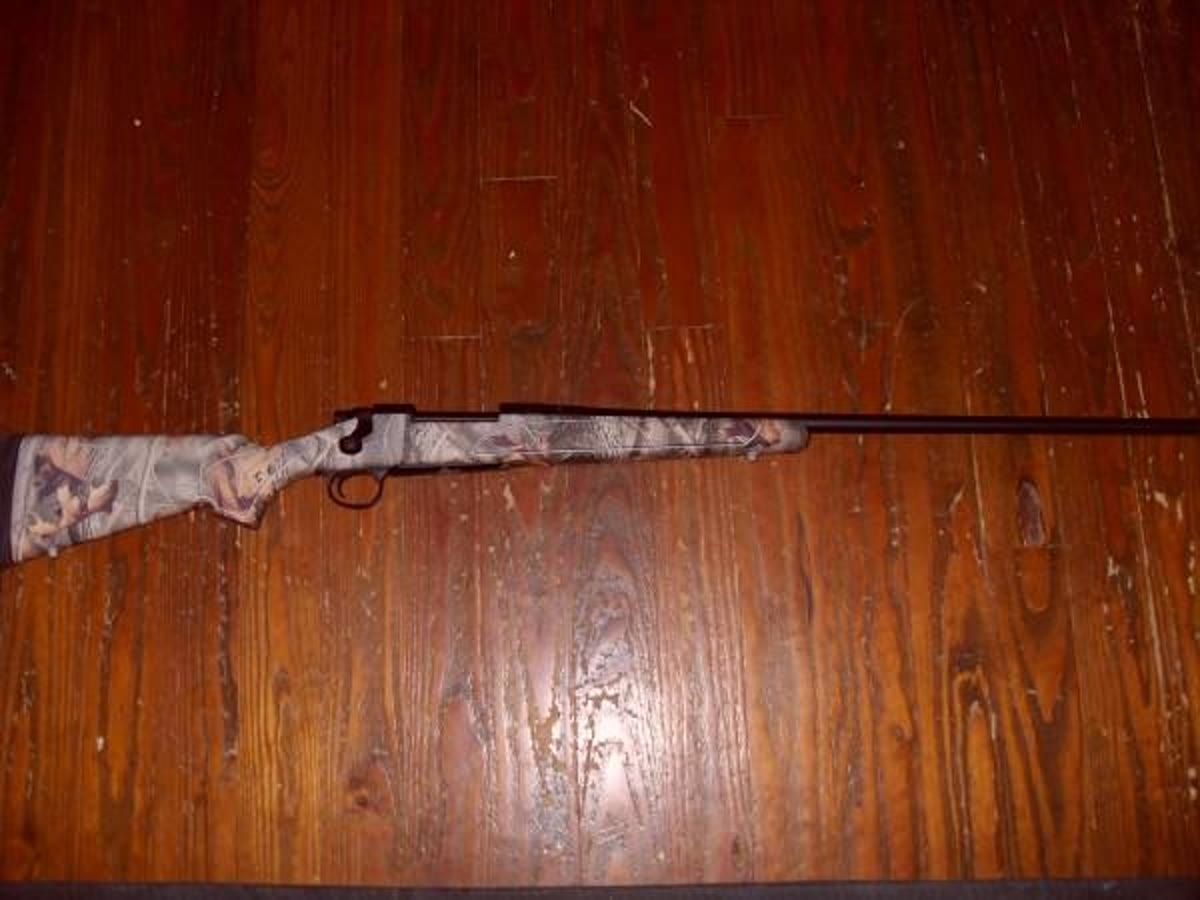
Sixty-plus years after its introduction, the 7mm Remington Magnum remains one of the most respected and widely used big-game cartridges in the world. Born from a simple idea — that a hunter could take elk at long range without the punishing recoil of a .300 Weatherby — it has earned its place in the pantheon of great American rifle cartridges. This guide covers everything you need to know: the history, the specs, the ballistics, the bullet types, and the real-world applications that make the 7mm Rem Mag a cartridge that still punches above its weight in 2026.
Origin and History: Born from a Practical Problem
The 7mm Remington Magnum was introduced in 1962, launched alongside the new Remington Model 700 bolt-action rifle. The driving force behind its creation was Les Bowman, a hunting editor and guided-hunt outfitter who saw a practical problem in the field: the .300 Weatherby Magnum produced recoil that degraded shot placement for many of his clients, while the .270 Winchester — with the bullets available in the early 1960s — lacked sufficient downrange energy for clean kills on elk at the longer ranges common in guided hunting.
The ideal alternative, the .275 Holland & Holland Magnum, was effectively unavailable in the U.S. market. Bowman’s solution was elegant: take the proven .375 H&H Magnum case, neck it down to .284-inch (7mm) bullet diameter, and trim it to a standard long-action length. The result was a flat-shooting, high-energy magnum with more tolerable recoil than the larger magnums.
The reception was immediate and dramatic. The 7mm Rem Mag substantially took market share from the .264 Winchester Magnum, which entered a sharp decline in popularity and sales after 1962. Winchester answered in 1963 with the .300 Winchester Magnum, and both cartridges have remained among the most popular magnum hunting calibers ever since. Chuck Hawks called it “one of the great all-around rifle cartridges,” and that assessment has aged remarkably well.
A note on modern ownership: Remington’s parent company entered bankruptcy in 2018 and collapsed in 2020. The ammunition business went to Vista Outdoor; the firearms business, including the Model 700 platform, went to the Roundhill Group / RemArms, with production resuming in 2021. The 7mm Rem Mag remains in continuous production across multiple manufacturers.
Specifications: The Numbers Behind the Performance
Cartridge Dimensions
| Feature | Imperial | Metric |
|---|---|---|
| Bullet diameter (nominal / groove) | .284 in | 7.2 mm |
| Land (bore) diameter | .277 in | 7.0 mm |
| Neck diameter | .315 in | 8.0 mm |
| Shoulder diameter | .491 in | 12.5 mm |
| Base diameter | .512 in | 13.0 mm |
| Rim diameter | .532 in | 13.5 mm |
| Case length | 2.50 in | 64 mm |
| Overall length (COL) | 3.29 in | 84 mm |
| Shoulder angle (half-angle) | 25° | 25° |
| Rifling twist (standard) | 1:9.5 in | 241 mm |
| Rifling grooves | 6 | 6 |
| Case capacity | 82.0 gr H₂O | 5.31 cm³ |
| Primer | Large Rifle Magnum | — |
Pressure Standards
| Standard | Type | Value |
|---|---|---|
| CIP Pmax | Piezo | 430.00 MPa / 62,366 psi |
| CIP Proof (125% of Pmax) | Piezo | 537.50 MPa / 77,958 psi |
| SAAMI MAP | Piezo | 61,000 psi / 420.58 MPa |
| SAAMI (copper crusher) | CUP | 52,000 CUP |
Important distinction: CUP (Copper Unit of Pressure) and piezo psi are not the same scale. The crusher figure (52,000 CUP) is numerically lower than the piezo MAP (61,000 psi) because the two measurement systems are calibrated differently. Never interchange them.
Parent Case Lineage
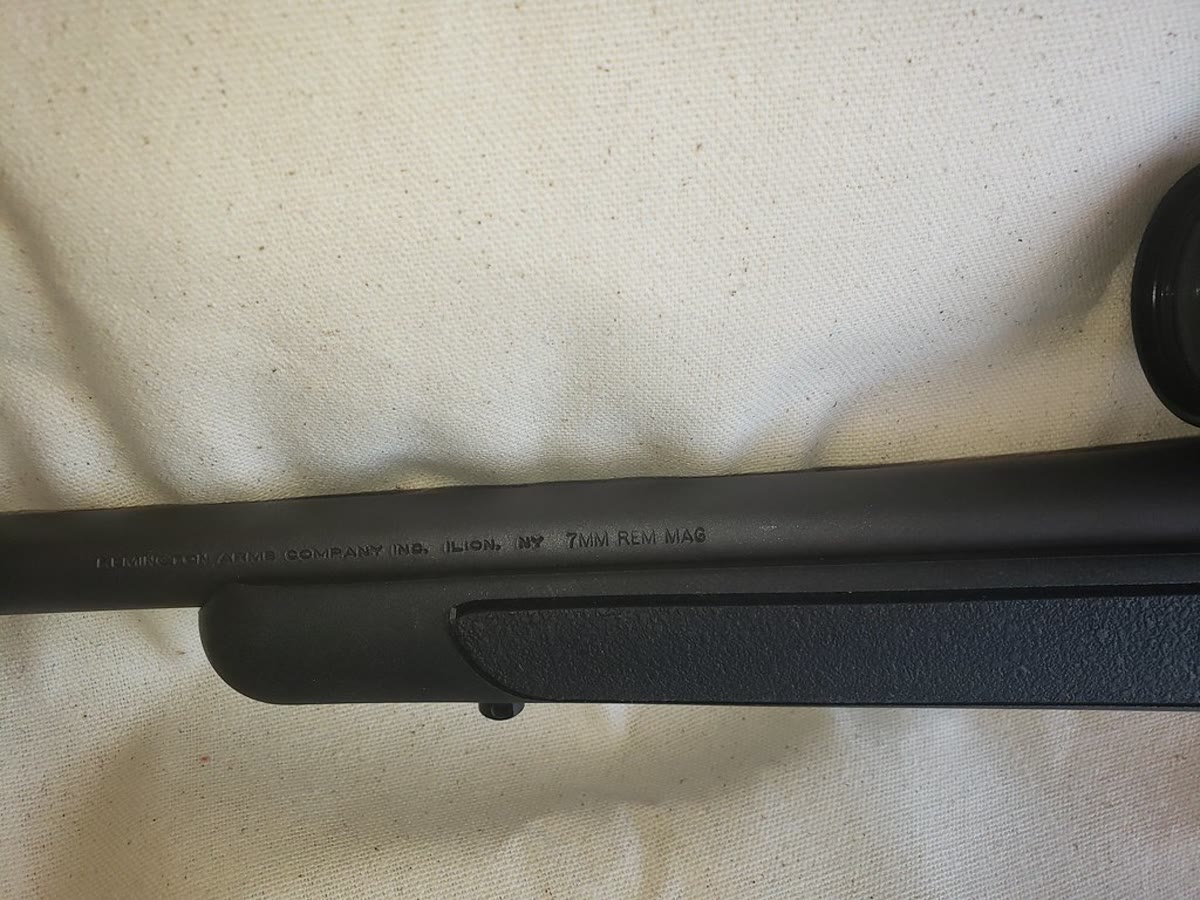
The 7mm Rem Mag is a belted magnum derived from the .375 Holland & Holland Magnum case, necked down to .284 inches. The belt’s original purpose was precise headspace control — the H&H design’s gentle shoulder eased extraction but was unsuitable as a headspace datum. The 7mm Rem Mag sits in the same shortened H&H-derived family as the .264 Winchester Magnum, .338 Winchester Magnum, and .458 Winchester Magnum. It is a standard long-action cartridge.
⚠️ Common misconception: The 7mm Rem Mag is sometimes incorrectly labeled “7x64mmB.” That designation belongs to the separate 1917 Brenneke cartridge, which is rimless and not interchangeable with the belted 7mm Rem Mag. The official CIP designation is “7 mm Rem. Mag.”
Ballistics: What the 7mm Rem Mag Actually Does Downrange
Factory Load Performance
| Maker | Bullet | MV (fps) | ME (ft-lbs) | G1 BC |
|---|---|---|---|---|
| Hornady | 162 gr ELD-X | 3,000 | 3,237 | 0.621 |
| Federal | 150 gr Trophy Copper | 3,025 | 3,047 | 0.498 |
| Federal | 160 gr Nosler Partition | 2,950 | 3,091 | 0.475 |
| Nosler | 160 gr AccuBond | 2,950 | 3,091 | — |
| Barnes | 140 gr TTSX BT | 3,100 | 2,987 | 0.412 |
| Hornady | 154 gr SST | 3,100 | 3,286 | — |
| Berger | 168 gr VLD Hunting | 2,900 | 3,137 | — |
| Winchester | 140 gr Deer Season XP | 3,100 | 2,987 | — |
| Remington | 140 gr Core-Lokt PSP | 2,750 | 2,350 | — |
Published Downrange Trajectory (100-Yard Zero)
The following velocity and energy figures are taken directly from published factory trajectory tables (AmmoSight, 100-yard zero, sea-level standard atmosphere):
| Range (yd) | 150 gr Core-Lokt Velocity | 150 gr Energy | 162 gr ELD-X Velocity | 162 gr Energy |
|---|---|---|---|---|
| 0 (muzzle) | 3,110 fps | 3,222 ft-lb | 2,940 fps | 3,110 ft-lb |
| 100 | 2,831 fps | 2,670 ft-lb | 2,791 fps | 2,802 ft-lb |
| 200 | 2,569 fps | 2,199 ft-lb | 2,647 fps | 2,520 ft-lb |
| 300 | 2,322 fps | 1,797 ft-lb | 2,507 fps | 2,262 ft-lb |
| 400 | 2,089 fps | 1,453 ft-lb | ~2,370 fps* | ~2,020 ft-lb* |
| 500 | 1,869 fps | 1,164 ft-lb | ~2,240 fps* | ~1,800 ft-lb* |
*400/500-yard ELD-X values interpolated from published drop data; exact velocity/energy not listed in the source table.
Key takeaway: The 162 gr ELD-X retains roughly 2,262 ft-lb at 300 yards and approximately 1,800 ft-lb at 500 yards — well above the 1,500 ft-lb ethical threshold for elk and moose. The 150 gr Core-Lokt drops below that threshold around 400 yards, making it a 300-yard deer/elk load rather than a 500-yard big-game round.
Sectional Density
| Bullet (gr) | SD | Interpretation |
|---|---|---|
| 140 | 0.248 | Lightest, fastest, least penetrating |
| 150 | 0.266 | Sweet spot for deer |
| 162 | 0.287 | Balanced for deer/elk |
| 175 | 0.310 | Best penetration class |
| 180 | 0.319 | Maximum penetration in the caliber |
The 7mm’s sectional densities sit between 6.5mm (lower) and .30-caliber (higher) for comparable weights. The 175–180 grain bullets offer the best penetration potential; the 140 grain is the lightest and fastest but least penetrating.
Wind Drift: The 7mm’s Headline Advantage
In a 10 mph full-value crosswind, the 7mm Rem Mag with a 162 gr ELD-X bullet drifts less than every common comparison cartridge at 300 yards:
| Cartridge / Load | Drift @ 300 yd | Drift @ 500 yd | Source |
|---|---|---|---|
| 7mm Rem Mag (162 gr ELD-X) | 4.5 in | not published* | AmmoSight |
| 7mm Rem Mag (150 gr Core-Lokt) | 8.1 in | 24.9 in | AmmoSight |
| .300 Win Mag (180 gr) | 6.7 in | 20.3 in | GunsAndGadgetsDaily |
| 6.5 Creedmoor (143 gr ELD-X) | ~5.2 in* | ~16.1 in* | aggregate estimate |
| .270 Winchester (130 gr) | ~6.8 in* | ~18.7 in* | aggregate estimate |
| .30-06 (165 gr) | ~7.0 in* | ~18.5 in* | aggregate estimate |
*Values marked with an asterisk are aggregate/secondary estimates pending a single primary published chart; the 7mm and .300 Win Mag figures are from primary published trajectory tables.
This is the 7mm’s headline long-range advantage: with the high-BC 162 gr ELD-X, a 10 mph wind moves the bullet roughly 2.2 inches less than a .300 Win Mag 180 gr at 300 yards, and the lighter 150 gr Core-Lokt still holds a 24.9-inch drift at 500 yards. For the open-country hunter, that difference is the line between a clean hit and a miss.
Recoil
| Rifle Weight | 7mm Rem Mag (162 gr) | Comparison |
|---|---|---|
| 7 lb | ~27.7 ft-lbs | — |
| 8 lb | 24.2 ft-lbs | ~5 ft-lb less than .300 Win Mag |
| 9 lb | ~21.5 ft-lb | Manageable for most shooters |
The 7mm Rem Mag sits in the “manageable but assertive” magnum class — noticeably more than .270 Win (~20 ft-lb), roughly 5 ft-lb less than .300 Win Mag (~29–35 ft-lb). A recoil pad or heavier rifle tames it substantially.
Cross-caliber recoil comparison (8-lb rifle, standard free-recoil momentum formula):
| Cartridge / Load | Recoil Energy (ft-lb) | Relative to 7mm |
|---|---|---|
| .308 Winchester (150 gr) | ~15.6 | 35% less |
| .270 Winchester (130 gr) | ~16.8 | 30% less |
| .30-06 Springfield (165 gr) | ~20.3 | 15% less |
| 7mm Remington Magnum (162 gr) | ~23.9 | baseline |
| .300 Winchester Magnum (180 gr) | ~30.1 | 26% more |
Computed using the standard free-recoil energy formula: E = (bullet_gr × vel + 4700 × powder_gr)² / (2 × rifle_weight × 32.174 × 7000²). Values are consistent with published recoil tables from multiple sources within ±1 ft-lb.
Barrel Length Effects
Testing shows approximately 28.2 ft/s velocity loss per inch of barrel shortening, with non-linear hot spots at 24→23 inches (~60 fps) and 21→20 inches (~75 fps). A 22-inch barrel runs roughly 100 fps slower than 24 inches. For most hunting applications, 24 inches is the sweet spot; 26 inches benefits long-range work.
Energy Retention
The 162 gr ELD-X retains approximately 2,000 ft-lbs at 500 yards — about 62% of its muzzle energy. This keeps it above the ~1,500 ft-lb elk threshold at that range. For deer-sized game, energy stays well above the ~1,000 ft-lb threshold out to 500+ yards with 150–162 grain loads.
Bullet Types: Choosing the Right Projectile
Hunting Bullets
| Bullet | Weight | Type | Best For |
|---|---|---|---|
| Winchester Power Max Bonded | 150 / 175 gr | Bonded soft point | Deer / elk |
| Federal Fusion | 150 / 175 gr | Fused copper-jacketed SP | Deer / elk |
| Hornady InterBond | 162 / 175 gr | Bonded polymer tip | Deer / elk |
| Nosler Partition | 150 / 175 gr | Dual-core partition | Elk / moose / tough game |
| Barnes TTSX | 140 / 150 / 165 gr | Monolithic 100% copper | Deer / elk / lead-free areas |
| Swift A-Frame | 160 / 175 gr | Dual-core bonded | Elk / moose / large game |
| Remington Core-Lokt | 150 / 175 gr | Bonded soft point | Deer / elk |
| Browning BPR | 175 gr | Plated soft point | General hunting |
| Woodleigh Protected Point | 175 gr | Magnum-rated solid/soft-nose | Large-bodied / tough game |
Terminal behavior by weight class:
- 140 gr: Very fast expansion on light-framed game. Best under 300 yards on larger animals. Can fragment on heavy bone at close range.
- 150 gr: The sweet spot for whitetail and mule deer. Reliable expansion, good penetration, manageable recoil.
- 160–165 gr: Best for elk and large game. Deeper penetration, controlled expansion, handles heavy bone well.
- 175 gr: Good for elk and moose. Flatter trajectory than 150 gr. Slightly slower expansion but deeper penetration. Verified factory specs: HSM GameKing 175gr (Sierra bullet) = 2,860 fps / 3,179 ft-lb (Bud’s Gun Shop); Remington 175gr Core-Lokt = 2,860 fps / 3,178 ft-lb / G1 0.427 (BallisticsBoard); Sierra 175gr GameKing SBT G1 = 0.505 (Sierra Bullets).
- Monolithic copper (Barnes TTSX): Nearly 100% weight retention, 2x expansion, no lead fragmentation. Ideal for lead-free areas.
- Partition (Nosler): Gold standard for tough game. Front core expands, rear core penetrates.
- A-Frame (Swift): Similar to Partition but with bonded jacket. Preferred by professional hunters.
Match and Precision Bullets
| Bullet | Weight | BC (G1) | Best For |
|---|---|---|---|
| Sierra MatchKing HPBT | 175 / 180 / 195 gr | 0.505–0.570 | 600–1,200 yd target |
| Hornady ELD-M | 168 / 175 / 195 gr | 0.571–0.640 | 600–1,000+ yd target |
| Berger Hybrid Hunter | 168 / 175 / 180 gr | 0.550–0.600 | Hunt/target crossover |
| Lapua Scenar | 178 / 185 gr | 0.570–0.600 | Premium target work |
Long-Range Hunting Bullets
| Bullet | Weight | BC (G1) | Expansion Threshold | Effective Range |
|---|---|---|---|---|
| Hornady ELD-X | 162 gr | 0.515 | ~1,800 fps (~850 yd) | 0–800+ yd |
| Nosler AccuBond Long Range | 175 gr | 0.570 | ~1,350 fps (~900 yd) | 0–1,000+ yd |
| Berger Hybrid Hunter | 180 gr | 0.600 | ~1,600 fps | 0–800+ yd |
The Nosler AccuBond Long Range is specifically designed for 1,000+ yard hunting — its bonded construction mushrooms as low as 1,350 fps and stays together up to 3,000 fps.
Hunting Applications: One Cartridge, Many Species
Whitetail and Mule Deer
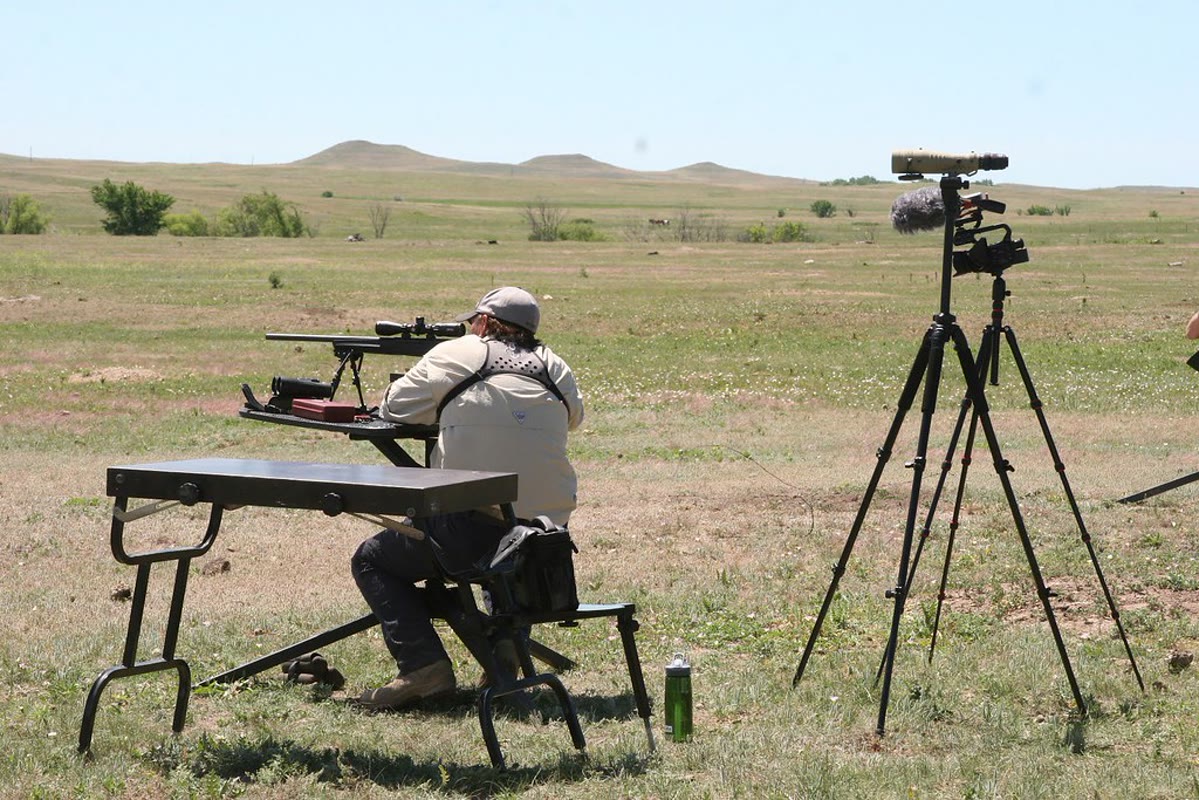
The 7mm Rem Mag is arguably overkill for whitetail at typical Eastern woods ranges under 150 yards, but in open country it shines. Best loads: 150 gr Core-Lokt, 150 gr Fusion, 162 gr ELD-X, 140 gr Barnes TTSX. Effective range: 0–400 yards comfortably, 0–600+ with premium bullets and a skilled shooter. The high velocity produces dramatic hydrostatic shock on whitetail. Avoid raking shots at close range with light bullets — can cause excessive meat damage.
Elk
The 7mm Rem Mag was literally designed for elk. Best loads: 160 gr Nosler AccuBond, 162 gr ELD-X, 160 gr Swift A-Frame, 165 gr Barnes TTSX, 175 gr Nosler Partition. Minimum energy: ~1,500 ft-lbs at impact. The 7mm maintains this well past 500 yards with 160+ grain bullets. A 160 gr AccuBond zeroed at 200 yards strikes about 7–8 inches low at 350 yards — you can hold dead-on with confidence on an elk-sized vital zone.
Moose
Moose are large, heavy-bodied animals (800–1,500 lbs) requiring deep penetration. Best loads: 160 gr Swift A-Frame, 175 gr Nosler Partition, 165 gr Barnes TTSX. Bonded, partition, or monolithic copper bullets are essential. 150 gr bullets may lack penetration on a moose’s massive shoulder. Some hunters prefer larger calibers (.338, .375) for insurance, but the 7mm with proper bullet construction is adequate.
African Plains Game
The 7mm Rem Mag has a strong track record on African plains game:
- Impala, Springbok, smaller antelope: 140 gr Barnes TTSX, 150 gr Nosler Partition
- Kudu, Wildebeest, Zebra: 160 gr Nosler AccuBond, 160 gr Swift A-Frame, 162 gr ELD-X
- Eland, large Kudu, Sable: 175 gr Nosler Partition, 175 gr Swift A-Frame (minimum recommended)
Limitation: The 7mm Rem Mag is NOT recommended for dangerous game (lion, leopard, buffalo, elephant). It lacks the caliber and energy for these species.
Mountain Hunting
The 7mm Rem Mag’s trajectory advantage is critical in mountain terrain where angles and distances are deceptive. A typical 7mm rifle weighs 7–8 lbs versus 8–9+ lbs for larger magnums. The high-BC bullets handle crosswinds better than .30 caliber equivalents, and the flat trajectory means fewer hold-over errors on uphill or downhill shots.
Protection and Defense: An Honest Assessment
Here is where the 7mm Rem Mag’s reputation needs a reality check. The cartridge is a hunting and precision tool, not a defensive round, and it is generally considered overpowered for typical home-defense distances.
Home Defense
The 7mm Rem Mag is a high over-penetration risk in home defense scenarios. Its high velocity (2,800–3,100 fps) and efficient bullet design can produce clean pass-throughs through walls, doors, and barriers. In drywall and interior walls, many 7mm bullets may fail to expand, resulting in full-energy over-penetration through multiple walls. Verdict: Not recommended for home defense. A 12-gauge with reduced-load buckshot, 9mm with +P JHP, or .40 S&W with controlled-expansion ammo are far better choices for interior defense.
Rural Property Defense
For rural property owners with large acreage (100+ acres), a 7mm Rem Mag can serve as a long-range deterrent and defense tool against threats at 200–500+ yards. The flat trajectory and high velocity are effective at ranges where handguns and shotguns cannot reach. Best loads: 150 gr or 175 gr bonded soft point for controlled expansion and deep penetration. Requires a safe backstop.
Law Enforcement: The Secret Service Connection
The U.S. Secret Service Uniformed Division Counter Sniper teams used rifles chambered in 7mm Remington Magnum for a number of years. The ammunition was loaded by HSM (Hunting Special Munitions) with Winchester FGMM brass, Winchester 215M LMP primers, and 168 grain Sierra MatchKing projectiles. The rifles were Remington 700-based “JAR” rifles made in-house at Beltsville, Maryland. The 7mm was chosen for its high BC, flat trajectory in urban environments, and because it was quieter than the .300 Win Mag — relevant for urban operations. The Secret Service has since transitioned to .300 Winchester Magnum.
Why It’s Overkill for Most Defense Scenarios
- Excessive velocity: 2,800–3,100 fps is far beyond what’s needed for defensive encounters at 0–25 yards.
- Over-penetration: High risk through walls, vehicles, and barriers.
- Recoil: Significant recoil makes rapid follow-up shots difficult.
- Maneuverability: Long-barreled bolt-action rifles are unwieldy in close quarters.
Practical takeaway: Buy the 7mm Rem Mag for hunting, not for defense. Its documented law-enforcement use is a specialized application, not a civilian self-defense scenario.
Target Shooting and Competition
The 7mm Rem Mag is a capable long-range target cartridge, historically used by 1,000-yard competitive shooters for decreased wind drift. With match-grade ammunition and a well-tuned rifle, sub-0.5 MOA groups at 100 yards are achievable. The 168 gr VLD bullet at 2,900 fps remains supersonic past 1,200 yards.
Sierra MatchKing 175 gr with IMR 7828SSC: 67.8 grains produces 2,950 fps / 3,091 ft-lbs — a proven accuracy load.
In F-Class and PRS/NRL competition, the 7mm Rem Mag sees limited use. Most competitors prefer 6mm, 6.5mm, or .30 caliber for a better balance of recoil, barrel life, and ballistic performance. The 7mm’s belt can complicate bolt cycling in some custom actions, and its recoil is punishing over a full match day. However, it remains competitive in F-Class Open and long-range hunting matches.
Rifle Platforms
Remington 700
The definitive platform for the 7mm Rem Mag. Introduced together in 1962, the Model 700 became the cartridge’s home. Variants include BDL, CDL, Sendero, LRP, SPS, and Mountain Rifle. The Remington 700 footprint has the largest aftermarket support of any bolt-action rifle — stocks, triggers, barrels, bolts, and chassis systems are widely available.
Winchester Model 70
A premium bolt-action hunting rifle with controlled-round feed and three-position safety. Available in Featherweight and Super Grade variants. Generally 1–1.5 MOA with factory ammo; sub-MOA achievable with handloads.
Browning X-Bolt / A-Bolt / BAR
The X-Bolt features a 3-lug bolt design known for accuracy and smooth cycling. The BAR semi-automatic is also available in 7mm Rem Mag — “I’ve killed many deer with a BAR in 7mm Rem Mag. It always shot most accurately with Remington Core-Lokt.”
Ruger Hawkeye / American
The Hawkeye features controlled-round feed and a strong Mauser-style action. The American Rifle is a budget-friendly option with good accuracy for the price.
Custom Builders
McWhorter Custom Rifles offers 7mm Rem Mag with a 1/2 MOA guarantee. Quarter Minute Magnums specializes in accurate magnum rifles for 1,000-yard competition. BAT Machine, Surgeon Rifles, and other premium builders also chamber the 7mm. Custom builders typically achieve 0.5 MOA or better with handloaded match ammunition.
Barrel Options
Standard factory twist is 1:9.5 inches, stabilizing bullets up to ~175 gr. For heavier match bullets (175 gr+), 1:8 or 1:9 twist rates are recommended. Popular barrel makers include Bartlein, Brux, Krieger, Lilja, and Criterion. Barrel lengths range from 22 inches (mountain) to 32 inches (target).
Ammunition Market and Reloading
Factory Availability
The 7mm Rem Mag is one of the most widely available magnum rifle cartridges in North America. Brands offering it include Federal, Hornady, Nosler, Winchester, Remington, Barnes, Browning, Swift, Woodleigh, Norma, PPU, and Sellier & Bellot. Bullet weights range from 139 to 180 grains.
Pricing (2024–2026)
| Tier | Examples | Price per Box (20) |
|---|---|---|
| Budget | Remington Core-Lokt, PPU | $25–$35 |
| Mid-range | Federal Fusion, Hornady SST | $30–$45 |
| Premium | Nosler Partition, Barnes TTSX, Hornady ELD-X | $40–$60 |
| Match | Federal Gold Medal, Hornady Match | $45–$65 |
Reloading
Top powders: H4831SC (superb accuracy, ultra-low ES/SD), IMR 7828SSC (Sierra’s recommended accuracy powder), RL 19, N560 (Vihtavuori). Primers: Winchester 215M, Federal 215M, CCI 250 (large rifle magnum). Brass: Winchester, Remington, Federal, Norma — widely available at gun shows and reloading supply stores.
Load data highlights:
- Sierra 175 gr MatchKing / IMR 7828SSC 67.8 gr → 2,950 fps / 3,091 ft-lbs
- Barnes 140 gr TTSX BT / multiple powders, COAL 3.240″
- General velocity range: 2,700–3,100 fps depending on bullet weight and powder charge
Honest Pros and Cons
Pros:
- Flat trajectory and high velocity for open-country, long-shot hunting
- Best-in-class wind drift among common hunting calibers (162 gr ELD-X)
- Outstanding retained energy — ~2,000 ft-lbs at 500 yd on 162 gr loads
- Huge factory bullet selection from deer to moose, plus match bullets
- Proven 60+ year track record on big game worldwide
- Manageable recoil for a magnum — ~5 ft-lb less than .300 Win Mag
- One of the most widely available magnum cartridges
- Extensive reloading data from every major manufacturer
- Better barrel life than 7mm Weatherby Mag and 7mm STW
Cons:
- Belted magnum design adds weight and complicates headspacing
- Outclassed by newer cartridges (7mm PRC, 7mm Backcountry) on paper
- Not ideal for home defense — high over-penetration risk
- Not a dangerous-game cartridge
- Recoil exceeds non-magnums — may be uncomfortable for smaller-framed shooters
- Long action only — cannot be chambered in short-action rifles
- Magnum-level barrel life (~2,000–3,000 rounds)
- Aging 1962 design in a market with modern alternatives
Bottom Line
The 7mm Remington Magnum is a flat-shooting, hard-hitting, versatile big-game cartridge that rewards a shooter who respects its limits. Born in 1962 from the .375 H&H case head and sized for a standard-length action, it delivers magnum velocity and energy retention that still turn heads today — and that earned it a second life in law-enforcement service alongside its hunting pedigree.
It is not a do-everything defensive tool, and it is not a soft-kicking plinker. But for the open-country hunter who wants reach, authority, and a cartridge that still hits hard at 500 yards, few rounds have earned their reputation more honestly. The 7mm Rem Mag handles whitetail through elk, African plains game through mountain sheep — one rifle, one caliber, many applications.
Newer cartridges like the 7mm PRC offer improved ballistics on paper, but the 7mm Rem Mag’s unmatched combination of ammunition availability, rifle options, reloading data, and proven track record keeps it firmly in the conversation. It is not the most advanced 7mm cartridge, but it is arguably the most practical.
Pick the right bullet for the game, keep your shots inside ethical velocity, and the 7mm Rem Mag will still be punching tickets for decades to come.
Shop 7mm Remington Magnum Gear at Patriotic Firearms
Looking for a 7mm Rem Mag rifle, factory ammo, or reloading components? Browse bolt-actions, hunting loads, and brass at Patriotic Firearms.
Shop 7mm Remington Magnum at PatrioticFirearms.com →
Stay Informed
Get the latest firearms news, gear reviews, and 2nd Amendment updates delivered to your inbox.
Sign up for the Patriotic Firearms newsletter →
Sources & Methodology
All ballistic data in this guide is sourced from published factory trajectory tables, manufacturer specifications, and standard engineering formulas. Key sources:
- Trajectory tables (150gr Core-Lokt, 162gr ELD-X): AmmoSight.com published factory trajectory tables, 100-yard zero, sea-level standard atmosphere
- .300 Win Mag 180gr wind drift: GunsAndGadgetsDaily verified .300 Win Mag ballistics chart (10 mph full-value crosswind)
- 175gr factory specs: Bud’s Gun Shop (HSM GameKing 175gr), BallisticsBoard.com (Remington 175gr Core-Lokt), Sierra Bullets official (175gr GameKing SBT G1 0.505)
- Pressure standards: CIP Technical Document for the Control of Cartridges (TDCC) and SAAMI ANSI/SAMI Z299.5 standard
- Recoil calculations: Standard free-recoil momentum energy formula: E = (bullet_gr × vel + 4700 × powder_gr)² / (2 × rifle_weight × 32.174 × 7000²), computed at 8-lb rifle weight
- Cartridge dimensions: CIP TDCC primary drawing, cross-checked against Wikipedia and SAAMI data
- Historical information: Remington product announcements, Les Bowman interviews, Chuck Hawks reviews, Vista Outdoor / RemArms corporate records
Verification notes:
- All velocity, energy, and wind drift figures marked with an asterisk (*) are interpolated or aggregate estimates where primary published data was unavailable
- The “1.40 rule → ~85,000 psi” figure sometimes cited for SAAMI proof pressure is not a recognized standard and has been removed from this guide; the correct CIP proof value is 125% of Pmax = 77,958 psi
- Recoil figures are computed values consistent with published recoil tables within ±1 ft-lb
- 400/500-yard ELD-X velocity/energy values are interpolated from published drop data; exact figures not listed in the source table
About the Author
Nathan Grill is a lifelong firearms enthusiast and writer covering rifles, ammunition, and the American shooting tradition for Patriotic Firearms. His work focuses on honest, research-backed guides that help hunters and gun owners make informed decisions.
Disclaimer: This article is for informational and educational purposes only. Firearm laws and hunting regulations vary by state and change frequently. Always consult your local laws, current hunting digests, and a qualified professional before purchasing, carrying, or hunting with any firearm.