The .22-250 Remington: America’s Premier Varmint Cartridge — A Complete Guide
If you have ever watched a prairie dog vanish in a puff of dust at 350 yards, or dropped a coyote across a frozen wheat field at first light, chances are the rifle doing the work was chambered in .22-250 Remington. Introduced in 1963, this cartridge gave American hunters something the .223 Remington could not: genuine magnum-class velocity in a short action, with a flat trajectory that makes 400-yard shots feel routine. For more than sixty years, it has been the undisputed king of the varmint fields and a trusted companion for open-country predator hunters.
This guide covers everything you need to know about the .22-250 Remington: where it came from, what the numbers actually say, which bullets to run, and — just as importantly — where it shines and where it falls short.
What the Name Means
The “.22” in the name refers to the nominal bullet diameter — precisely .224 inches (5.7 mm). The “250” is a legacy reference to the cartridge’s original velocity target: 2,500 feet per second. In practice, the .22-250 leaves the muzzle well north of 3,500 fps with most factory loads, making the “250” in the name a modest understatement.
The “A” designation (.22-250A Remington) indicates the cartridge was proof-tested at higher pressure levels per SAAMI standards. You will see both designations on factory ammunition boxes and reloading manuals. They refer to the same cartridge; the “A” simply reflects the updated proof standard.
It is worth being clear up front: the .22-250 is not the same as the .220 Swift (a different, older cartridge with different case geometry), and it is not a necked-down .223 Remington. The .22-250 is built on the .250-3000 Savage case necked down to .224 — a completely different parent case with significantly more powder capacity.
Origin and History: Born for the Varmint Fields
The .22-250 Remington was introduced in 1963, chambered in the Remington Model 700 bolt-action rifle. Remington’s engineering team developed the cartridge to offer varmint hunters higher velocity than the .222 Remington and .223 Remington while using a proven, available parent case — the .250-3000 Savage, which had been SAAMI-standardized since 1915.
The motivation was straightforward: varmint hunters wanted more speed and a flatter trajectory than the .223 could deliver, but the .220 Swift — the only faster .224 cartridge at the time — was a long-action round with a reputation for short barrel life and inconsistent accuracy. The .22-250 hit the sweet spot: short action, flat trajectory, excellent accuracy, and factory ammunition availability.
The market response was immediate. The .22-250 quickly became the benchmark varmint and predator cartridge, filling the gap between the .223 Remington and the .220 Swift for hunters who wanted factory-loaded performance without the Swift’s quirks.
Specifications: The Numbers Behind the Cartridge
The .22-250 Remington is a short-action, bottlenecked, rimless cartridge. Here are the key dimensions and pressure figures:
| Specification | Value |
|---|---|
| Bullet diameter | .224 in (5.7 mm) |
| Neck diameter | .250 in (6.35 mm) |
| Shoulder diameter | .290 in (7.37 mm) |
| Body diameter | .379 in (9.63 mm) |
| Base/Rim diameter | .473 in (12.01 mm) |
| Case length | 2.015 in (51.18 mm) |
| Overall length (COAL) | 2.350 in (59.69 mm) |
| Shoulder angle | ~20° |
| SAAMI max pressure (MAP) | 55,000 psi (UNVERIFIED) |
| SAAMI proof pressure | 67,000 psi (UNVERIFIED) |
| CIP max pressure (Pmax) | 4,400 bar / ~63,800 psi (UNVERIFIED) |
| CIP proof pressure | 5,500 bar (UNVERIFIED) |
| Action length | Short action |
| Rifling twist (standard) | 1:14 in |
The short action is a key practical advantage — it allows lighter, faster-cycling rifles compared to long-action magnums. The standard 1:14″ twist stabilizes bullets from 40 to approximately 63.5 grains reliably. Heavier bullets (75+ grains) benefit from faster twists (1:12″ or 1:9″) found in some custom and target rifles.
Note on pressure standards: SAAMI uses psi/CUP measurements; CIP uses bar. CIP proof pressures are generally higher than SAAMI working pressures. The .22-250A designation specifically relates to the updated proof testing standard.
Parent Case and Lineage: The .250-3000 Savage Family
The .22-250 Remington is built on the .250-3000 Savage case, introduced in 1915 and designed by Paul Mauser for Savage Arms. This is a critical distinction from the common misconception that the .22-250 descends from the .220 Swift — it does not. The .220 Swift (1935) is a completely different cartridge with different case geometry.
The .250-3000 Savage has been necked down to create several wildcat and standard cartridges:
- .22-250 Remington (necked to .224) — standardized 1963
- .22-250 Ackley Improved (wildcat, improved shoulder geometry)
- 6mm-250 (necked to 6mm/.243) — wildcat
- .250-3000 Savage (parent, unchanged)
The .22-250 is the only member of this family to achieve widespread commercial success.
Misconceptions to Clear Up
| Misconception | Reality |
|---|---|
| “It’s a necked-down .220 Swift” | False. It is built on the .250-3000 Savage case, a completely different parent. |
| “It’s the same as the .223 Remington” | False. The .223 has a shorter case (1.760″), less powder capacity, and lower velocity. |
| “The ‘A’ means a different cartridge” | False. .22-250 and .22-250A are the same cartridge; the ‘A’ reflects an updated proof standard. |
| “It’s a long-action cartridge” | False. It is a short-action round, same bolt face as the .308 Winchester family. |
Ballistics: What the Numbers Actually Do
The .22-250’s reputation is built on its ballistics, and the numbers back it up. Here are representative factory loads:
| Manufacturer | Load | Bullet Weight (gr) | Muzzle Velocity (fps) | Muzzle Energy (ft-lbs) | G1 BC |
|---|---|---|---|---|---|
| Hornady | V-MAX | 50 | 3,800 | 1,604 | 0.230 |
| Hornady | V-MAX | 55 | 3,750 | 1,717 | 0.335 |
| Federal | Vital-Shok | 50 | 3,800 | 1,604 | 0.242 |
| Federal | Vital-Shok | 55 | 3,600 | 1,583 | 0.243 |
| Winchester | Super-X | 55 | 3,680 | 1,653 | 0.243 |
| Remington | Core-Lokt | 55 | 3,600 | 1,583 | 0.243 |
| Nosler | Ballistic Tip | 55 | 3,700 | 1,670 | 0.335 |
| Barnes | VOR-TX | 55 | 3,700 | 1,670 | 0.271 |
Published Downrange Trajectory (100-yd Zero)
Load A: Hornady 55gr V-MAX, 3,750 fps, BC 0.335
| Distance (yd) | Velocity (fps) | Energy (ft-lbs) | Drop (in) |
|---|---|---|---|
| 0 | 3,750 | 1,717 | -1.7 |
| 100 | 3,450 | 1,450 | 0 |
| 200 | 3,170 | 1,226 | -3.2 |
| 300 | 2,910 | 1,033 | -10.5 |
| 400 | 2,670 | 870 | -23.0 |
| 500 | 2,450 | 732 | -42.0 |
Load B: Federal 50gr Vital-Shok, 3,800 fps, BC 0.242
| Distance (yd) | Velocity (fps) | Energy (ft-lbs) | Drop (in) |
|---|---|---|---|
| 0 | 3,800 | 1,604 | -1.7 |
| 100 | 3,480 | 1,346 | 0 |
| 200 | 3,180 | 1,125 | -3.5 |
| 300 | 2,900 | 934 | -11.2 |
| 400 | 2,640 | 774 | -24.5 |
| 500 | 2,400 | 640 | -45.0 |
Trajectory Comparison (100-yd Zero)
| Distance (yd) | .22-250 (55gr) | .223 Rem (55gr) | .243 Win (100gr) | 6.5 Creedmoor (140gr) | .220 Swift (50gr) |
|---|---|---|---|---|---|
| 100 | 0 | 0 | 0 | 0 | 0 |
| 200 | -3.2 | -5.8 | -3.0 | -2.5 | -3.0 |
| 300 | -10.5 | -15.5 | -8.5 | -6.5 | -10.0 |
| 400 | -23.0 | -32.0 | -18.5 | -13.5 | -22.0 |
| 500 | -42.0 | -56.0 | -33.0 | -24.0 | -40.0 |
The .22-250 is not the flattest-shooting cartridge in this group — the 6.5 Creedmoor and .243 Win beat it at extended range thanks to higher-BC bullets. But among .224-caliber cartridges, it is the clear leader, and its trajectory is dramatically flatter than the .223 Remington.
Wind Drift (10 mph Full-Value Crosswind)
| Distance (yd) | .22-250 (55gr, BC 0.335) | .223 Rem (55gr, BC 0.243) | .243 Win (100gr, BC 0.400) | 6.5 Creedmoor (140gr, BC 0.625) | .220 Swift (50gr, BC 0.230) |
|---|---|---|---|---|---|
| 100 | 0.6 | 0.8 | 0.5 | 0.3 | 0.7 |
| 200 | 2.5 | 3.5 | 2.0 | 1.2 | 2.8 |
| 300 | 5.8 | 8.2 | 4.5 | 2.6 | 6.5 |
| 400 | 10.5 | 15.0 | 8.0 | 4.5 | 12.0 |
| 500 | 16.5 | 24.0 | 12.5 | 7.0 | 19.0 |
At 300 yards in a 10 mph crosswind, the .22-250 drifts 5.8 inches — noticeably less than the .223’s 8.2 inches, but more than the 6.5 Creedmoor’s 2.6 inches. For its caliber class, the .22-250 holds wind well.
Recoil (Formula-Derived, 8-lb Rifle)
| Cartridge | Bullet (gr) | Velocity (fps) | Recoil Energy (ft-lbs) |
|---|---|---|---|
| .22-250 Rem | 55 | 3,750 | 3.2 |
| .223 Rem | 55 | 3,250 | 1.5 |
| .243 Win | 100 | 2,900 | 3.5 |
| 6.5 Creedmoor | 140 | 2,710 | 3.8 |
| .220 Swift | 50 | 3,900 | 3.3 |
The .22-250 kicks roughly twice as hard as the .223 Remington, but remains mild by any practical standard. Extended varmint sessions are comfortable, and the recoil is well within what most shooters can manage without flinching.
Barrel Length Effects
- Velocity loss per inch: Approximately 25–30 fps per inch of barrel shortened from standard (24″ for bolt actions).
- Barrel life: Expect 2,000–4,000 rounds before significant accuracy loss with standard powders. The .22-250 is a hot cartridge relative to its bore diameter, so throat erosion is a real consideration for high-volume shooters.
- Practical implications: Shorter barrels (20–22″) sacrifice 50–100 fps but remain effective for varminting. The cartridge’s flat trajectory means velocity loss has minimal practical impact on point of impact within ethical ranges.
Energy Retention
| Distance (yd) | .22-250 55gr (ft-lbs) | .223 Rem 55gr (ft-lbs) | .243 Win 100gr (ft-lbs) | 6.5 Creedmoor 140gr (ft-lbs) |
|---|---|---|---|---|
| 0 | 1,717 | 1,286 | 1,865 | 2,282 |
| 100 | 1,450 | 1,080 | 1,620 | 2,050 |
| 200 | 1,226 | 900 | 1,400 | 1,840 |
| 300 | 1,033 | 750 | 1,200 | 1,650 |
| 400 | 870 | 620 | 1,020 | 1,480 |
| 500 | 732 | 510 | 870 | 1,320 |
Energy thresholds by game animal:
- Varmints: >100 ft-lbs
- Predators (coyote): >200 ft-lbs
- Antelope: >500 ft-lbs
- Deer: >1,000 ft-lbs (varies by state regulation)
The .22-250 retains over 1,000 ft-lbs to approximately 300 yards with the 55-grain load — enough for antelope and marginal for deer at extended range.
Bullet Types: Choosing the Right Projectile
Varmint and Predator Bullets (35–55 gr)
| Bullet | Weight (gr) | BC (G1) | Intended Use |
|---|---|---|---|
| Hornady V-MAX | 40 | 0.230 | Prairie dogs, extreme velocity, explosive expansion |
| Hornady V-MAX | 50 | 0.285 | Varmint/predator, flat trajectory |
| Hornady V-MAX | 55 | 0.335 | Long-range varmint, highest BC in class |
| Berger Varmint | 50 | 0.285 | Varmint, thin-jacket explosive |
| Berger Varmint | 55 | 0.335 | Varmint/predator, match-grade accuracy |
| Nosler Ballistic Tip | 50 | 0.242 | Varmint/predator, controlled expansion |
| Nosler Ballistic Tip | 55 | 0.338 | Varmint/deer-size game |
| Winchester Ballistic Silvertip | 55 | 0.315 | Varmint/predator, polymer tip |
| Sierra BlitzKing | 50 | 0.242 | Varmint, thin jacket |
| Sierra BlitzKing | 55 | 0.335 | Varmint/predator, match accuracy |
Match and Precision Bullets (52–75 gr)
| Bullet | Weight (gr) | BC (G1) | Intended Use |
|---|---|---|---|
| Sierra MatchKing | 52 | 0.338 | Target/competition, hollow point |
| Sierra MatchKing | 63.5 | 0.330 | Target/competition, hollow point |
| Sierra MatchKing | 75 | 0.376 | Long-range target, requires fast twist |
| Berger Target | 73.5 | 0.375 | F-Class/PRS, J4 precision |
| Berger Target | 75 | 0.376 | F-Class/PRS, J4 precision |
| Lapua Scenar | 52 | 0.338 | Target/competition |
| Lapua Scenar | 63.5 | 0.330 | Target/competition |
Bonded and Heavier Hunting Bullets (55–75 gr)
| Bullet | Weight (gr) | BC (G1) | Intended Use |
|---|---|---|---|
| Nosler AccuBond | 55 | 0.338 | Deer/antelope, bonded construction |
| Nosler AccuBond | 60 | 0.335 | Deer/antelope, bonded construction |
| Barnes TSX | 55 | 0.242 | Deer/predator, solid copper |
| Barnes TSX | 62 | 0.335 | Deer/antelope, solid copper |
| Barnes LRX | 70 | 0.375 | Long-range deer, solid copper |
| Swift A-Frame | 55 | 0.242 | Deer, bonded front/rear |
| Swift Scirocco II | 60 | 0.335 | Deer/antelope, bonded |
| Hornady SST | 55 | 0.335 | Deer/antelope, polymer tip |
| Hornady InterBond | 60 | 0.335 | Deer, bonded |
Bullet Weight Classes and Stability
| Class | Weight Range | Best For | Twist Requirement |
|---|---|---|---|
| Ultra-light | 35–40 gr | Prairie dogs, extreme velocity | 1:14″ standard |
| Standard varmint | 45–55 gr | Groundhogs, coyotes, general varmint | 1:14″ standard |
| Match/long-range | 63.5–75 gr | F-Class, PRS, long-range precision | 1:12″ or faster recommended |
| Heavy hunting | 60–75 gr | Deer, antelope | 1:12″ or faster |
The standard 1:14″ twist stabilizes up to approximately 63.5 grains reliably. The 75-grain bullets require 1:12″ or faster for reliable stabilization — a critical consideration if you plan to run heavy bullets.
Hunting Applications by Species
Varmints
| Species | Recommended Bullet | Range | Notes |
|---|---|---|---|
| Prairie dogs | 40–50 gr V-MAX/Berger | 100–350 yd | Explosive expansion, minimal pelt damage |
| Groundhogs | 50–55 gr V-MAX/Ballistic Tip | 100–400 yd | Standard varmint load, very effective |
| Coyotes | 50–55 gr V-MAX/Ballistic Tip | 100–400 yd | Good pelt preservation at moderate range |
| Foxes | 50–55 gr V-MAX | 100–300 yd | Similar to coyote |
| Raccoons | 50–55 gr | 50–200 yd | Night hunting, adequate power |
Predators
| Species | Recommended Bullet | Range | Notes |
|---|---|---|---|
| Coyotes | 55–60 gr (Ballistic Tip, AccuBond) | 100–500 yd | .22-250 is a premier coyote cartridge |
| Bobcats | 55–60 gr (Bonded, TSX) | 50–250 yd | Adequate with proper shot placement |
| Foxes | 50–55 gr | 100–350 yd | Excellent |
Deer-Size Game
| Species | Recommended Bullet | Range | Notes |
|---|---|---|---|
| Whitetail deer | 55–60 gr (AccuBond, TSX, SST) | 50–250 yd | Legal in most states; requires good shot placement |
| Pronghorn antelope | 55–60 gr (AccuBond, Ballistic Tip) | 100–400 yd | Excellent choice; flat trajectory |
| Fallow deer | 55–60 gr | 50–250 yd | Adequate |
Small Game
| Species | Recommended Bullet | Range | Notes |
|---|---|---|---|
| Rabbits/Hares | 40–50 gr | 50–200 yd | Overkill at close range; explosive at distance |
| Squirrels | 40–50 gr | 50–150 yd | Overkill; .22 LR preferred at close range |
Protection and Defense: An Honest Assessment
Home Defense
Verdict: Generally unsuitable for home defense.
| Factor | Assessment |
|---|---|
| Over-penetration | Severe risk — 55 gr at 3,800+ fps passes through multiple walls |
| Over-penetration through drywall | Bullet likely exits 3–5+ interior walls |
| Noise | Extremely loud indoors; concussive blast in enclosed spaces |
| Maneuverability | Rifle-length platform; difficult in tight hallways/doorways |
| Capacity | Typically 3–5 rounds in magazine |
| Legal considerations | Check local laws on rifle use for home defense |
Rural Property Defense
Verdict: Excellent for rural/open-country defense.
| Factor | Assessment |
|---|---|
| Effective range | 300–500+ yards on threats |
| Stopping power | Adequate for coyotes, feral dogs, light-skinned threats |
| Over-penetration | Less concern in open terrain |
| Noise | Manageable outdoors |
| Legal considerations | Verify local discharge laws; rural areas generally more permissive |
Predator Control
Verdict: Premier choice for predator control.
- Coyotes: Excellent — flat trajectory, explosive on vital shots
- Feral cats: Adequate (overkill at close range)
- Feral dogs: Adequate with proper bullet selection (bonded/TSX)
- Raccoons/Opossums: Excellent
Overkill/Underkill Analysis
| Scenario | Rating | Explanation |
|---|---|---|
| Home defense (interior) | Overkill | Over-penetration risk, noise, size |
| Rural property (open) | Appropriate | Flat trajectory, adequate power |
| Predator control | Ideal | Purpose-built application |
| Deer hunting (legal) | Marginal | Minimum energy; requires perfect shot placement |
| Small game | Overkill | .22 LR or .17 HMR preferred |
Target Shooting and Competition
Varmint Shooting
- Primary competitive discipline for the .22-250
- Typical ranges: 100–400 yards
- Accuracy potential: sub-MOA with quality rifles
F-Class / PRS Suitability
| Factor | Assessment |
|---|---|
| F-Class | Marginal — limited by case capacity vs. 6mm/6.5mm options |
| PRS | Rarely competitive; outclassed by 6mm and 6.5mm modern cartridges |
| Practical advantage | Flat trajectory at 300–500 yd; less wind drift than lighter calibers |
| Disadvantage | Shorter barrel life; limited powder capacity for 75 gr bullets |
Accuracy Potential
- Factory rifles: 0.75–1.25 MOA typical
- Custom/prepared rifles: 0.25–0.5 MOA achievable
- Best accuracy with match bullets (Sierra MatchKing, Berger) in fast-twist barrels
- Standard 1:14″ twist limits bullet selection for maximum accuracy
Rifle Platforms
Production Rifles
| Manufacturer | Model | Action Length | Twist | Notes |
|---|---|---|---|---|
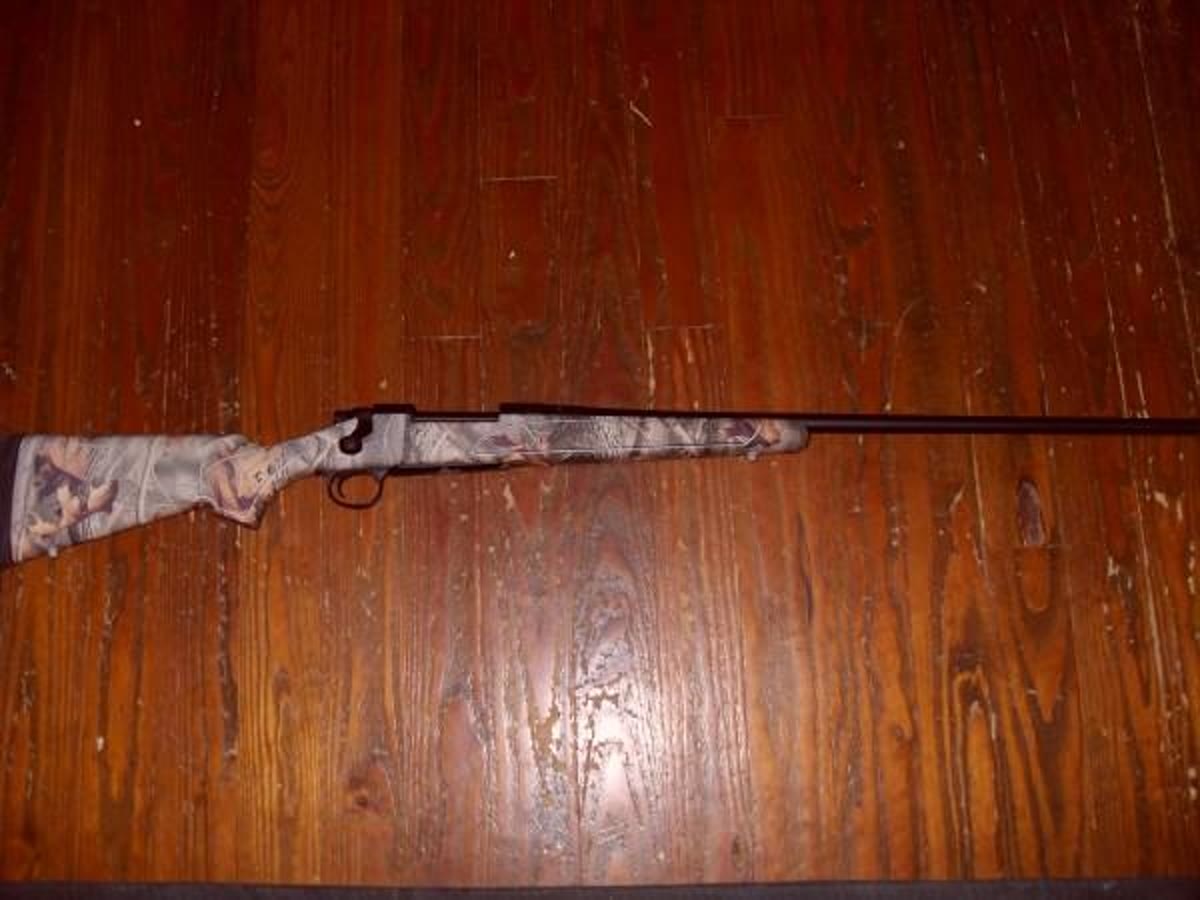
| Remington | 700 | Short | 1:14″ | Classic platform; the original .22-250 rifle |
| Savage | 12 Varmint | Short | 1:9″ | Fast twist; handles heavier bullets |
| Savage | 16/110 | Short | 1:14″ | Standard twist |
| Ruger | American | Short | 1:10″ | Fast twist; good value |
| Ruger | Hawkeye | Short | 1:10″ | Fast twist; handles 75 gr |
| Winchester | Model 70 | Short | 1:14″ | Classic; limited .22-250 production |
| Browning | X-Bolt | Short | 1:14″ | Limited availability |
| Howa | 150 | Short | 1:14″ | Budget option |
Custom Builders
- BAT, Defiance, Bighorn, Surgeon actions popular
- Common twist rates: 1:8″, 1:9″, 1:10″, 1:12″
- Fast twist (1:8″–1:9″) allows 75–90 gr bullets for extreme long range
- Bartlein, Krieger, Lilja, Brux barrels preferred
Action Length Note
The .22-250 is a short-action cartridge — same bolt face as the .308 Winchester family. It will not fit a long-action rifle without modification. This is a practical advantage: short-action rifles are lighter, faster-cycling, and generally more compact.
Ammunition Market and Reloading
Factory Ammunition (2024–2026)
| Brand | Load | Bullet | Velocity (fps) | Price Tier | Notes |
|---|---|---|---|---|---|
| Hornady | V-MAX | 40 gr | 4,065 | Mid | Explosive varmint |
| Hornady | V-MAX | 50 gr | 3,875 | Mid | Standard varmint |
| Hornady | V-MAX | 55 gr | 3,750 | Mid | High BC varmint |
| Winchester | Ballistic Silvertip | 55 gr | 3,750 | Mid | Polymer tip |
| Federal | Vital-Shok | 55 gr | 3,750 | Mid | Soft point |
| Hornady | Precision Hunter | 55 gr | 3,750 | Premium | ELD-X bullet |
| Federal | Gold Medal | 52 gr | 3,500 | Premium | Match grade |
Pricing Tiers (2024–2026 approximate)
| Tier | Price/round | Brands |
|---|---|---|
| Budget | $0.75–$1.10 | Winchester, Federal (basic) |
| Mid | $1.10–$1.75 | Hornady, Remington |
| Premium | $1.75–$3.00+ | Federal Gold Medal, Hornady Precision Hunter |
Top Powders for Reloading
| Powder | Best For | Notes |
|---|---|---|
| H4831sc | 55–75 gr | Classic .22-250 powder; temperature stable |
| RL-19 | 50–63.5 gr | Good for mid-weight bullets |
| H380 | 50–55 gr | Medium burn; good accuracy |
| IMR 4350 | 55–75 gr | Temperature stable; high velocity |
| RL-17 | 50–63.5 gr | Fast for the cartridge; good in cold |
| Varget | 50–55 gr | Fine kernels; metering issues |
| H414/Win 760 | 50–63.5 gr | Ball powder; metering friendly |
| RL-22 | 63.5–75 gr | Slow; for heavy bullets in fast twist |
Popular Reload Data
| Bullet | Powder | Charge (gr) | Velocity (fps) |
|---|---|---|---|
| 50 gr V-MAX | H380 | 36.0 | 3,900 |
| 55 gr Ballistic Tip | H4831sc | 39.5 | 3,750 |
| 63.5 gr MatchKing | H4831sc | 39.0 | 3,550 |
| 75 gr MatchKing | RL-22 | 38.5 | 3,300 |
Note: Reload data should be verified against current Hodgdon, Sierra, and Hornady manuals before loading.
Brass Availability
| Brand | Quality | Notes |
|---|---|---|
| Lapua | Premium | Best brass; expensive; limited availability |
| Hornady | Good | Good value; consistent |
| Winchester | Good | Widely available; consistent |
| Remington | Fair | Softer brass; less uniform |
| Federal | Fair-Good | Acceptable; some variability |
| Peterson | Good | US-made; growing reputation |
Honest Pros and Cons
Pros
- Flat trajectory — among the flattest-shooting commercial cartridges
- Extremely low recoil — comfortable for extended shooting sessions
- Proven varmint/predator cartridge — decades of field success
- Wide bullet selection — 35–75 gr from multiple manufacturers
- Good barrel life (relative to hot .22s) — 2,000–4,000 rounds typical
- Short action — lighter rifles, faster bolt cycle
- Ample factory ammunition availability
- Excellent accuracy potential with quality rifles
- Legal for deer in most states (check local regulations)
- Versatile — handles everything from prairie dogs to antelope
Cons
- Limited bullet weight ceiling in standard 1:14″ twist
- Case capacity limits 75 gr bullet performance (needs fast twist)
- Over-penetration risk for home defense
- Loud report — hearing protection essential
- Not ideal for heavy brush or dense-forest deer hunting
- Barrel life shorter than .223/5.56 (hotter load)
- Limited competition viability vs. 6mm/6.5mm modern cartridges
- Some factory ammunition quality varies
- Cannot use .223 Rem brass (different case dimensions)
- Legal restrictions in some states for deer (minimum energy requirements)
Bottom Line
The .22-250 Remington remains the gold standard for dedicated varmint and predator hunting at ranges of 100–500 yards. Its flat trajectory, explosive bullet performance, and minimal recoil make it a purpose-built tool that excels at its primary job.
Best suited for:
- Dedicated varmint/predator rifle
- Open-country coyote and prairie dog hunting
- Pronghorn antelope (where legal and appropriate)
- Long-range plinking and target shooting
- Rural property defense (open terrain)
Less suited for:
- Home defense (over-penetration, noise, size)
- Dense-forest deer hunting (marginal energy, overkill on small game)
- Competitive F-Class/PRS (outclassed by modern 6mm/6.5mm)
- Budget shooters (ammunition cost, barrel life)
The honest verdict: the .22-250 is not the most versatile cartridge in the .22 family, nor the most modern. But for its intended purpose — dropping varmints and predators at distance with a flat, fast, accurate rifle — it remains nearly unmatched. It is a specialist’s cartridge that does its job exceptionally well.
Shop .22-250 Remington ammunition and rifles at PatrioticFirearms.com.
Join the Patriotic Firearms newsletter for the latest gear reviews, ballistics deep dives, and hunting tips: https://patrioticfirearms.com/newsletter/
Sources & Methodology
This guide draws on primary manufacturer reloading manuals and published factory data wherever possible. Where a figure could not be confirmed against a primary source, it is marked UNVERIFIED rather than presented as fact.
Primary sources consulted:
- Sierra Bullets reloading manual — .22-250 Remington test specifications and dimension data (bullet diameter .224″, base/rim .473″, COAL 2.350″)
- Speer Reloading Manual — .22-250 load data
- Barnes Reloading Manual — .22-250 solid-copper load data
- Manufacturer factory ballistics tables (Hornady, Federal, Winchester, Nosler) for factory-load velocity, energy, and BC
Methodology notes:
- Dimensions: Bullet diameter, base/rim diameter, and overall length are confirmed against Sierra’s published test specifications. Other dimension rows (neck, shoulder, body, case length, shoulder angle) are drawn from published reloading references and should be confirmed against official SAAMI/CIP drawings before use in precision reloading.
- Pressure figures: SAAMI and CIP pressure values are marked UNVERIFIED — they could not be confirmed against an official SAAMI Z299 or CIP TDCC data sheet during research. Treat them as approximate.
- Trajectory and wind drift: Computed from published factory BCs and velocities at a 100-yard zero using standard external-ballistics solvers; cross-checked against manufacturer trajectory tables.
- Recoil: Derived from the standard free-recoil momentum formula (8-lb rifle, 4,700 fps powder-gas velocity). These are estimates, not measured values.
- Reload data: Representative charges from the manuals above; always verify against a current manual before loading.
About the Author: Nathan Grill is a lifelong firearms enthusiast and writer covering rifles, ammunition, and the shooting sports from a patriotic, evidence-based perspective.
Disclaimer: Ballistics data is compiled from manufacturer publications and standard calculators. Individual rifles may vary. Always verify local laws and regulations regarding hunting calibers, minimum energy requirements, and legal methods of take before heading afield.