The Space Cowboy Lever Action Rifle: Why America’s Oldest Gun Just Became Its Most Modern
Published: September 27, 2026
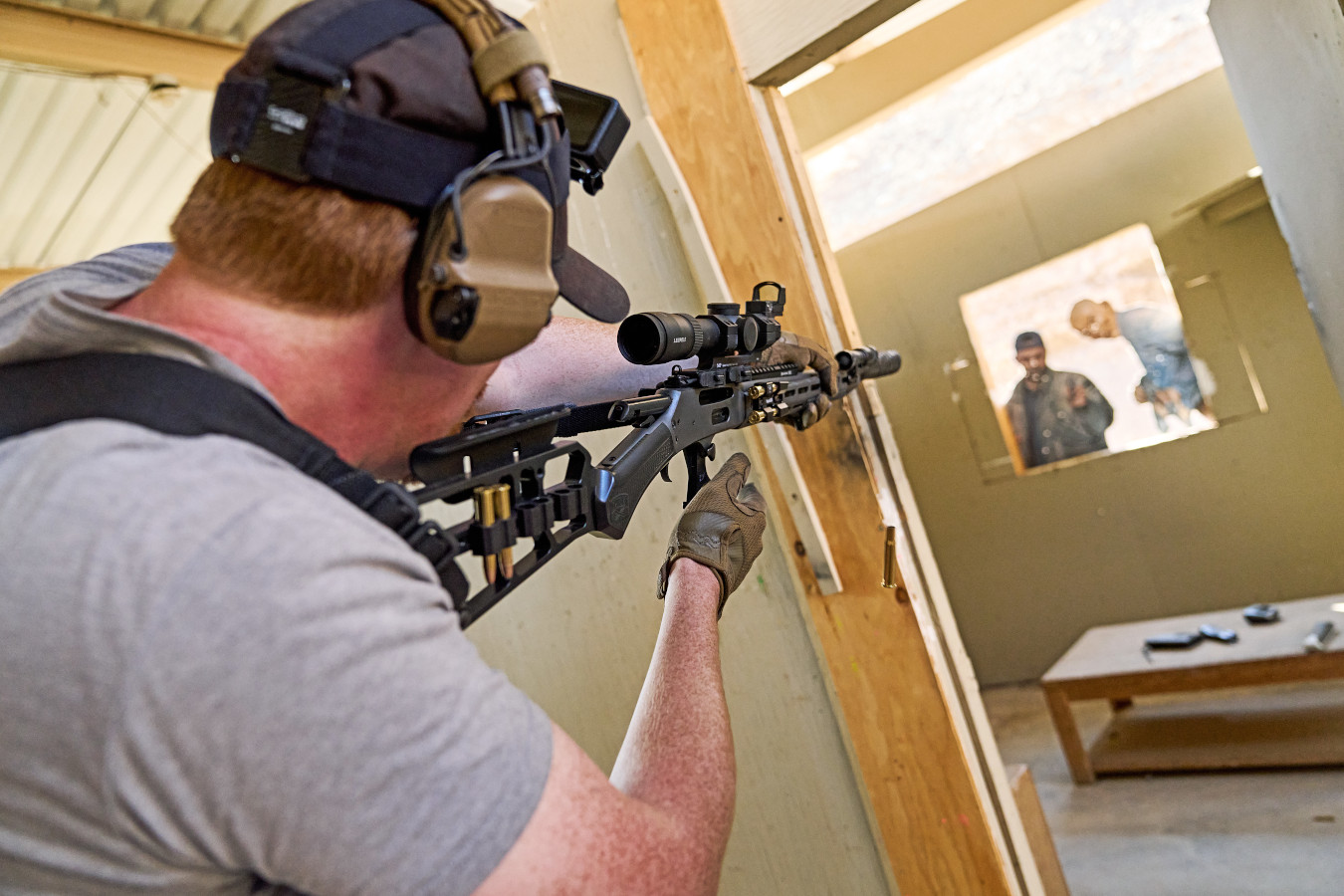
The space cowboy look: a classic lever action dressed for the 21st century. Photo credit: Recoil Magazine.
Introduction: The Gun That Refused to Die
There is a rifle in America that everyone was supposed to outgrow. It was born in the 1890s, made famous in the hands of cowboys, mountain men, and frontier lawmen, and written off a dozen times by people who knew better. The lever action was supposed to be a museum piece — a charming relic for the den wall, a gift for grandpa, a thing you admire but never actually use. And yet here we are in 2026, and the lever action is not just alive. It is the single most argued-about, most photographed, most wanted build category in modern gun culture. They call it the space cowboy.
I have spent the last several weeks deep in this world — forum threads, manufacturer catalogs, custom-shop price lists, and a lot of very opinionated Reddit comments — and I want to tell you plainly what I think. The space cowboy lever action rifle is not a fad, and it is not a joke. It is one of the most honest expressions of what American gun ownership actually means right now: a stubborn refusal to let the past stay in the past, a demand that old things work better, and a love of craftsmanship that no polymer-and-picatinny monoculture ever killed. It is also, frankly, a lot of fun to look at.
This is not a spec sheet. This is an opinion piece about a culture — why it exists, why it is winning, where the fights are, and how you can build one yourself if the spirit moves you. If you came for the platforms and calibers, they are here. But the real story is the people.
What Exactly Is a “Space Cowboy”?
Let’s define the term before we argue about it. “Space cowboy” is community slang — not a manufacturer category, not a legal class, not a marketing invention. It refers to a lever-action rifle that has been modernized with tactical and sci-fi accessories while keeping the classic lever mechanism intact. We are talking M-LOK handguards, red-dot or low-power-variable optics, ghost-ring iron sights, synthetic or skeletonized stocks, oversized lever loops, threaded barrels for suppressors, and weapon lights. The aesthetic deliberately fuses the Old West with the modern tactical and the science-fictional — the cowboy who wandered off the range and onto the starship.
The phrase rides on a long pop-culture trope: the gunslinger in a futuristic setting. Lever-gun forums adopted it to describe the “future-cowboy” look of a blacked-out, rail-equipped lever rifle that would not look out of place on the set of a space-western. You will also hear it used interchangeably with “tactical lever gun” and “modern lever.” The point is the tension — the deliberate collision of two eras in one object.
Here is the thing that makes it stick: the lever action is the most mythologized firearm in American history. So when you take that myth and bolt a red dot to it, you are not just accessorizing. You are making a statement about continuity. The cowboy never left. He just upgraded.
Why It Is Trending Right Now
The space cowboy did not emerge from nowhere. A few converging forces pushed it from a niche meme to a mainstream build category between 2024 and 2026.
A genuine lever-action resurgence. Lever-action sales climbed, and the aftermarket responded with a wave of modernization that simply did not exist a decade ago. Dedicated M-LOK handguards, tactical stocks, and accessory systems for Marlins and Henrys are now a real product category with real competition. When the parts exist, the builds follow.
Factory tactical platforms legitimized the look. Manufacturers stopped pretending the lever action was only for walnut-and-iron purists. The Marlin Dark Series, the Henry Big Boy X, and the POF-USA Tombstone shipped from the factory with the modern aesthetic already baked in. That factory blessing pulled mainstream attention and gave builders permission to take the look further.
Practical appeal that survives the meme. A lever gun that runs a red dot, takes a suppressor, and handles pistol- or straight-wall-caliber ammunition is genuinely useful as a truck gun, a ranch gun, or a home-defense carbine. The space cowboy is not just a look. In the right caliber, it is a legitimate, handy, fast-handling tool. The aesthetic opens the door; the utility keeps you shooting it.
Identity and the statement piece. Many builders openly admit they “just think they look rad.” That is not a shallow reason — it is a human one. A space cowboy rifle is a conversation starter, a piece of functional art, and a way to opt out of the sea of identical black rifles. In a market drowning in sameness, choosing the weird, beautiful, anachronistic thing is its own kind of patriotism: a vote for individuality and craft.
The Culture War: Walnut vs. M-LOK
You cannot write about the space cowboy without naming the fight at its center, because the fight is the culture. Lever-gun communities are split, loudly and often, between two camps.
The traditionalists believe the lever action’s soul is its original form: blued steel, checkered walnut, iron sights, and a smooth action that a 19th-century gunsmith would recognize. To them, bolting a handguard and a red dot onto a Winchester 94 is a kind of vandalism — a misunderstanding of why the gun is beautiful. They are not wrong that the classic form is gorgeous, and they are not wrong that some modern builds are clumsy.
The modernizers argue that a gun is a tool, and tools should improve. A red dot is faster than iron sights. A suppressor is kinder to your ears and your neighbors. A synthetic stock survives a truck bed in the rain. To them, the traditionalist reverence for walnut is sentimentality that gets in the way of a better-performing rifle. They are not wrong either.
My honest take? Both camps are protecting something real, and the space cowboy is the bridge. The lever action has always been a working gun — it was never a museum object. The cowboys who carried them would have bolted a red dot on in a heartbeat if the technology existed, because they cared about hitting what they aimed at. The modernizer who smooths a Marlin action and adds a ghost-ring sight is honoring the same instinct that drove a frontier hunter to tune his rifle before a season. The traditionalist who keeps a factory walnut 336 pristine is honoring the craftsmanship that made the gun worth tuning in the first place.
The tension is not a bug. It is the engine that keeps this community arguing, posting, and building. And honestly, it is more fun than the polite silence of a monoculture where everyone owns the same rifle.
The Platforms: Where the Space Cowboy Lives
Not every lever action makes a good space cowboy. The platform you choose dictates the parts you can buy, the smoothness you can achieve, and how much of the build you can do yourself. Here is my opinionated rundown of the major bases.
Marlin 336 — The People’s Champion
If you are building your first space cowboy, the Marlin 336 is the answer. It has the smoothest stock action of any lever gun, the largest aftermarket parts ecosystem, and the most documented DIY path of any platform. Top-ejection means you can run an offset optic rail without fighting the ejection port, and Ruger now owns and backs the Marlin name, which means new production, stainless options, and a warranty. The only real gotcha is barrel-band versus end-cap geometry, which affects handguard fit — measure before you buy. But for a first build, nothing else comes close.
Marlin 1894 — The Pistol-Caliber Sweetheart
The 1894 is the compact, pistol-caliber sibling, and it is arguably the most natural space cowboy base. In .357 Magnum or .44 Magnum it is handy, fast, and suppressor-friendly. If you want a truck gun that points like a carbine and shoots like a pistol, this is it. Same huge parts ecosystem as the 336.
Marlin 1895 — Big-Bore Bravado
The .45-70 1895 is for the builder who wants thump. Ruger reintroduced the SBL and Dark variants with factory-threaded barrels, which means you can buy the space-cowboy muzzle straight from the factory. It is heavier and the recoil is real, but there is nothing quite like a suppressed .45-70 lever gun that hits like a freight train and whispers like a rumor.
Henry Big Boy X — The Factory Shortcut
If you want fewer gunsmith tasks and more out-of-the-box tactical capability, the Henry Big Boy X is the best factory-tactical shortcut. Side-loading gate, smooth action, made in the USA, and ready for the modern accessory ecosystem. The one caveat: the aluminum receiver is not for hot, heavy loads. Keep it to standard-pressure pistol calibers and it will serve you forever.
Winchester 94 — The Icon With Baggage
The Winchester 94 is the most iconic lever gun ever made, and it is also the most frustrating to modernize. Post-64 quality changes and angled ejection make optics and modern rails genuinely difficult. I respect the 94 more than I recommend it for a space cowboy build. If you love the look, budget for the gunsmithing headaches or buy a pre-built.
The Rest
The Savage 99 is a beautiful, strong, hammerless design but it is discontinued and its parts are aging. The Chiappa 1892 offers takedown portability but import QC varies. The POF-USA Tombstone is a modern box-mag lever that is genuinely clever but lacks the classic feel. The Rossi is the cheapest entry point and fine for a budget build, but the action feel betrays the price. Each has its place; none dethrone the Marlin/Henry axis.
Caliber Is Identity
In the space cowboy world, your caliber choice is a personality test. It tells people what you want the gun for, and it shapes everything downstream — recoil, suppressor options, ammo cost, and effective range.
My pick for versatility is the .357 Magnum / .38 Special. It is the flattest-shooting pistol-caliber lever round, the ammo is cheap and ubiquitous, suppressors work beautifully on it, and it covers home defense, small game, and medium game at honest distances. If you can only build one space cowboy, build it in .357 and you will never feel under-gunned in the roles this platform actually fills.
The .30-30 Winchester is the choice if you want a true deer-capable general-purpose lever. It has longer range and milder recoil than the big-bore pistol rounds, and the ammo is dirt cheap. It is the most traditional space cowboy caliber and a legitimate hunting tool.
The .45-70 Government is for the builder who wants maximum thump and does not mind the recoil. It is a short-range hammer, perfect for big game in thick country and for the sheer satisfaction of a suppressed big-bore lever that sounds like nothing else.
The .44 Magnum hits harder than the .357 with more blast and more recoil — a brush gun with attitude. And the .450 Bushmaster makes the lever platform field-ready in straight-wall-cartridge states, with factory-threaded suppressor-ready options on the Henry Supreme.
The .410 Henry Axe is a niche “not-a-shotgun” novelty that is fun but has a limited practical role. Pick it for the grin, not the job.
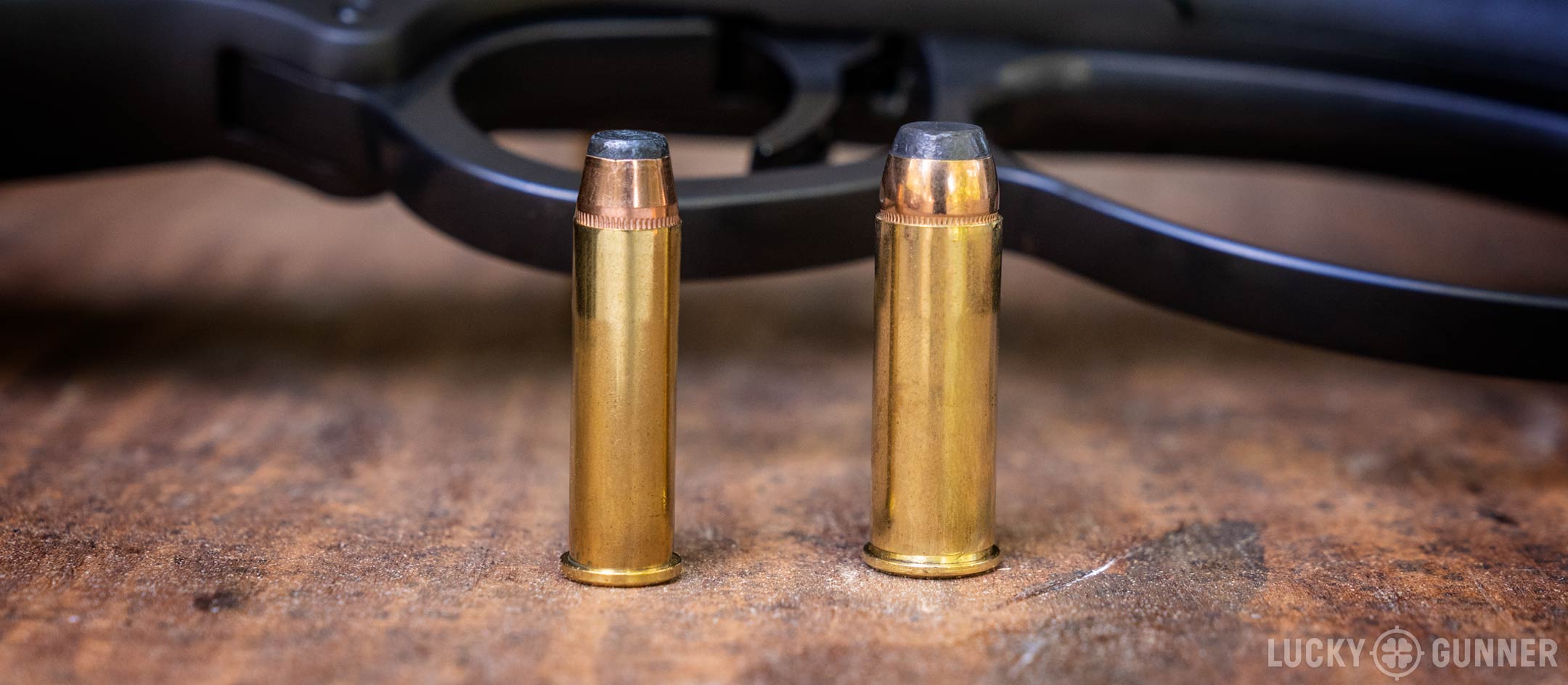
The .357 shoots flatter and softer; the .44 hits harder with more blast. Photo credit: Lucky Gunner Lounge.
The Parts: How the Old Meets the New
The space cowboy aesthetic is built from a specific palette of modern components. This is where the aftermarket earns its keep, and where a decade of innovation turned a meme into a buildable reality.
Handguards are the signature move. Ranger Point Precision, Midwest Industries, WOOX, and XS Sights all make M-LOK handguards that wrap the tubular magazine and give you rails for lights, grips, and slings. The Midwest Industries Henry M-LOK G2 is a standout for its rigid second-gen mount and forward sling swivel.
Threaded barrels are the suppressor-ready handshake. Most pistol-caliber levers thread 1/2×28; some .30-cal and big-bore guns use 5/8×24. Adapters bridge the two. Threading is a standard gunsmith service — and, importantly, it is not an NFA event on a rifle with a stock and a barrel of 16 inches or more.
Optics pair a micro red dot or a 1-4x/1-6x LPVO with a ghost-ring iron backup. XS Sights ghost-ring sets run roughly $70 to $110 and are the classic safety net under the glass.
Stocks range from synthetic tactical to skeletonized to WOOX walnut-tactical hybrids that split the difference between the two culture camps.
Lever loops — oversized and medium loops for gloved hands — are a Ranger Point specialty at around $140, and they transform the handling of a cold-morning build.
Action tuning is the quiet hero. Timney drop-in triggers, Wild West Guns “Trigger Happy” kits at 3 to 3.5 pounds, Wolff spring upgrades, and gunsmith smoothing turn a gritty lever into a glass rod. A smooth action is the difference between a gun you admire and a gun you love.
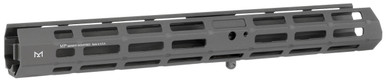
Modern M-LOK handguards turn a tubular-mag lever into a rail-equipped carbine. Photo credit: Midwest Industries.
The Two Roads: DIY vs. Custom Shop
Every space cowboy builder faces the same fork in the road: do it yourself, or pay a master to do it for you. Both are valid. Both have a culture of their own.
The DIY Path
The DIY route is the purist’s journey and the budget-conscious builder’s best friend. You acquire a donor rifle — a used Marlin 336, 1894, or 1895 — strip it, verify function, and then tackle the gunsmith tasks: thread the barrel, recrown it, possibly shorten it to 16.1 inches (keeping it at or above 16 inches to stay a rifle), and drill and tap for rails if needed. Then you install the handguard, the rail, the tactical stock, the oversized lever, and the trigger kit yourself. Mount the optic, the ghost ring, the light, the sling. Function-test, zero, and if you are running a suppressor, test with it.
The honest truth: many builders outsource the threading and recrowning (it takes a lathe and a steady hand) and do the rest themselves. The action-smoothing and part-swapping are very achievable at home with basic tools and patience. The DIY path is cheaper, more satisfying, and teaches you your rifle in a way a finished purchase never will.
The Custom Shop Path
If you want a finished masterpiece and have the budget, the custom shops are where the art lives. Ranger Point Precision has been the parts-driven backbone of the scene since 2013, with CNC-machined components for Marlin, Henry, Winchester, and Smith & Wesson. Mad Pig Customs calls itself the industry leader in lever-action optimization, with Marlin “Thumper” packages starting around $1,999 and full modern levers commonly running $4,000 to $7,000. Wren Metal Works builds integrally suppressed lever actions in titanium and stainless — true engineering art at roughly $6,200 to $7,694, with multi-month lead times. Country Custom Metals and Hill Country Rifles round out a growing field of specialists.
The custom path buys you fit-and-finish you cannot replicate in a home shop, integrated suppressor work, and a rifle that is genuinely a one-of-one piece. The cost is real, and the lead times are real. But for a keeper rifle you will hand down, it is worth every dollar.
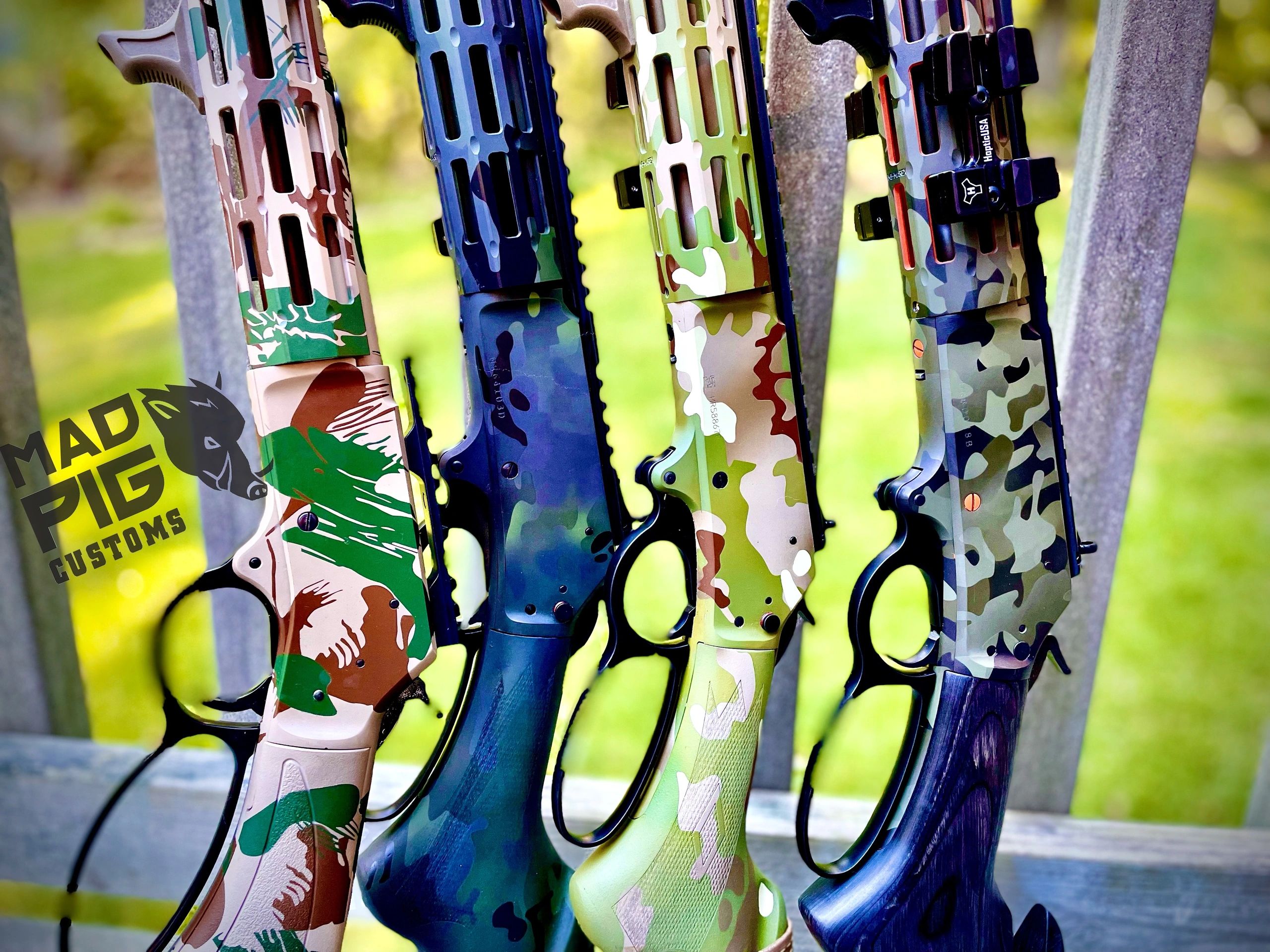
Custom shops like Mad Pig turn the space cowboy into a precision art form. Photo credit: Mad Pig Customs.
Looking for the right lever action or the parts to modernize one? Browse the full selection at Patriotic Firearms — built for Americans who want their old guns to learn new tricks.
The Legal Backdrop: What You Can and Cannot Do
Because this is America and because the law is part of the story, a space cowboy builder needs to know the legal lines. Here is the plain-English version as of 2025 to 2026 — and a strong note that this area is moving fast, so verify locally before you act.
Threading a rifle barrel is not an NFA event. Adding threads to a rifle barrel is a standard gunsmith service, provided the rifle keeps its stock and stays at or above 26 inches overall with a barrel of 16 inches or more. You can thread a lever rifle and run a suppressor without turning it into a regulated item, as long as the rifle geometry stays legal.
Cutting under 16 inches is an SBR. A rifle with a barrel under 16 inches, or overall length under 26 inches, is a Short-Barreled Rifle and is NFA-regulated. This is the single most common way a well-meaning builder accidentally creates a felony. Measure twice.
Suppressors and the 2025 tax change. The Big Beautiful Bill, signed July 4, 2025, cut the $200 NFA tax stamp to $0 for making and transferring suppressors, SBRs, SBSs, and AOWs. The registration process still applied at the time of signing, but the tax itself is gone.
The 2026 Texas ruling. In August 2026, a federal court in Texas held the NFA’s registration requirements unconstitutional for suppressors, SBRs, and SBSs, reasoning that with the tax now at zero, the tax rationale for registration collapses. This is a fast-moving, jurisdiction-sensitive development. Some Americans can now buy and sell these items without federal registration; others cannot, depending on where they live and how the courts and ATF respond. Treat this as evolving and verify the current status in your state before publishing or acting on it.
922(r) import parts. For domestic lever guns like Marlins and Henrys, 922(r) is rarely a blocker. For imported platforms like Chiappa or some Rossi models, you need to count imported parts and keep them within the legal limit.
State law still rules. California, New York, and other states have their own feature definitions, magazine caps, and restrictions that can apply even where federal law loosens. Federal legality is not the finish line. Check your state.
My Recommended Starter Build
If you asked me, “Nathan, I want to build one space cowboy and I want it to be right,” here is the spec I would hand you. It balances cost, capability, and the aesthetic, and it avoids every common mistake.
- Base: Ruger-made Marlin 1894 in .357 Magnum, or a Henry Big Boy X in .357
- Handguard: Midwest Industries M-LOK
- Stock: synthetic tactical or WOOX walnut-tactical
- Lever: Ranger Point medium loop
- Trigger: Timney or Wild West Guns drop-in, 3 to 3.5 pounds
- Optic: micro red dot with an XS ghost-ring backup
- Muzzle: threaded 1/2×28, suppressor-ready
- Sling: QD two-point
- Optional: Streamlight M-LOK weapon light
All-in, expect roughly $1,800 to $2,500 depending on whether you buy new or used and how much you do yourself. It is a rifle that shoots flat, suppresses well, points fast, and looks like it wandered off a starship. It is, in my opinion, the ideal first space cowboy.
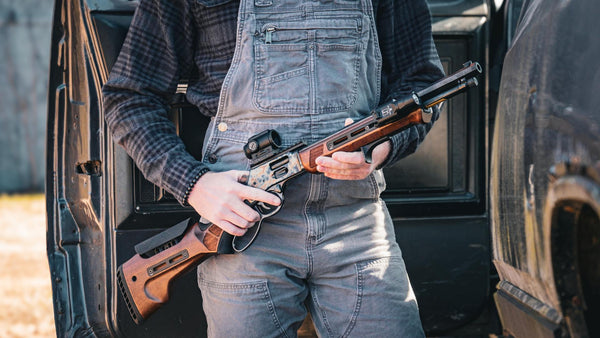
WOOX walnut-tactical gear splits the difference between the traditionalist and the modernizer. Photo credit: WOOX.
The Mistakes That Ruin Builds
I have watched enough space cowboy builds go sideways to list the traps. Avoid these and you will be ahead of most builders.
- Cutting the barrel under 16 inches without an approved SBR. This turns a legal rifle into a felony NFA item. Do not do it.
- Ignoring barrel-band versus end-cap geometry when buying a handguard. The fitment fails and you waste money.
- Mounting an optic straight over a top-ejecting Marlin without an offset rail. The brass hits the glass.
- Skipping the headspace and function check after any barrel work. This is a safety issue, not a suggestion.
- Assuming a suppressor fits without confirming the thread pitch. 1/2×28 and 5/8×24 are not interchangeable without an adapter.
- Over-buying premium parts before the action is smoothed and timed. Tune the action first; pretty parts on a gritty gun is wasted money.
- Ignoring state law because “federal is legal.” Federal is the floor, not the ceiling.
Why This Matters — A Patriotic Coda
Here is what I actually think, underneath the accessories and the arguments. The space cowboy lever action rifle is a small, stubborn act of American individualism. In a world that keeps telling gun owners what they should want — the same black rifle, the same optic, the same configuration sold by the million — the space cowboy says no, thank you, I want the old thing, and I want it better, and I want it to be mine.
That instinct is as American as the lever action itself. The frontier was not won by people who accepted the factory default. It was won by people who tuned, modified, and made-do — who took a good tool and made it a better one for their own hands and their own country. The builder smoothing a Marlin action in a garage in Ohio and the mountain man accurizing a Sharps in 1870 are doing the same thing, separated by 150 years and connected by the same love of craft and self-reliance.
The space cowboy is not a rejection of tradition. It is tradition continuing — the lever action refusing to be a museum piece, refusing to be obsolete, refusing to be anything other than useful and beautiful and free. And as long as there are Americans who want their old guns to learn new tricks, the space cowboy will keep riding.
Bottom Line
The space cowboy lever action rifle is the most talked-about build in gun culture for good reason: it is practical, it is beautiful, it is a statement, and it is endlessly customizable. Start with a Marlin 336 or 1894, or a Henry Big Boy X if you want a factory shortcut. Pick .357 for versatility, .30-30 for deer, or .45-70 for thump. Buy M-LOK handguards, a red dot with a ghost-ring backup, an oversized lever, and a good trigger. Thread the barrel if you want a suppressor — and keep the rifle at 16 inches or longer so you stay on the right side of the law. Build it yourself for the satisfaction, or commission a custom shop for the art.
Whatever you choose, you are joining a community that believes the oldest gun in America still has something to say. The space cowboy is proof that tradition and innovation are not enemies — they are partners, and the result is a rifle that honors where we came from while pointing at where we are going. Long may it ride.
Ready to build your own space cowboy? From lever-action rifles to M-LOK handguards, red dots, ghost-ring sights, and suppressor-ready barrels, find everything you need at Patriotic Firearms. Built for Americans who refuse to let a good thing stay stock.
Join the Newsletter
Get weekly firearms news, build guides, and 2A updates delivered straight to your inbox. Sign up for the Patriotic Firearms newsletter →
Legal Disclaimer
This article is for informational and educational purposes only and does not constitute legal advice. Firearm laws — including NFA regulations, barrel-length requirements, suppressor rules, and state-specific restrictions — change frequently and vary by jurisdiction. The 2025 tax-stamp change and the 2026 Texas NFA ruling are actively evolving. Always verify current federal, state, and local law with a qualified attorney and your local ATF office before modifying, building, or transferring any firearm or NFA item. The author and Patriotic Firearms assume no liability for legal outcomes arising from the information in this post.
About the Author
Nathan Grill is a lifelong firearms enthusiast and writer covering guns, gear, and 2A culture for Patriotic Firearms. He has built, shot, and broken more lever actions than he can count, and he still cannot resist a red dot on a Marlin. When he is not at the range, he is arguing about walnut versus M-LOK on a forum somewhere.