Active Shooter Response: What Changed After Uvalde
By Nathan Grill — Published October 31, 2026
When the sirens finally stopped at Robb Elementary, the nation was left with a question that no amount of grief could soften: why did it take so long? On May 24, 2022, an armed gunman walked into a Texas elementary school and murdered 19 children and two teachers. The horror of the act was matched, in the months that followed, by the horror of the response. Officers were on scene within minutes, yet roughly 77 minutes passed before anyone entered the room where the children were trapped. That gap became the single most scrutinized number in modern policing, and it rewrote the rulebook.
Four years on, the lessons of Uvalde have rippled through training academies, equipment lockers, and policy manuals across the country. For gun owners, concealed carriers, and safety-conscious families, understanding what changed is not an academic exercise. It shapes how first responders will act if the worst ever happens near your home, your school, or your place of worship. This is a respectful look at what went wrong, what has been fixed, and what every armed citizen should know today.
What Happened at Uvalde and What the DOJ Review Found
The official U.S. Department of Justice Critical Incident Review, released on January 18, 2024, did not mince words. Attorney General Merrick Garland described a “series of major failures” in leadership and decision-making. The review concluded that responders treated the situation as a barricaded-subject standoff rather than an active-shooter event, and that a “cascading failure” of command left officers waiting in a hallway while children waited to be rescued.
That distinction matters. A barricaded suspect is typically an isolated individual who has stopped shooting and can be negotiated with or contained. An active shooter is an ongoing, dynamic threat where every second of delay costs lives. By reclassifying the scene, the chain of command inadvertently switched from an assault doctrine to a containment doctrine, and the clock started running.
The DOJ was not alone in its findings. A July 2023 Texas House investigative committee report documented “systemic failures and egregiously poor decision making” that made the tragedy worse than it needed to be. In September 2024, U.S. Customs and Border Protection published its own review, concluding that its active-shooter response procedures had been insufficient for the incident at Robb Elementary. Three separate official reviews, three different agencies, one shared verdict: the response failed the victims.
None of these reports blamed the officers for fear. They blamed the absence of clear command, the breakdown of communication, and the failure to apply the doctrine that already existed on paper. That is the uncomfortable truth at the heart of Uvalde: the playbook was right, but nobody ran it.
How Response Doctrine Changed
The single most important shift since Uvalde is a return to, and a hardening of, immediate action tactics. The core principle is deceptively simple: when there are indications of life-threatening threats and/or wounded individuals, responders move immediately toward the threat to stop the killing, even before a full tactical team is assembled. Rescue is not a phase that waits for the threat to be neutralized; it is the whole point.
Before Uvalde, many agencies trained a layered response: contain, call for help, build a team, then enter. Uvalde exposed how that model collapses when the threat is still active and children are bleeding on the floor. The doctrine now emphasizes that the first officers on scene, even two or three, are the response. Waiting for a SWAT callout is no longer the default when lives are on the line.
Command clarity is the second pillar. The DOJ review made clear that the failure was not a lack of officers but a lack of a single, decisive commander. Modern training now drills the handoff of command explicitly, so that when a senior officer arrives, responsibility transfers cleanly and the plan does not stall in committee.
The third pillar is communication. Radio chaos, incompatible systems, and unclear perimeters turned a manageable scene into confusion. Agencies have since invested in interoperable communications and clearer scene-control protocols, because a doctrine you cannot communicate is a doctrine you cannot execute.
These changes are not theoretical. They are the direct, documented answer to the failures named in the DOJ and Texas House reports, and they represent the most concrete good to come out of the worst day in Uvalde’s history.
Training and Equipment Shifts
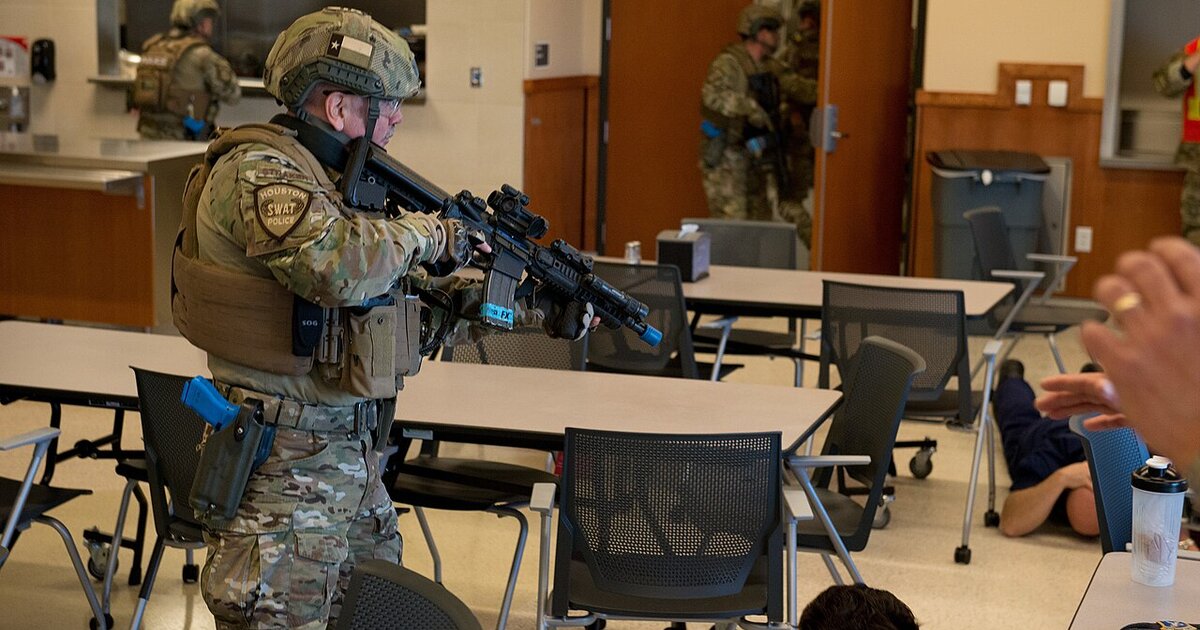
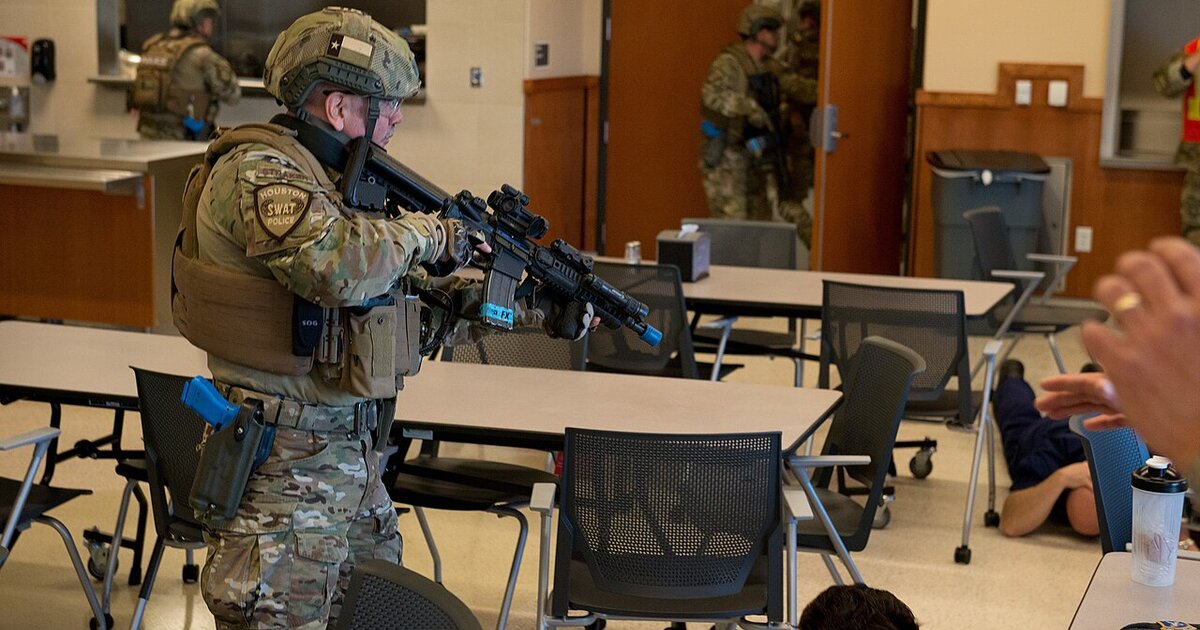
Doctrine only matters if people are trained to it and equipped to carry it out. Since 2022, training emphasis has moved decisively toward law enforcement training scenarios that stress the first minutes: the lone officer, the two-officer entry, the decision to push toward gunfire rather than behind cover.
Several trends define the current training landscape:
- Immediate-action drills. Agencies increasingly rehearse small-unit and single-officer response, reinforcing that the first responders are the rescue force, not the containment force.
- Command and control practice. Scenario training now forces officers to assume, transfer, and document command under stress, directly addressing the leadership vacuum the DOJ identified.
- Rescue-first mindset. Training scenarios place wounded “civilians” in the hot zone so responders practice moving toward them, not waiting for an all-clear.
- Stop the Bleed integration. Massive hemorrhage control has moved from a nice-to-have to a core skill, with tourniquets and pressure dressers standard on individual officers and increasingly on patrol vehicles.
On the equipment side, the lessons are equally practical. Body armor that actually fits and protects, red-dot and low-light optics that let officers identify targets in dim hallways, reliable radios, and individual first-aid kits have all seen renewed investment. The goal is not to make officers more aggressive for its own sake, but to give them the tools to act on the doctrine they are trained to follow.
At the federal level, the Cybersecurity and Infrastructure Security Agency (CISA) has expanded its Active Shooter Preparedness program, publishing an updated Action Guide in 2025 and running regular preparedness webinars through 2026. These resources push a comprehensive, community-wide strategy that includes schools, houses of worship, and businesses, not just police departments. The message is consistent: preparedness is everyone’s job, and the gap between the first 911 call and the first responder is where ordinary people can make the difference.
Ready to put preparedness into practice? Whether you are building a home-defense loadout or outfitting your first-aid kit, the right gear makes the difference between a plan and a reaction. Explore the full lineup at Patriotic Firearms and gear up the American way.
The AR-15 Platform Role

It is impossible to discuss Uvalde honestly without addressing the AR-15 platform, because the weapon the gunman carried was an AR-15-style rifle, and it shaped the response in a way many Americans never considered. In previously unreleased interviews, responding officers told investigators they were slowed by the rifle’s reach and firepower, a factor that fed the hesitation in those critical early minutes.
This is not a political talking point; it is an operational reality. The AR-15 platform is the most popular rifle in America precisely because it is easy to operate, modular, and accurate. In the hands of a trained defender, those same traits are assets. In the hands of an active threat inside a confined school hallway, they change the calculus for everyone responding.
The lesson for gun owners is twofold. First, the platform itself is neutral; it is training and doctrine that determine whether it saves lives or costs them. Second, if you carry or keep an AR-platform rifle for home defense, you owe it to yourself to train with it under stress, in low light, and in the confined spaces where you would actually use it. The officers at Uvalde were not blamed for their fear, but the system was blamed for not preparing them to act through it. The same standard applies to citizens.
What Armed Citizens Should Know
For concealed carriers and responsible gun owners, the post-Uvalde landscape carries a few clear implications.
- Know your role in the first minutes. If you are armed and a threat emerges, your decision to act, to move family members to safety, or to provide information to responders can be decisive. Doctrine now trusts the first person on scene; that can be you.
- Train like it counts. Dry-fire, low-light practice, and movement drills matter more than any single piece of gear. A trained citizen with a modest setup beats an untrained citizen with the best rifle on the wall.
- Carry a tourniquet and know how to use it. Stop the Bleed is no longer optional for responders, and it should not be optional for you. The minutes before an ambulance arrives are the minutes you control.
- Have a family plan. Lockdown, reunification, and communication plans turn panic into procedure. CISA’s community-wide guidance exists for exactly this reason.
- Respect the responders. When officers arrive, they are executing a doctrine refined by tragedy. Clear communication and cooperation save lives on both sides.
None of this asks ordinary citizens to become tactical operators. It asks them to be prepared, trained, and ready to do the small things that, in the aggregate, are the difference between a tragedy and a near-miss.
What Happens Next
For readers tracking this space, several developments are worth monitoring through 2026 and beyond:
- Continued CISA guidance updates. The 2025 Action Guide and the 2026 webinar series signal ongoing federal investment in community preparedness; expect further refinements for schools and houses of worship.
- Training standardization. Watch for more agencies adopting unified immediate-action and command-transfer curricula, closing the gap between what is written and what is drilled.
- Equipment adoption. Red-dot optics, fitted body armor, and individual first-aid kits are moving from specialty items to standard issue; the trickle-down to the civilian market is already underway.
- Policy debates. The AR-15 platform will remain a flashpoint in Washington. The operational lesson, however, is stable: training and doctrine, not hardware alone, determine outcomes.
The through-line is clear. The tools are improving, the training is improving, and the culture is shifting toward action. The question is whether every agency and every citizen keeps pace.
The Short Version
- The DOJ review found “cascading failures” in leadership and decision-making, with roughly 77 minutes of delay before entry at Robb Elementary.
- Responders misclassified an active-shooter event as a barricaded-subject standoff, switching from assault to containment and losing precious time.
- Modern doctrine now emphasizes immediate action: the first officers on scene move toward the threat to stop the killing and rescue the wounded.
- Training and equipment have shifted toward command clarity, interoperable communications, fitted armor, optics, and Stop the Bleed readiness.
- The AR-15 platform shaped the Uvalde response; its role underscores that training and doctrine, not hardware, decide outcomes.
- Armed citizens are now part of the preparedness picture: train, carry a tourniquet, have a family plan, and cooperate with responders.
Final Word

Uvalde changed everything about how America responds to an active shooter. The grief will never fully fade, but from it came a harder, clearer doctrine: when lives are on the line, you go. The DOJ, the Texas House, and CBP all reached the same conclusion, and the training, equipment, and community-preparedness programs that followed are the answer to the question those families deserved an answer to at the time.
For gun owners, concealed carriers, and safety-conscious families, the responsibility is personal now. Train with what you carry, prepare your household, and be ready to do the small, decisive things in the first minutes. That is how a nation honors the memory of 19 children and two teachers: by making sure the next time, nobody waits.
Put preparedness on your side. From home-defense rifles to the gear that gets you through the first minutes, Patriotic Firearms has the tools to keep your family ready. Shop the full collection at Patriotic Firearms — because readiness is a patriotic duty.
Join the Patriotic Firearms Newsletter
Get the latest on firearms news, training, gear, and the issues that matter to gun owners — delivered straight to your inbox. Sign up for the Patriotic Firearms Newsletter and never miss a briefing.
Legal Disclaimer: This article is for informational and educational purposes only and does not constitute legal advice. Laws regarding firearms, self-defense, and the use of force vary by state and locality and change over time. Nothing here should be relied upon as a substitute for consultation with a qualified attorney in your jurisdiction. The author and Patriotic Firearms make no representations or warranties regarding the accuracy or completeness of the information presented, and assume no liability for actions taken based on this content.