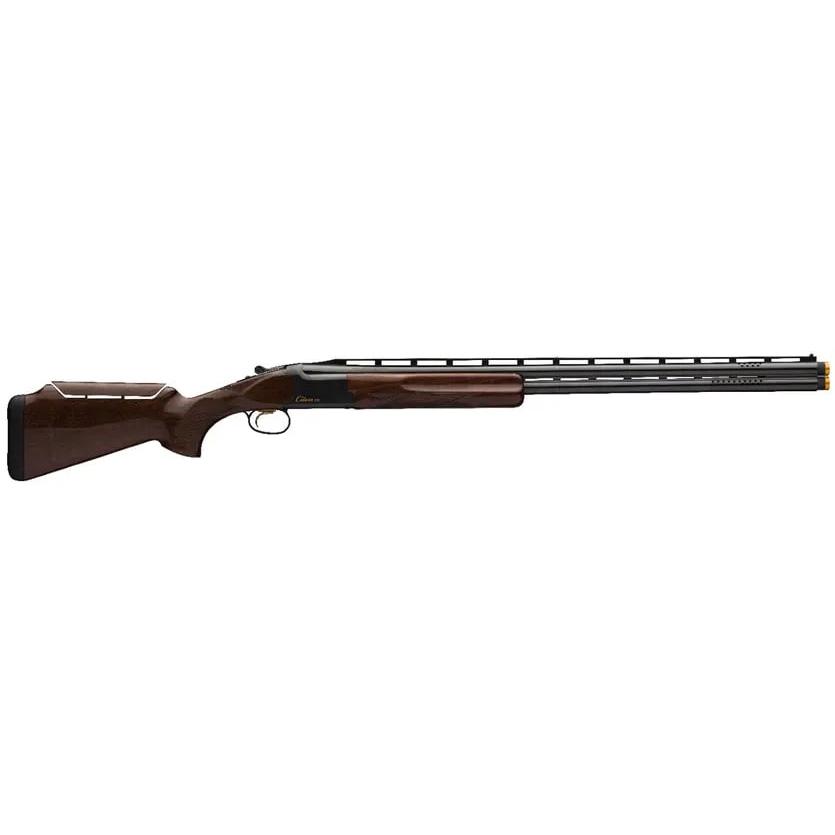
Nearly seventy years after it first hit the market, the .243 Winchester still holds a place in the American shooting landscape that few cartridges can match. It is the round that let a generation of hunters put a flat-shooting, hard-kicking-for-its-size 6mm bullet into a light, handy short-action rifle — and it remains one of the most recommended first centerfire hunting cartridges in the country. This guide covers the whole story: where the .243 came from, the specs that define it, what it actually does downrange, the bullet types that make it work, and the honest truth about where it shines and where it falls short.
Origin and History: A Wildcat That Became a Benchmark
The .243 Winchester was introduced in 1955, but its roots go back a decade earlier. Warren Page, the legendary hunting writer and conservationist, had been tinkering with .243-caliber wildcats since the 1940s. When Winchester brought out the .308 Winchester in 1952, Page saw the opportunity he’d been waiting for: a modern, short-action case he could neck down to 6mm. His field results and his prolific writing helped convince Winchester to take the idea to production.
The cartridge Winchester released filled a very specific gap. Hunters wanted a flat-shooting round that could handle everything from prairie dogs to deer and antelope from a single short-action rifle. The .257 Roberts could have filled that niche, but it was never factory-loaded with the light varmint-weight or pointed long-range spitzer bullets that made the .243 so versatile. The .243 delivered both ends of the spectrum — a screaming 80-grain varmint load and a 100-grain game load — in one compact case.
The reception was immediate. The .243 became one of the most popular sporting centerfire cartridges in North America and the benchmark 6mm hunting round. Notably, Remington answered the same year with the .244 Remington (later renamed the 6mm Remington), kicking off one of the great caliber rivalries of the era — a rivalry the .243 won on the strength of its better twist rate for heavier bullets.
A couple of historical footnotes worth knowing. In 1963, the United Kingdom’s Deer Act set minimum bullet-diameter and energy rules that made the .243 an entry-level legal deer-stalking caliber across the pond — a quiet endorsement of its adequacy on deer-sized game. And in a non-sporting context, bolt-action rifles chambered in .243 were used by the Los Angeles Police Department’s SWAT unit during its early years, a curiosity that says more about the availability of accurate bolt guns at the time than about the round’s defensive merits (more on that later).
Specifications: The Numbers Behind the Cartridge
Cartridge Dimensions
The .243 Winchester is a rimless, bottleneck, short-action cartridge. Here are the nominal dimensions:
| Feature | Imperial | Metric |
|---|---|---|
| Bullet diameter (groove) | .243 in | 6.17 mm |
| Land (bore) diameter | .237 in | 6.02 mm |
| Neck diameter | .276 in | 7.01 mm |
| Shoulder diameter | .454 in | 11.53 mm |
| Base diameter | .471 in | 11.96 mm |
| Rim diameter | .473 in | 12.01 mm |
| Case length | 2.045 in | 51.94 mm |
| Overall length (COL) | 2.710 in | 68.83 mm |
| Case capacity | 53.7–54.8 gr H₂O* | ≈3.48–3.55 mL |
| Common rifling twist | 1:10 in | 254 mm |
| Twist range | 1:10 to 1:8 | 254–203 mm |
Case capacity confirmed as the standard grains-of-water (gr H₂O) reading; the metric equivalent (≈3.48–3.55 mL) is a direct conversion. Verified against the .243 Winchester spec table.
Pressure Standards
| Standard | Type | Value |
|---|---|---|
| SAAMI MAP | Piezo | 60,000 psi / ≈413.7 MPa |
| CIP Pmax | Piezo | 415.00 MPa / 4,150 bar |
Important distinction: SAAMI MAP and CIP Pmax are both modern piezo (crystal-transducer) measurements and are directly comparable. Older manuals may quote CUP (copper-crusher) figures — a CUP number is not numerically equal to the same number in piezo psi, and the two systems must never be interchanged. Keep them separate when you’re reading load data.
Parent Case Lineage
The .243 Winchester is a .308 Winchester / 7.62×51 NATO case necked down to 6mm (.243). The .308 itself had arrived only three years earlier, in 1952, which made the .243 a natural fifth-generation offspring: same rimless base, same short-action footprint, same reliable feeding geometry — just a smaller neck gripping a 6mm bullet. Because it’s rimless, the .243 carries no belt, distinguishing it from the belted magnums of the era.
⚠️ Two common misconceptions to clear up. First, the .243 Winchester is not the 6mm Remington / .244 Remington. The 6mm Rem is based on the .257 Roberts case, has a larger case capacity, and originally shipped with a 1:12 twist — a different cartridge that is not interchangeable with the .243. Second, the .243 Winchester is not the .243 WSSM (Winchester Super Short Magnum), a separate, shorter, larger-case magnum. Never mix them up at the gun counter or the loading bench.
Ballistics: What the .243 Actually Does Downrange
The Velocity and Energy Picture
The .243 fires bullets from 55 grains up to 115 grains, and that wide band is the source of its versatility. On a 22-inch test barrel, factory velocities run from roughly 2,890 fps with a 100-grain bullet all the way to 3,840 fps with a 55-grain varmint load. Muzzle energies cluster in the 1,800–2,050 ft-lb range across the common weights.
Factory Load Data
All figures from published factory-load tables (22-inch test barrel):
| Manufacturer | Load | Bullet | MV (fps) | ME (ft-lb) | G1 BC |
|---|---|---|---|---|---|
| Winchester | Ballistic Silvertip | 55 gr | 3,840 | 1,800 | 0.276 |
| Barnes | TSX BT | 85 gr | 3,130 | 1,849 | 0.333 |
| Federal | GameKing HPBT | 85 gr | 3,220 | 1,956 | 0.293 |
| Remington | Scirocco | 90 gr | 3,050 | 1,858 | 0.365 |
| Hornady | SST Superformance | 95 gr | 3,115 | 2,047 | 0.355 |
| Winchester | Ballistic Silvertip | 95 gr | 3,020 | 1,923 | 0.379 |
| Hornady | BTSP | 100 gr | 2,890 | 1,854 | 0.405 |
| Nosler | Partition | 100 gr | 3,000 | 1,998 | 0.384 |
The 95-grain Hornady SST Superformance tops the loaded tables at 2,047 ft-lb, while the 55-grain varmint bullets trade a little energy for a whole lot of velocity.
Cross-check note: the table above is on a consistent 22-inch test-barrel basis, which is also the basis for the trajectory and energy-retention tables below — keeping them all internally comparable. Manufacturer-published figures (mostly on a 24-inch test barrel) run slightly higher: Hornady SST Superformance 95 gr ≈ 3,185 fps / 2,140 ft-lb; Hornady BTSP 100 gr ≈ 2,960 / 1,945; Barnes TSX 85 gr ≈ 3,200 / 1,932; Winchester BST 95 gr ≈ 3,100 / 2,027 (BC 0.400); Nosler Partition 100 gr ≈ 2,850 / 1,803. Three loads could not be confirmed in a manufacturer-sourced database and rest only on the 22″ reference table: Federal GameKing HPBT 85 gr, Remington Scirocco 90 gr, and Winchester BST 55 gr (the only 55 gr entries in the manufacturer DB are Varmint X/Rifle at BC 0.195). Barnes lists its 85 gr .243 as “TSX,” not “TSX BT.” Treat the three flagged rows as reference values rather than manufacturer-confirmed specs.
Trajectory and Point-Blank Range
The .243’s calling card is a flat, forgiving trajectory. The high muzzle velocity and moderate-to-high ballistic coefficients mean that, with a long-range point-blank zero (roughly 250–278 yards depending on the load), the bullet stays within a ±3-inch vital zone across a generous band of distances — a real advantage for offhand shots on deer and antelope where you don’t have time to range and dial.
For a representative 90-grain Remington Scirocco (zeroed at 268 yards), the bullet path runs about +3.5 inches at 100 yards, crosses zero at 268, and drops to roughly −3 inches at 300 yards. In a 10 mph full-value crosswind, that same load drifts about 8 inches at 300 yards. The lighter 55-grain varmint loads, with their higher velocity but lower BC, hold a similar point-blank window but shed velocity faster and drift more at distance.
Trajectory figures are taken from published point-blank-zero tables at the yardages the source provides; intermediate and long-range values beyond the published grid are not presented rather than estimated.
Energy Retention
This is where the .243’s limits start to show. At 300 yards, the cartridge retains roughly 50–60% of its muzzle energy, depending on bullet weight and BC:
| Load | Muzzle Energy | 300 yd Energy | Retained |
|---|---|---|---|
| Hornady 95 gr SST SF | 2,047 ft-lb | 1,158 ft-lb | 57% |
| Winchester 95 gr BST | 1,923 ft-lb | 1,146 ft-lb | 60% |
| Remington 90 gr Scirocco | 1,858 ft-lb | 1,064 ft-lb | 57% |
| Hornady 100 gr BTSP | 1,854 ft-lb | 1,075 ft-lb | 58% |
| Barnes 85 gr TSX | 1,849 ft-lb | 985 ft-lb | 53% |
| Winchester 55 gr BST | 1,800 ft-lb | 899 ft-lb | 50% |
The heavier, higher-BC bullets hold energy a little better than the light varmint loads. But the takeaway is clear: the .243’s terminal margin thins with distance. Terminal-ballistics analysis notes that the .243 produces its fastest kills inside 200 yards or at impact velocities above about 2,650 fps, and that beyond that window wound channels tend to be narrower and slower-killing. For ethical deer hunting, the .243 is best kept under 300 yards with premium bullets and good shot placement.
Recoil: The .243’s Best Friend
If you take one thing away from this section, let it be this: the .243 is easy to shoot. Computed with the standard free-recoil formula (verified against published .223 and .308 anchors), a 100-grain load in an 8-pound rifle produces roughly 10 ft-lbs of recoil — about two-thirds of a .308 150-grain load (≈15.8 ft-lb) in the same rifle, and only about 2.4× a .223 55-grain load in a light AR.
| Cartridge | Bullet | Gun Weight | Recoil Energy |
|---|---|---|---|
| .243 Winchester | 55 gr | 8.0 lb | ≈7.1 ft-lb |
| .243 Winchester | 85 gr | 8.0 lb | ≈9.3 ft-lb |
| .243 Winchester | 100 gr | 8.0 lb | ≈10.0 ft-lb |
| .308 Winchester | 150 gr | 8.0 lb | ≈15.8 ft-lb |
| .223 Remington | 55 gr | 6.5 lb | ≈4.2 ft-lb |
Recoil tracks momentum, not velocity — which is why the blazing 55-grain load actually kicks less than the 100-grain load despite its 3,840 fps muzzle. That mild report is a big part of why the .243 is a favorite first centerfire and a steady follow-up shooter.
Accuracy
The .243 has a genuine accuracy reputation. It is widely described as extremely accurate to 300 yards and beyond, and as shooting flatter and more accurately than the 7mm-08 Remington out to 500 yards — though with less terminal energy. A good .243 rifle and a careful reload will reward you with sub-MOA groups and a round that simply point-and-shoots well.
Bullet Types: Choosing the Right Projectile
The .243’s 55–115 grain band breaks down into a few clear roles.
Varmint / Plinking (≈55–75 gr)
This is the .243’s “garden-variety” role — flat trajectory, low recoil, and explosive terminal effect on animals under about 25 pounds. Barnes fields 58-, 62-, and 72-grain flat-base varmint bullets in its all-copper line, and the thin-jacket polymer-tip varmint bullets from Hornady (V-MAX) and Sierra (BlitzKing) are designed to fragment violently on small pests at high velocity. For prairie dogs, ground squirrels, and coyotes, this band is pure fun.
Medium-Game / Deer (≈85–100 gr)
The heart of the .243’s hunting reputation. The recommended band for deer is 80–85 grain monolithic copper or 90–105 grain controlled-expansion lead. Barnes’ 80-grain TTSX BT, 85-grain TSX BT, and 95-grain LRX BT all deliver controlled petal expansion with high weight retention on deer and antelope. Conventional soft-point and polymer-tip bullets in the 90–105 grain range are the classic deer bullets for this caliber.
Bonded / Partition Controlled-Expansion
For quartering-away shots and heavier bone, bonded and partition designs are the “insurance” choice. A Nosler Partition’s dual-core construction expands up front while driving a hard rear core deep, and bonded soft-points (Core-Lokt, Fusion, AccuBond class) reduce jacket-core separation for deeper, more reliable penetration than a non-bonded bullet. These mitigate the thin-jacket fragmentation tendency of light .243 bullets on tough shots.
Polymer-Tip Spitzer
The polymer-tip spitzer is the .243’s workhorse profile for both varminting and extended-range deer and antelope. The Barnes LRX 95-grain BT is engineered to open reliably at lower impact velocity than standard copper bullets — useful at the longer end of the .243’s range — while Hornady’s ELD-X and SST polymer-tip hunting bullets initiate expansion via the tip for a controlled mushroom.
Match / BTHP and ELD-Match
The .243 has a real target following. Barnes fields 68-, 105-, and 112-grain Match Burner BT bullets in .243, and Sierra MatchKing and Hornady ELD-Match class bullets in the 90–107 grain range give competitive BCs for F-Class and long-range work — the 105–112 grain match bullets in a fast-twist (1:8/1:7) .243 are genuinely competitive at 600–1,000 yards.
Lead-Free / Frangible
For lead-free zones, Barnes’ all-copper line (58–112 gr) satisfies the requirement across varmint, deer, and target roles. A dedicated frangible .243 load (sintered, barrier-safe) is a niche that remains thin in the market.
Hunting Applications: One Cartridge, Many Species
Whitetail and Mule Deer — the .243’s Most Famous Role
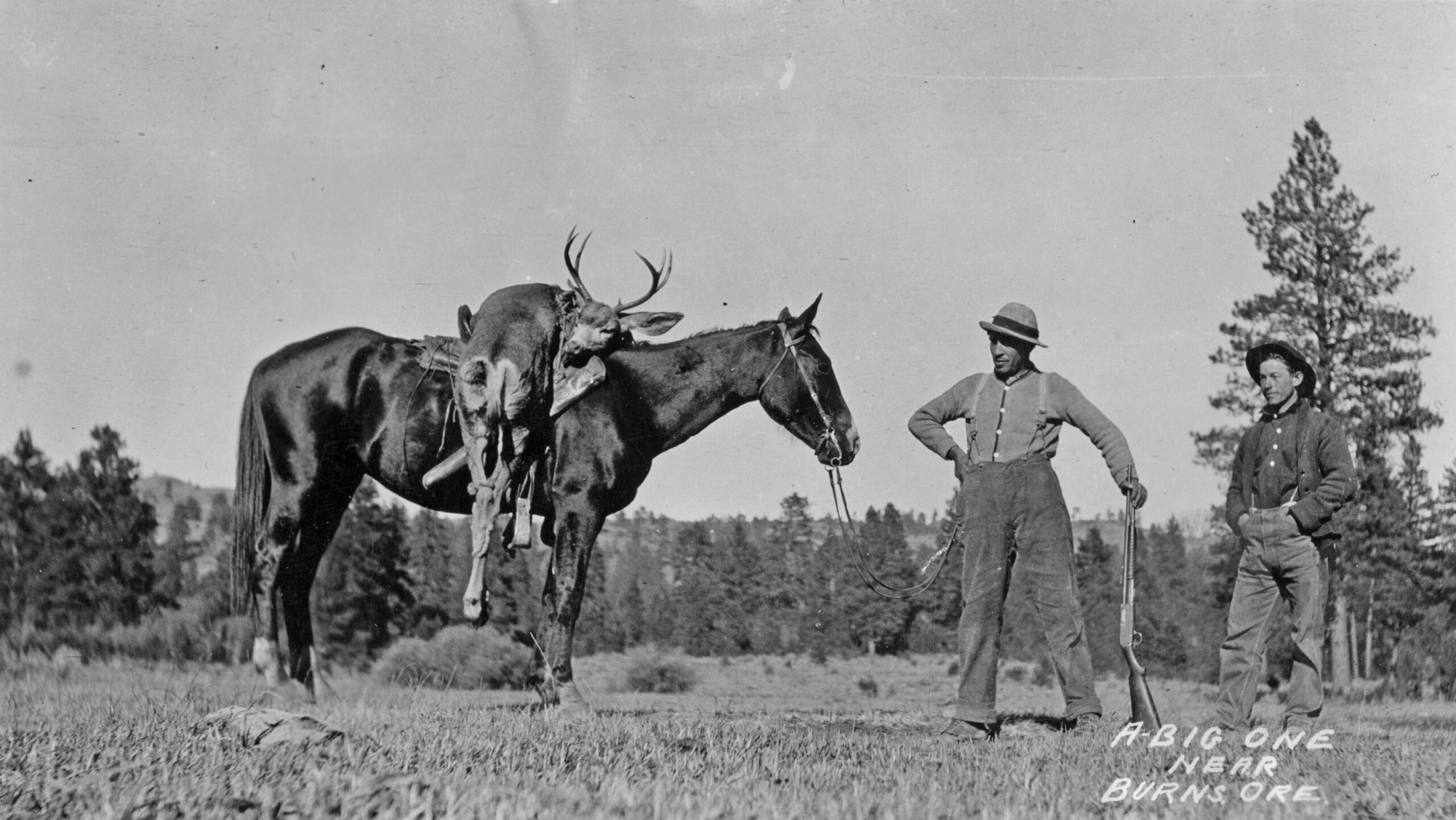
The .243 Winchester is best known as a whitetail and mule deer cartridge, and for good reason. It’s especially popular for whitetail and commonly used on blacktail, mule deer, and pronghorn. The low recoil and high velocity mean even less-experienced hunters can be effective, while skilled shooters can ethically drop bucks up to about 250 pounds. The recommended bullet band is 80–85 grain monolithic copper or 90–105 grain controlled-expansion lead.
The honest limit: the .243 may not retain enough terminal energy to reliably drop medium game at 300 yards and beyond. In practice that means shot placement matters more on a .243 than on a .308 or 7mm — the cartridge is flat-shooting and accurate, but its terminal margin thins with distance and on heavy or quartering animals. Bonded or partition bullets and a well-placed lung shot are the standard mitigations.
Pronghorn / Antelope
Pronghorn is a near-ideal .243 role: light-framed animals, open country, flat trajectory, and low recoil for offhand shots. An 80–95 grain copper or 90–100 grain controlled-expansion bullet gives reliable expansion on a 90–150 pound antelope at typical 150–350 yard ranges. This is widely regarded as one of the cartridge’s best hunting applications.
Coyote and Predators
The .243 is a proven coyote and predator cartridge. The 55–75 grain varmint bullets deliver explosive terminal effect at high velocity, and the flat trajectory and low recoil make it a favorite for calling and long-range predator work. Heavier 80–90 grain bullets are used when a more controlled, deeper-penetrating effect is wanted on larger predators or at longer range.
Small / Medium Game
Beyond deer and antelope, the .243 handles small-to-medium game with appropriate 80–100 grain controlled-expansion or bonded bullets. Feral hogs, however, are a tougher proposition — the .243 is generally considered adequate only with premium bullets and good shot placement, not as a primary hog cartridge.
The ELK Debate — Why the .243 Is Considered Marginal
The .243 Winchester is legal for elk in many U.S. states but widely regarded as marginal or underpowered for the animal. The debate comes down to energy at typical elk shot distances and bullet diameter:
- Energy drop-off. A .243 with a 95–100 grain bullet produces roughly 1,700–2,000 ft-lb at the muzzle but drops below the commonly cited 1,000 ft-lb ethical-kill threshold at the longer ranges where elk are often encountered.
- Wound channel. The .243’s .243-inch bullet makes a smaller permanent wound channel than .277/.308/.323 elk cartridges. On a 600–900 pound elk, a marginal hit is more likely to produce a poor, slow kill than a larger caliber would.
- A real agency rule — now correctly stated. Colorado Parks and Wildlife’s big-game regulations set a legal minimum of 1,000 ft-lb of rated impact energy at 100 yards (not muzzle energy) for rifles taking elk and moose, alongside a .24-caliber-or-larger requirement and an 85-grain minimum expanding bullet. A .243 with a 95-grain bullet clears the .24-caliber and 85-grain floors and clears 1,000 ft-lb at the muzzle — but the rule is measured at 100 yards, where the .243’s energy is already dropping, which is precisely why the cartridge sits at the legal edge rather than comfortably inside it. (Source: CPW Chapter W-2 Big Game Regulations, §203 — a legal “Manner of Take” minimum, not an ethical guideline. Note: Colorado’s only lead-related rule is the nonlead-bullet voucher pilot under CRS 33-1-127, repealed July 1, 2026; there is no copper-bullet mandate.)
Bottom line on elk: the .243 can ethically take elk at close range with a premium 95–100 grain controlled-expansion or bonded bullet and a perfect lung shot, but it is not a recommended elk cartridge by most authorities and experienced hunters. If you hunt elk, a .270 Win, .280 Ackley Improved, 7mm Rem Mag, or .30-06/.308 gives a far larger ethical margin.
Minimum-Energy Ethics
Ethical big-game hunting generally targets a minimum of about 1,000 ft-lb of impact energy on the animal at the shot distance, with bullet construction and shot placement mattering as much as raw energy. The .243 meets this at close-to-moderate range on deer and antelope but falls short at long range and is marginal on elk. The principle is simple: match the cartridge’s energy-at-range to the animal and the distance, or don’t take the shot.
Protection and Home Defense — An Honest Assessment
Short answer: the .243 Winchester is not a recommended home-defense cartridge, and you shouldn’t overstate its defensive suitability.
- Overpenetration through walls is a serious concern. A high-velocity, small-diameter .243 round can pass through interior walls, drywall, and furniture with significant residual energy, endangering family members or neighbors on the other side. This is the same overpenetration problem that applies to any high-velocity rifle round indoors.
- Terminal performance is a mixed bag. The .243’s high velocity can produce dramatic temporary cavitation on a human target, but a thin-jacket varmint bullet may fragment too shallowly while a solid copper or FMJ may over-penetrate. Neither extreme is ideal for the controlled, through-wall-safe performance a home-defense round needs.
- A rifle is not a home-defense tool for most homes. A 22-inch-plus bolt or semi-auto rifle in .243 is long, heavy, and hard to maneuver in hallways and doorways compared to a handgun or a short-barreled defensive carbine. The .243’s advantages — flat trajectory, long-range accuracy — are irrelevant inside a house.
- What is typically suggested instead. For home defense, the common recommendations are a centerfire handgun (9mm, .40, .45) with appropriate defensive hollow-point ammo, or a short-barreled defensive carbine in 5.56 NATO/.223 or .300 Blackout, which offer better maneuverability and more controllable penetration than a full-power .243 rifle.
If you already own a .243 rifle and have nothing else, it is a last-resort defensive tool that will fire accurately and hard — but it is not recommended for home defense. Choose a handgun or a defensive carbine in a more appropriate caliber instead.
Target and Sport Shooting
The .243 has a strong accuracy reputation in target and sport shooting:
- Varminting as a sport. Flat trajectory, low recoil, and explosive terminal effect make the .243 a classic varminting and plinking cartridge.
- F-Class / prone precision. Match bullets like the Barnes 68/105/112-grain Match Burner BT and Sierra MatchKing / Hornady ELD-Match class give competitive BCs for 600–1,000 yard work in a fast-twist .243.
- Metallic silhouette. The .243 is popular with metallic silhouette shooters because of its low recoil, high velocity, and superb accuracy — the mild kick lets shooters stay on target for rapid strings.
- Practical / long-range plinking. The flat trajectory and low recoil make the .243 a fun, accurate steel-target and long-range plinking round.
Rifle Platforms
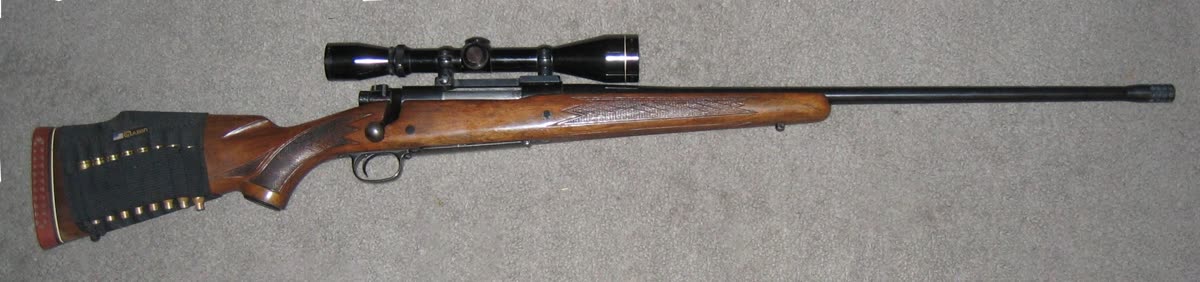
Because the .243 is a short-action cartridge, it fits compact, light, handy rifles that cycle quickly — a practical advantage in the field and on the bench over long-action .270/.280/.30-06 platforms. The .243 was originally introduced in 1955 for the Winchester Model 70 and Model 88, and today it is chambered across a wide range of modern bolt-action and semi-automatic rifles, including the Remington Model 700 short action, Winchester Model 70 short action, and countless budget and premium short-action platforms. The short action gives a lighter, quicker-cycling rifle that’s well suited to the .243’s varmint-and-deer mission.
For target work, a faster-twist (1:8 or 1:7) short-action rifle stabilizes the heavier 105–112 grain match bullets and unlocks the .243’s long-range precision potential.
Ammunition Market
The .243 is a mainstream, widely available cartridge. Every major manufacturer — Winchester, Federal, Hornady, Remington, Nosler, Barnes, Browning — loads it, and the bullet range from 55 to 115 grains means there’s a factory load for nearly every job. Barnes’ all-copper line covers the lead-free requirement. The cartridge’s long production run and broad popularity mean factory ammo is easy to find at most gun stores and online retailers, and reloading components — brass, bullets from 55 to 115 grains, and published load data — are plentiful.
Price tiers. Budget plinking and varmint loads (Winchester White Box, Federal FMJ) sit at the low end; mid-range hunting loads (Federal Power-Lok, Winchester Super-X, Hornady American Whitetail) occupy the middle; and premium hunting and match loads (Hornady Precision Hunter ELD-X, Nosler Partition, Barnes TSX/LRX, Sierra MatchKing) command the top of the price range. For a cartridge this popular, you can dial cost up or down without giving up availability.
Reloading. The .243 is a favorite on the loading bench. The .308-derived case is forgiving, brass is common, and the wide bullet range lets handloaders tailor a load for everything from 55-grain varmint work to 105-grain long-range deer and match shooting. A fast-twist (1:8/1:7) barrel opens up the heavy-match-bullet potential that factory 1:10 rifles can’t fully exploit.
Pros and Cons
Pros
- Flat trajectory and forgiving point-blank range — great for offhand shots on deer and antelope.
- Mild recoil — about two-thirds of a .308; a favorite first centerfire and a steady follow-up shooter.
- Short-action platform — light, handy, quick-cycling rifles.
- Extreme versatility — one rifle covers varminting, predators, deer, antelope, and target shooting.
- Proven accuracy — sub-MOA potential and a strong target/silhouette following.
- Widely available — every major manufacturer loads it; components are plentiful.
- Lead-free options — Barnes all-copper line covers restricted zones.
Cons
- Terminal margin thins with distance — energy drops below ~1,000 ft-lb past ~300 yards on lighter bullets.
- Marginal for elk — small wound channel and energy drop-off make it underpowered for big game by most authorities.
- Not a home-defense round — high over-penetration risk through walls; poor maneuverability.
- Thin-jacket varmint bullets can fragment too shallowly on tough, quartering deer shots unless you use bonded/partition construction.
- Factory 1:10 twist limits the heaviest match bullets; you need a 1:8/1:7 barrel to unlock long-range precision.
Recommendations by Use Case
| Use Case | Recommended Bullet | Notes |
|---|---|---|
| Varmint / plinking | 55–75 gr thin-jacket polymer-tip (V-MAX / BlitzKing) or Barnes 58–72 gr | Explosive effect on small pests; flat and fun |
| Coyote / predators | 55–75 gr varmint, or 80–90 gr controlled-expansion | Light bullets for calling; heavier for long, tough shots |
| Whitetail / mule deer | 80–85 gr monolithic copper or 90–105 gr bonded/partition | Keep under ~300 yd; place lungs; bonded for quartering shots |
| Pronghorn / antelope | 80–95 gr copper or 90–100 gr controlled-expansion | Near-ideal role; flat trajectory for open-country shots |
| Elk | 95–100 gr premium bonded/partition, close range only | Marginal — not recommended; choose a bigger caliber if elk is the target |
| Target / F-Class / silhouette | 90–112 gr match (MatchKing / ELD-Match / Match Burner) in 1:8–1:7 twist | Competitive BCs at 600–1,000 yd; mild recoil for rapid strings |
| Home defense | Not recommended | Use a handgun or 5.56/.300 BLK defensive carbine instead |
| Youth / first centerfire | 80–100 gr in a light short-action rifle | Mild recoil builds confidence; teaches good shot placement |
The Verdict: A Versatile Classic With Honest Limits
The .243 Winchester earned its reputation the old-fashioned way: it simply works. For the hunter who wants one light, flat-shooting, low-recoil rifle that can plink prairie dogs in the morning and put a clean, ethical tag on a whitetail or pronghorn in the evening, the .243 is hard to beat. Its short-action handling, mild report, and genuine accuracy make it one of the most pleasant and practical sporting cartridges ever designed, and its status as a go-to first centerfire is well deserved.
But an honest guide has to name the limits, and they’re real. The .243 is a medium-game cartridge with a thinning terminal margin past 300 yards, and it is not the right tool for elk or for home defense. Respect those boundaries — match the bullet and the distance to the animal, place your shot well, and the .243 will reward you for decades. Push it beyond what it was built to do, and you’ll be better served by a .270, a 7mm, or a .30-06.
For the varmint-and-deer hunter who values shootability and versatility over raw horsepower, the .243 Winchester remains one of the smartest choices in the rack — a true American classic that still earns its place nearly seventy years on.
Ready to gear up for varmint season or your next whitetail hunt? Browse the full selection of .243 Winchester rifles, ammunition, and premium hunting bullets at **Patriotic Firearms.
Stay in the fight for your rights. Get the latest firearms news, in-depth caliber guides, and exclusive deals delivered straight to your inbox. Sign up for the Patriotic Firearms newsletter — free, no spam, unsubscribe anytime.
About the Author
Nathan Grill is the firearms editor at Patriotic Firearms, where he covers hunting, ballistics, gear, and Second Amendment issues. A lifelong shooter and hunter, he writes the deep-dive caliber guides that help readers choose the right cartridge for the job — with honest data and no hype.
Legal Disclaimer
This article is for informational and educational purposes only. Firearm laws vary by state, province, and country, and regulations governing calibers, magazine capacity, hunting seasons, and permitted game change frequently. Always verify your local, state, and federal laws before purchasing, possessing, or hunting with any firearm or cartridge. Hunting with any cartridge requires sound judgment, proper shot placement, and adherence to your state game agency’s regulations and minimum-energy guidelines. The author and Patriotic Firearms are not responsible for the misuse of the information contained in this article. Shoot responsibly, wear eye and ear protection, and follow all firearm safety rules.