The $0 Tax Stamp Era: CANCON 2026 Shows Suppressors Getting Cheaper
The $0 Tax Stamp Era: CANCON 2026 Shows Suppressors Getting Cheaper
By Nathan Grill — Published October 31, 2026
For nearly a century, the price of silence carried a hidden surcharge. You could buy the can, but the government wanted its two hundred dollars before it would let you take it home. On January 1, 2026, that surcharge dropped to zero. The federal tax stamp on suppressors is gone, and the industry noticed immediately. Nowhere was that more obvious than CANCON West 2026, the world’s largest fully suppressed range day, which just wrapped up October 22–24 at the Boulder Rifle & Pistol Club in Nevada. It was the first major convention after the change, and the energy on the line told the whole story: suppressors are having their moment.
This is not just a pricing story. It is a story about what happens when a decades-old barrier comes down and a wave of new manufacturing technology collides with it at exactly the right time. Let’s walk through what changed, what the manufacturers are bringing, and what it actually means for the buyer holding a credit card and a Form 4.
The $0 Tax Stamp Story
Here is the plain version. On July 4, 2025, legislation was signed that reduced the National Firearms Act making and transfer tax on suppressors to $0, effective January 1, 2026. For the first time since the NFA was enacted in 1934, the federal government stopped charging a tax to transfer a suppressor.
It is worth being precise about what did and did not change, because the internet is full of half-truths. The tax is gone. The registration process is not. You still file the ATF paperwork, you still go through the transfer or making process, and suppressors are still regulated under the NFA. What changed is the money. There is no longer a $200 payment step baked into the transaction. As the major retailers put it, the eForm 4 submission in 2026 simply has no tax payment step. The ATF also cleaned house during the transition, deleting forms sitting in draft status and publishing updated forms to match the new $0 reality.
One important caveat for collectors: the $200 tax remains in place for machine guns and destructive devices. The relief was targeted at suppressors (and, per the signed legislation, the related making/transfer categories it covered). If you are chasing a transferable machine gun, your two hundred dollars is still due.
The result was exactly what you would predict. The National Shooting Sports Foundation reported that 2026 was on track to become the “Year of the Suppressor,” with roughly 845,000 suppressor applications flooding the ATF. When the price of entry drops by two hundred dollars on a product that already costs several hundred, demand does not nudge. It surges.

CANCON West 2026: The First Real Test
CANCON has always been the industry’s loudest quiet event. The concept is simple and irresistible: a fully suppressed range day where the ammunition is free and you get to shoot hundreds of firearms through cans, all day long. CANCON West 2026, presented by Dead Air Silencers, ran October 22–24 at the Boulder Rifle & Pistol Club in Nevada, and it was the first major convention to take place under the new $0 tax regime.
That timing matters. Conventions are where manufacturers read the room, and the room was packed. The booth lineup read like a who’s who of the modern suppressor world: legacy names like Silencer Central, Q, and Maxim Defense rubbing shoulders with a new generation of additive-manufacturing startups. The difference this year was not just the gear on the tables. It was the prices being quoted and the technology behind them.
For buyers, CANCON is where the abstract “industry impact” becomes concrete. You can hold the new cans, hear the real-world report, and talk to the engineers who designed them. And what the engineers were talking about in 2026 was one word: printing.
New Products: The 3D-Printed Wave
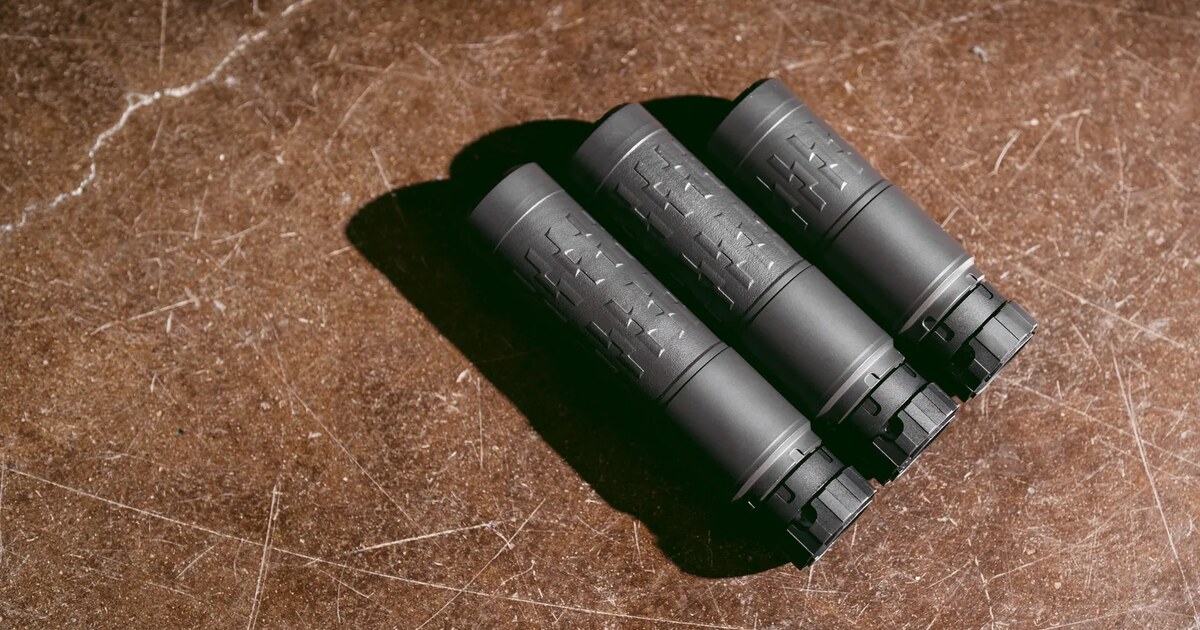
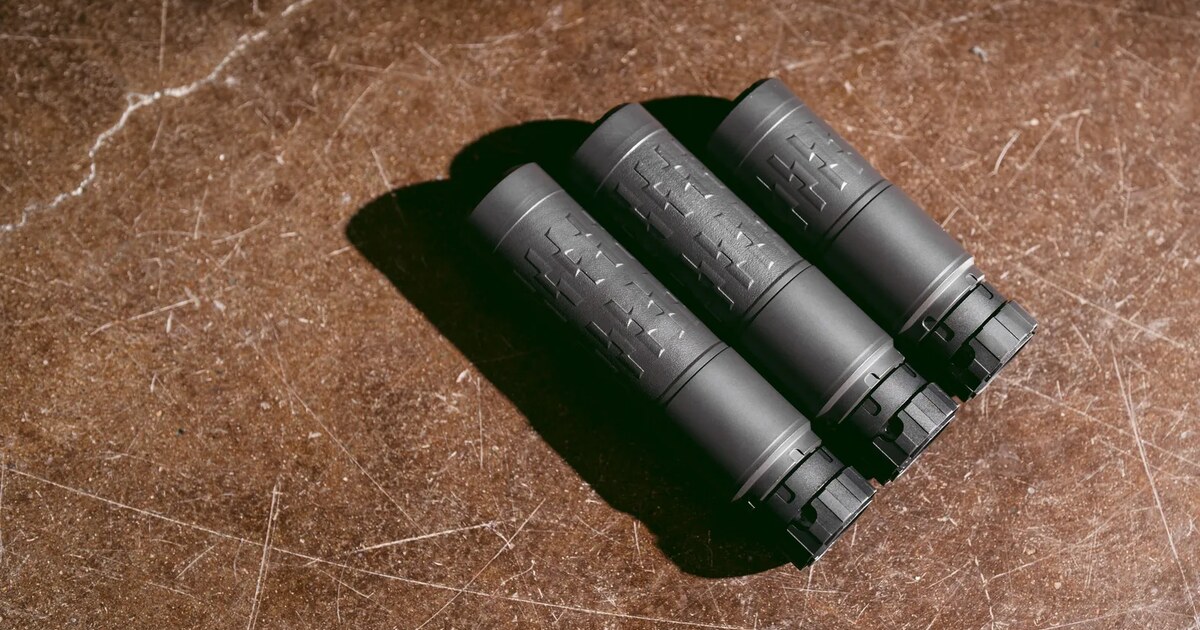
The single biggest theme at CANCON West 2026 was the rapid rise of 3D-printed suppressors. This is not a gimmick. Additive manufacturing—specifically metal direct metal laser sintering (DMLS)—is reshaping how cans are built, and Forbes covered it back in March 2026 as a genuine industry surge driven by cost, speed, and supply-chain advantages. When a manufacturer can print a complex internal baffle geometry in one piece instead of machining and welding multiple parts, two things happen: weight drops, and the cost floor falls.
Polite Society Industries
Polite Society Industries came to CANCON with a clear pitch: 3D-printed suppressors without the premium price. Founder Sean Burrows walked through the company’s line of monolithic, one-piece printed cans. In August 2026 the company launched six 3D-printed suppressors with MSRPs ranging from roughly $250 to $750—pricing that would have been hard to justify a few years ago. Polite Society is also leaning on a customer-confidence play, promising to fix, replace, or refund, which tells you they intend to compete on trust as much as on price.
LayerX Suppression
LayerX Suppression is one of the most interesting newcomers on the scene. Based in Livonia, Michigan and founded in 2025, the team pulled together talent from legacy suppressor makers, defense suppliers, and aerospace. Their platform-optimized, low-back-pressure DMLS cans—the Strake 9, Strake 9K, and Raster—are tuned for specific platforms rather than built as one-size-fits-all. At CANCON they showed off the Trace 22, a rimfire can that is rated for 5.56, which is exactly the kind of over-built, do-it-all design that wins over practical shooters.
Off Grid Suppressors
Off Grid Suppressors built its reputation on monolithic 3D-printed precision builds—no welds, no seams, no weak points. The whole value proposition is structural: a single printed body eliminates the failure points that traditional multi-part cans carry. Backed by serious investment, Off Grid is part of the wave proving that printed cans are not a budget compromise but a legitimate engineering path.
The Established Players
None of this means the old guard is standing still. Dead Air presented the event itself. Q, Silencer Central, and Maxim Defense all had strong showings, and Palmetto State Armory was openly polling the crowd on why the industry is moving to 3D printing. Additive manufacturing is no longer a startup experiment. It is the direction the whole market is leaning.
Ready to put the $0 tax stamp to work? Browse suppressors, NFA-ready builds, and the gear the pros are running at Patriotic Firearms — and lock in your setup while the market is hot.
What Buyers Should Know
Let’s translate the convention floor into plain advice for the three groups most affected.
Suppressor Enthusiasts and NFA Collectors
You win twice. The $200 you used to pay per transfer now stays in your pocket, and the explosion in printed options means more cans at more price points than ever. If you have been sitting on a &ld;someday” can, the math just got better. The registration process still applies, so budget for the paperwork and the wait, but the tax line item is gone.
Hunters
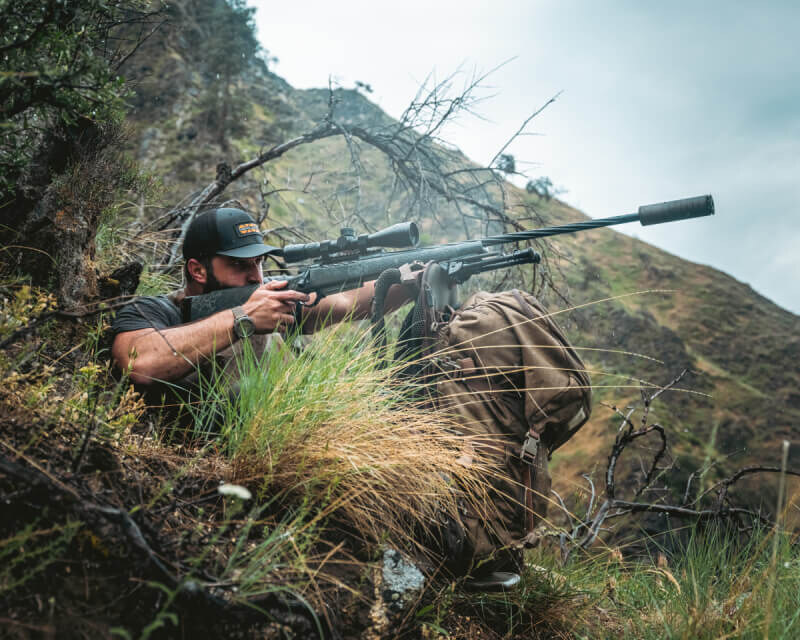
Hunters have arguably the most to gain. A suppressor protects your hearing, keeps you in the stand after the shot, and improves communication with your partner—and for years the $200 tax was the excuse people gave for not owning one. With that excuse removed and lightweight printed cans hitting the sub-$500 range, the barrier to a hunting can is lower than it has ever been.
Concealed Carriers
The rise of platform-optimized and rimfire-rated printed cans lines up perfectly with the concealed-carry world, where compact, low-back-pressure cans on pistols and PCCs are in demand. When manufacturers are engineering cans around specific platforms and printing them in one piece, the carry-friendly options multiply fast.
One honest caution: a flood of applications means the ATF pipeline is busier than it used to be. The tax is $0, but the wait is not. Plan around processing times, and buy from reputable dealers who know the current forms cold.
What Happens Next
- ATF processing times. With roughly 845,000 applications in 2026, expect the queue to stay busy. The tax is gone; the patience test is not.
- Printed-can durability and warranty. Watch how companies like Polite Society back their fix/replace/refund promises at scale. Confidence guarantees are only as good as their fulfillment.
- Price compression. As DMLS scales, the cost floor keeps dropping. Today’s $250–$750 range may not be the bottom.
- Regulatory clarity. The tax changed, but the NFA framework did not. Keep an eye on ATF guidance and any future legislative movement, because the rules of the road still apply.
- Platform-specific designs. The LayerX model—cans tuned to a specific action for low back pressure—is likely to spread. “Good enough for everything” is losing to “perfect for this gun.”
The Short Version
- The federal suppressor tax stamp went to $0 on January 1, 2026; the registration process still applies, but the $200 payment is gone.
- Machine guns and destructive devices still carry the $200 tax—the relief was targeted.
- CANCON West 2026 was the first major convention under the new rules, and demand was unmistakable.
- 3D printing (DMLS) is the technology driving the surge—lighter, cheaper, single-piece builds from companies like Polite Society, LayerX, and Off Grid.
- Prices are compressing fast, with printed cans now landing in the $250–$750 range.
- Expect busy ATF processing times even though the tax is zero.
Final Word
The $0 tax stamp did not just save buyers two hundred dollars. It pulled the rug out from under the most common reason people gave for not owning a suppressor, and it landed at the exact moment a new generation of manufacturers figured out how to print cans cheaper and lighter than ever. CANCON West 2026 was the first place you could see both forces collide—surging demand meeting a wave of affordable, platform-tuned, 3D-printed hardware. The result is a market that is bigger, faster, and more competitive than at any point in its history.
For the American shooter, that is a good thing. The gear is better, the prices are friendlier, and the only thing standing between you and a quieter range is a form and a little patience. The era of paying a premium just for the privilege of silence is over. Welcome to the $0 tax stamp era.
Build your suppressed setup today. From everyday-carry cans to hunting-ready builds, find the right gear at Patriotic Firearms.
Stay in the Loop
Want the next industry shift explained before the crowd catches on? Sign up for the Patriotic Firearms newsletter for straight-shooting coverage on suppressors, NFA changes, and the gear that matters to American shooters.
Legal Disclaimer: This article is for informational purposes only and does not constitute legal advice. Federal law regarding the National Firearms Act, suppressor registration, and the $0 tax stamp is subject to change, and state and local laws may impose additional requirements or restrictions. The removal of the federal tax does not eliminate the ATF registration and transfer process. Always verify current ATF guidance and your state and local regulations before purchasing, transferring, or making an NFA item, and consult a qualified firearms attorney for advice specific to your situation.