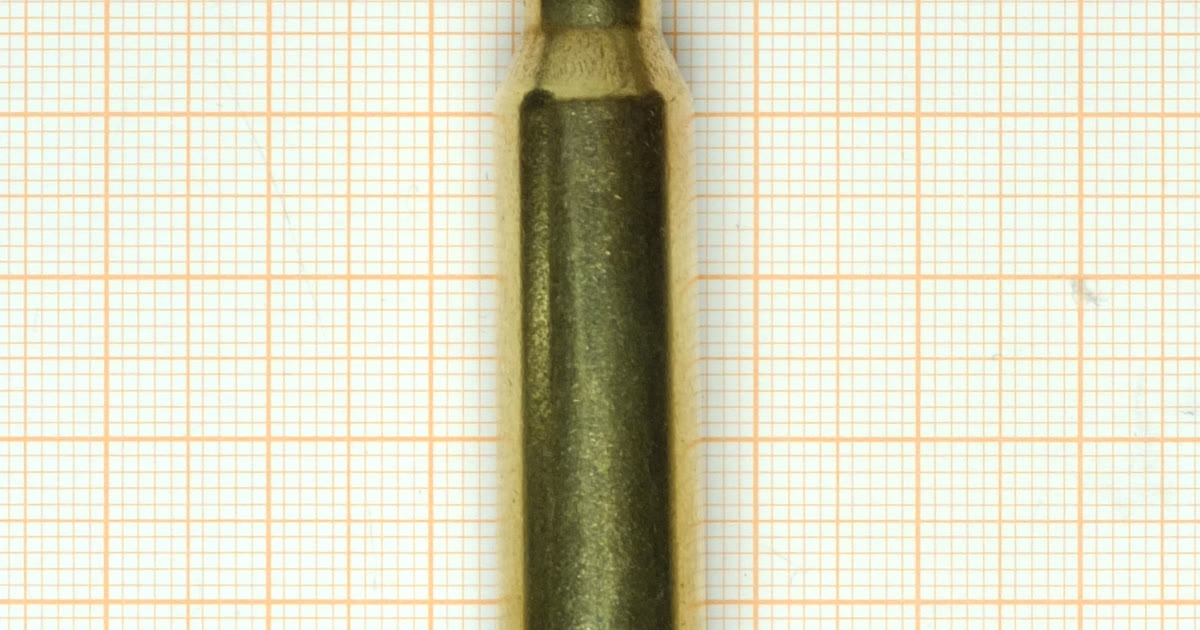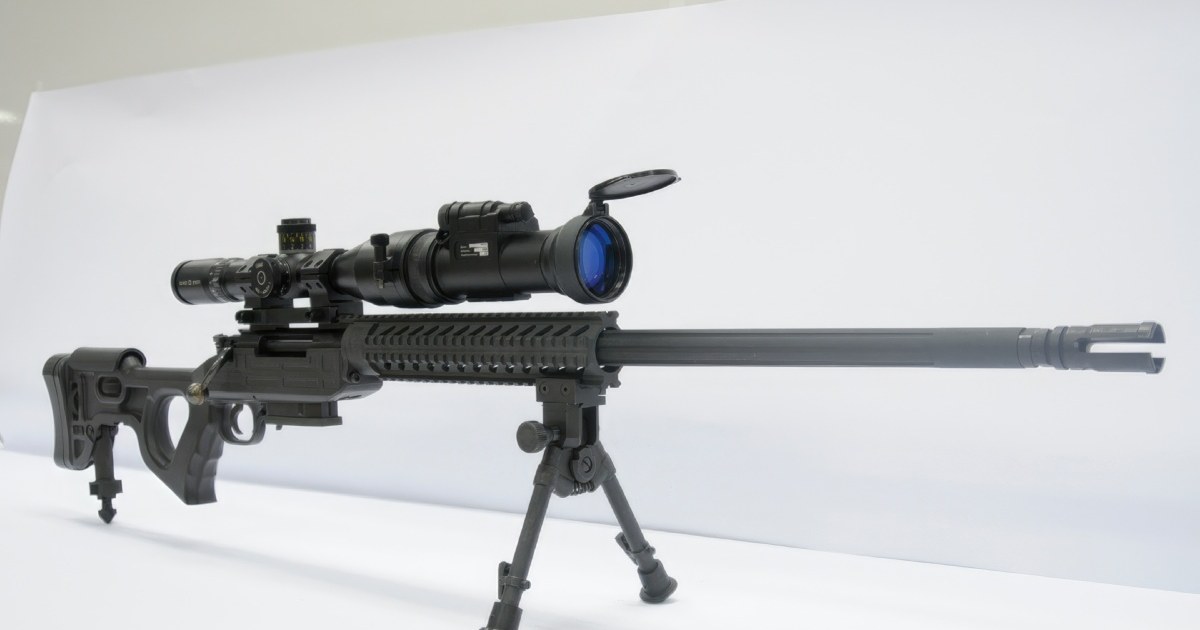
The 6.5mm Precision Rifle Cartridge — the 6.5 PRC — arrived at the 2018 SHOT Show and immediately reshaped the conversation about what a 6.5mm round could do. Where the 6.5 Creedmoor had proven that a modest, efficient .264-caliber bullet could out-shoot everything in its class, Hornady’s PRC asked a different question: what happens when you take that same high-BC bullet and shove it out of a genuinely magnum-sized case? The answer is a cartridge built for one thing above all — putting heavy, slippery bullets downrange faster and flatter than the Creedmoor, with the supersonic stability to keep doing it past a thousand yards.
This guide breaks down the 6.5 PRC from the ground up: where it came from, what it actually does on paper and in the field, which bullets to run, and — just as importantly — where it does not make sense. As always, we separate confirmed facts from estimates and flag anything we could not verify against a primary source.
Origin and History: Hornady’s Magnum 6.5
The 6.5 PRC was developed by Hornady Manufacturing in partnership with George Gardner of GA Precision, and it was released to the public at the 2018 SHOT Show. The design work dates back to around 2013, when the long-range precision-rifle community was pushing the 6.5 Creedmoor to its limits and starting to hit a ceiling: the Creedmoor was flat-shooting and accurate, but it was a standard-action cartridge with a standard-action case, and there was only so much powder you could fit behind those heavy bullets.
Hornady’s own marketing frames the PRC as the “big brother” of the 6.5 Creedmoor, promising a 200+ fps velocity advantage in a compact magnum package. That framing is accurate and comes straight from Hornady. The goal was a cartridge that could drive the same .264-inch bullets the Creedmoor loved at meaningfully higher velocity, extending the flat-shooting envelope and the supersonic range without jumping to a full-length magnum action.
The Parent Case — and a Common Misconception
Here is where a lot of online copy gets it wrong. The 6.5 PRC is most often described as being “based on the .375 Ruger.” The primary sources we could load tell a more precise story: the direct parent case is the .300 Ruger Compact Magnum (.300 RCM), necked down to .264 caliber. The .300 RCM is itself a shortened .375 Ruger case, so the .375 Ruger is the grandparent, not the parent. Hornady, SAAMI, and CIP did not explicitly state the .375 Ruger connection in the sources we reached, so we treat the direct .300 RCM parent as confirmed and the .375 Ruger link as a reasonable but UNVERIFIED lineage detail.
Why does this matter? Because the .300 RCM is a short, fat, beltless case — and that is exactly the architecture that lets the 6.5 PRC run magnum-class powder charges in a short-to-medium action. The PRC is a beltless magnum, not a belted one, and that is a deliberate design choice for reliability and simplicity.
Specifications: Dimensions, Pressure, and Design
The numbers below are drawn from the CIP TDCC technical drawing (dated 18 October 2017) and cross-checked against Hornady’s official load-data PDF. These are the authoritative dimensions.
| Dimension | Value | Source |
|---|---|---|
| Bullet diameter | .264 in (6.5 mm) | Hornady / CIP |
| Case length | 51.56 mm (2.015 in trim) | CIP / Hornady |
| Max overall length (OAL) | 75.06 mm (2.955 in) | CIP |
| Factory COL range | 2.775 in – 2.950 in | Hornady |
| Neck diameter | 7.54 mm | CIP |
| Shoulder angle | 35° | CIP |
| Body / base diameter | 13.51 mm | CIP |
| Rifling twist | 203 mm ≈ 1:8 in | CIP / Hornady |
| CIP max piezo pressure (Pmax) | 4400 bar ≈ 63,800 psi | CIP |
| CIP proof pressure (PK) | 5060 bar ≈ 73,370 psi | CIP |
A note on the pressure figure: The 4400 bar / ~63,800 psi number is the CIP maximum piezo pressure, and it is primary-confirmed. The SAAMI Maximum Average Pressure (MAP) for the 6.5 PRC is commonly cited around 65,000 psi, but we could not reach a primary SAAMI document that states it, so the exact SAAMI MAP is UNVERIFIED — do not treat the 65,000 figure as gospel without a SAAMI source.
Case capacity is another honest gap. The reloading community generally quotes roughly 85–86 grains of water, but no primary Hornady/SAAMI/CIP source we reached states it, so case capacity is UNVERIFIED here. Likewise, the explicit rim diameter is not labeled in the CIP drawing and is UNVERIFIED.
What is solid: the 1:8 twist is fast enough to stabilize the long, heavy high-BC bullets the PRC is built around, and the beltless, short-magnum geometry is what gives the cartridge its powder room without forcing you into a long action.
Ballistics: What the 6.5 PRC Actually Does
Before the tables, one premise correction worth knowing: there is no factory 6.5 PRC load offered as a 140gr or 156gr ELD Match. Hornady’s match bullet in this cartridge is the 147gr ELD Match. The 140gr loads you see are from other lines (Federal Fusion, Sako, Winchester MatchKing), and the 156gr is a Berger EOL Hunter. We built the data below around the real factory offerings, using the 147gr ELD Match as the PRC benchmark.
Factory Load Data
Muzzle velocities and ballistic coefficients are manufacturer-stated values. G7 is the preferred drag model for long, boat-tailed 6.5mm bullets.
| Bullet | Product line | Muzzle velocity | G1 BC | G7 BC |
|---|---|---|---|---|
| 120 gr | Federal Trophy Copper | 3,050 fps | 0.497 | — |
| 120 gr | Nosler E-Tip | 3,100 fps | 0.497 | — |
| 127 gr | Barnes VOR-TX LR | 2,995 fps | 0.468 | — |
| 130 gr | Federal Terminal Ascent | 3,000 fps | 0.532 | — |
| 130 gr | Hornady CX | 2,975 fps | 0.489 | — |
| 140 gr | Federal Fusion SP | 2,925 fps | 0.439 | — |
| 140 gr | Winchester MatchKing HPBT | 3,030 fps | 0.580 | 0.289 |
| 143 gr | Hornady ELD-X Precision Hunter | 2,960 fps | 0.625 | 0.315 |
| 147 gr | Hornady ELD Match | 2,910 fps | 0.697 | 0.351 |
| 156 gr | Berger EOL Hunter | 2,960 fps | 0.679 | 0.347 |
The 147gr ELD Match’s G7 of 0.351 is the headline number — that is a genuinely slippery bullet, and it is what gives the PRC its long-range wind-bucking ability.
A safety note worth repeating: Hornady has issued a notice that the 12th Edition reloading handbook misprinted the 6.5 PRC powder on one page — “StaBall Match” should read “StaBall HD.” If you reload, do not use the misprinted load.
Trajectory and Energy Retention
The figures below use the 147gr ELD Match at 2,910 fps, G7 0.351, zeroed at 100 yards. Important caveat: these are calculator-model outputs (estimates), not manufacturer-published drop tables. True them to your own chronograph and target before trusting them for a shot.
| Range | Velocity | Energy | Drop | Energy retained |
|---|---|---|---|---|
| 100 yd | 2,775 fps | 2,513 ft·lb | 0.0 in | ~91% |
| 200 yd | 2,642 fps | 2,280 ft·lb | −3.0 in | ~83% |
| 300 yd | 2,514 fps | 2,063 ft·lb | −11.0 in | ~75% |
| 500 yd | 2,267 fps | 1,678 ft·lb | −44.1 in | ~61% |
| 800 yd | 1,924 fps | 1,209 ft·lb | −146.7 in | ~44% |
| 1,000 yd | 1,712 fps | 956 ft·lb | −260.7 in | ~35% |
The practical takeaway: the 147gr ELD Match stays supersonic well past 1,000 yards (~1,712 fps). That sustained supersonic flight is the single biggest reason the PRC outperforms the Creedmoor at extreme range — it keeps a stable, predictable drag curve longer instead of transonic-tumbling into the target.
Wind Drift vs. 6.5 Creedmoor
This is where the PRC’s extra velocity and BC pay off — but honestly, the advantage is modest at typical hunting ranges and grows at distance. In a 10 mph full-value crosswind, same calculator, same 100-yard zero:
| Range | PRC 147gr drift | Creedmoor 140gr drift | PRC advantage |
|---|---|---|---|
| 200 yd | 2.2 in | 2.2 in | tie |
| 300 yd | 4.3 in | 5.4 in | ~1.1 in less |
| 500 yd | 14.4 in | 16.2 in | ~1.8 in less |
| 800 yd | 37.4 in | 46.1 in | ~8.6 in less |
| 1,000 yd | 61.2 in | 79.2 in | ~18 in less (~23%) |
Do not let anyone tell you the PRC “beats wind” at 200 yards — at that range the two are effectively tied, and the difference is inside shooter and wind-reading error. The PRC’s wind advantage is a long-range advantage, and it is real there.
Recoil
Recoil is computed from the standard free-recoil formula with estimated powder charges in an 8-lb rifle — these are estimates, not manufacturer-published values.
| Load | Recoil energy (est.) |
|---|---|
| 6.5 PRC 147gr ELD Match | ~18.7 ft·lb |
| 6.5 PRC 143gr ELD-X | ~18.2 ft·lb |
| 6.5 Creedmoor 140gr ELD Match | ~13.0 ft·lb |
In plain terms: the PRC kicks roughly 40–45% more than the Creedmoor. That is a noticeable step up — comparable to moving from a .308 to a .30-06-class push — but it is not punishing, and a heavier rifle or a good muzzle brake closes much of the gap. The extra recoil is the direct price of the extra velocity.
Bullet Types: What to Run
The 6.5 PRC is a high-BC cartridge first and foremost, and the bullet selection reflects that.
- ELD Match (147gr): The precision-target bullet. Highest BC in the line (G7 0.351), built for paper and steel at long range. Not a hunting bullet — it is designed for accuracy, not terminal expansion.
- ELD-X (143gr): The all-range hunting bullet. The Heat Shield tip preserves the BC through supersonic flight, and the bullet is rated for medium game (50–300 lb) and large game (300–1,500 lb) with reliable expansion across a wide velocity band. This is the do-it-all hunting choice.
- CX (130gr): Hornady’s copper, lead-free solid-style hunting bullet for those who need non-lead or want deep penetration on tough animals.
- A negative finding worth stating: the InterBond is NOT offered in 6.5mm. If you were hoping for a bonded InterBond in this caliber, it does not exist in the factory line. Plan around the ELD-X or a third-party bonded bullet instead.
Third-party options (Berger, Federal, Nosler, Barnes) fill out the lineup nicely, as the factory table shows.
Hunting Applications: An Honest, Species-by-Species Look
Whitetail and mule deer — excellent. The 6.5 PRC is more than enough deer cartridge at any realistic range. The high-BC bullets expand reliably and the flat trajectory makes hits easy. This is a comfortable, overbuilt deer round.
Elk — capable, with smaller-bore caveats. The PRC can ethically take elk, especially with the 143gr ELD-X or a solid copper bullet, at ranges within its energy envelope. But it is still a 6.5mm — a smaller bore than the traditional .300 magnums. Shot placement matters more than with a .300 Win Mag, and you should keep your shots within the energy window where your bullet is still expanding reliably (roughly inside 600–800 yards with a hunting bullet, per the energy table).
Sheep and mountain goats — the sweet spot. This is arguably where the PRC shines brightest as a hunting cartridge. Thin air, long shots across canyons, and the need for a flat, wind-bucking trajectory are exactly what the PRC was built for. The extra velocity and BC over the Creedmoor are genuinely useful on a 700-yard mountain shot.
Pronghorn — capable but overkill at close range. On a 400-yard antelope shot the PRC is a laser. At 100 yards it is more gun than you need, but it will still do the job cleanly.
Long-range big game — the design intent. The PRC exists for the long shot on big game. If you hunt open country where 600-to-900-yard opportunities are real, this cartridge is purpose-built for that scenario.
Long-Range Target Shooting and Competition
The 6.5 PRC was developed with the precision-rifle series (PRS/NRL) community in mind, and it shows. The sustained supersonic flight, high BC, and flat trajectory make it a legitimate 1,000-to-1,200-yard target cartridge. For a skilled shooter with a good optic and solid wind calls, the PRC is a serious competitor on long-range steel and paper. Specific competition results are UNVERIFIED here, but the ballistic profile clearly supports the niche.
Rifle Platforms
The 6.5 PRC uses a .532-inch magnum bolt face — larger than the standard .473-inch face — but it is designed to run in short-to-medium actions, not full-length magnums. That is the whole point of the beltless short-magnum design: magnum performance without a long action.
It is a bolt-action cartridge. You will find it in bolt-action precision and hunting rifles — platforms like the Christensen Arms MPR and ELR are confirmed examples. Do not expect a semi-auto 6.5 PRC; the cartridge and its pressures are a bolt-action proposition.
Home Defense: An Honest “No”
We will be blunt: the 6.5 PRC is a poor choice for home defense. It is a long-range, magnum bolt-action rifle cartridge, and every one of those traits is wrong for a home-defense scenario. Over-penetration through walls is a serious concern, the bolt-action is slow and unwieldy in a stress shot, the muzzle blast indoors is severe, and there is no controlled-penetration bullet designed for this caliber in a defensive context. If you want a home-defense rifle, this is not it — pick a purpose-built defensive caliber and platform.
6.5 PRC vs. 6.5 Creedmoor: The Real Comparison
This is the question every buyer asks, and the honest answer is: it depends on your longest expected shot.
- Inside ~500 yards: The Creedmoor is the more practical choice. Lower recoil, cheaper ammo, wider rifle selection, and you give up almost nothing on wind or trajectory at these ranges.
- Beyond ~600 yards: The PRC earns its keep. The extra velocity, higher BC, and longer supersonic flight translate into real advantages on trajectory, wind, and retained energy at the long end.
- The trade-off: The PRC’s edge is paid for in recoil, muzzle blast, faster barrel wear, and higher ammo cost. It is not a free upgrade — it is a specialized one.
If you are a hunter who mostly shoots inside 500 yards, the Creedmoor is the smarter buy. If you hunt open country or shoot long-range competition where 800-to-1,200-yard shots are real, the PRC is the tool for the job.
Ammunition Availability and Cost
The 6.5 PRC has a healthy multi-load factory line from Hornady, Federal, Winchester, Nosler, Barnes, Norma, and Sako, so ammunition is broadly available and not a niche-aftermarket caliber. Exact current retail pricing and stock levels are UNVERIFIED here and fluctuate with market conditions, but expect the PRC to cost more per round than the Creedmoor, consistent with its magnum-class powder charge.
Pros and Cons
Pros:
- Genuinely flat trajectory with sustained supersonic flight past 1,000 yards
- High-BC bullets (G7 0.351 on the 147gr ELD Match) for real long-range wind performance
- Runs magnum-class velocity in a short-to-medium action (beltless, no long action needed)
- Excellent on deer; capable on elk; superb for mountain-sheep long shots
- Healthy multi-manufacturer factory ammunition line
Cons:
- ~40–45% more recoil than the 6.5 Creedmoor
- More muzzle blast and faster barrel wear than the Creedmoor
- Higher ammunition cost
- Wind advantage is negligible inside ~300 yards
- Poor fit for home defense
- Requires a .532-inch magnum bolt face (limits some rifle options)
Final Verdict
The 6.5 PRC is exactly what Hornady said it would be: a 6.5 Creedmoor with a magnum case bolted on, delivering a real 200+ fps advantage and the supersonic stability to extend the flat-shooting envelope well past a thousand yards. For long-range precision shooting and long-range hunting in open or mountainous country, it is a superb, purpose-built cartridge that earns every bit of its popularity.
But it is not a universal upgrade. The extra velocity comes with extra recoil, extra blast, extra barrel wear, and extra cost — and at the ranges most hunters actually shoot, the 6.5 Creedmoor does the job with less of everything. Buy the PRC for the long shot. If your longest expected shot is inside 500 yards, save your money and your shoulder and run the Creedmoor.
For the American long-range shooter and the open-country hunter, the 6.5 PRC is a genuinely great American cartridge — a modern magnum that respects the .264 caliber’s reputation for accuracy and stretches it to distances the Creedmoor simply cannot hold.
Ready to build your long-range setup? Explore the full lineup of precision rifles, optics, and premium 6.5 PRC ammunition at Patriotic Firearms — American-made quality for American shooters.
Stay in the fight. Get the latest caliber deep-dives, ballistics breakdowns, and gear reviews delivered straight to your inbox. Sign up for the Patriotic Firearms newsletter.
Disclaimer: This article is for informational purposes only. Ballistic figures marked as calculator-model estimates should be verified with your own chronograph and target before relying on them for a shot. Always follow all federal, state, and local laws regarding firearms and ammunition, and observe the legal and ethical guidelines of your state wildlife agency for hunting. Nothing in this article is legal advice.
About the author: Nathan Grill is a lifelong firearms enthusiast and writer covering calibers, ballistics, and gear for Patriotic Firearms. He believes in the Second Amendment, honest data, and helping American shooters make informed decisions.