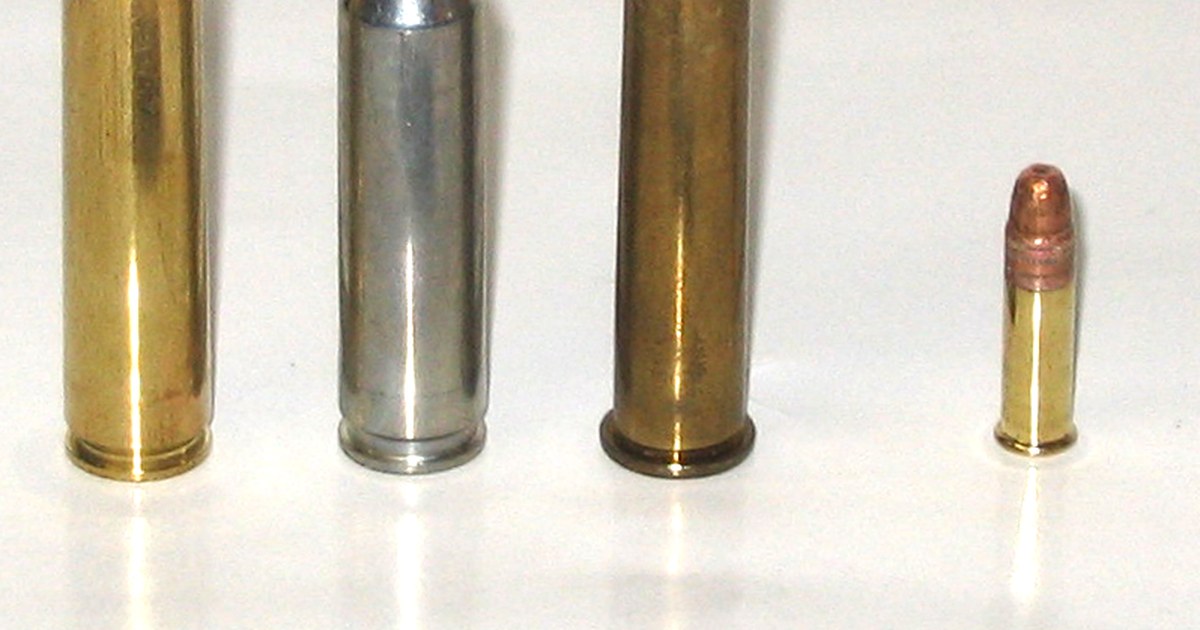
If you grew up around guns in America, there’s a very good chance the first firearm you ever held was a .22. The little rimfire cartridge that taught a century of kids to shoot, that fills a tin can for pocket change, that drops a squirrel from a tree limb at forty yards without waking the neighbors — the .22 Long Rifle is not just a cartridge. It is the foundation of American marksmanship, the most-produced center of a shooting culture, and the round that quietly made millions of people competent with a firearm before they ever touched a centerfire rifle.
But the .22 LR is also one of the most misunderstood and most casually dismissed cartridges on the shelf. People wave it off as a “toy round” while carrying thousands of them to the range, and they make safety mistakes with its rimfire cousins that can hurt them. This guide sets the record straight: where the .22 LR came from, what it actually does, the loads that exist, where it shines, and — just as importantly — the hard lines it must never be pushed past.
What the .22 Long Rifle Actually Is
The .22 Long Rifle did not appear in a vacuum. It is the culmination of more than four decades of rimfire innovation that began in a French parlor and ended in a Massachusetts gun shop.
The story starts in 1845, when French inventor Louis-Nicolas Flobert created the first practical metallic rimfire cartridge — the .22 BB Cap — a diminutive round designed for indoor target shooting with a heeled lead ball and minimal report. In 1857, the Smith & Wesson Model 1 revolver fired the .22 Short, the first commercially successful metallic cartridge in America, using black powder to push a conical lead projectile. The .22 Long followed in 1871, stretching the case to 0.613 inches with a five-grain black-powder charge. The .22 Extra Long arrived in 1887, pairing a 40-grain outside-lubricated bullet with a .22 Long case.
Then, also in 1887, the J. Stevens Arms & Tool Company of Chicopee, Massachusetts combined the .22 Long case with that 40-grain bullet to create the .22 Long Rifle — a longer, faster, more versatile round that rendered the .22 Extra Long obsolete almost overnight. Founder Joshua Stevens is often called the “Father of the 22 LR,” and the cartridge he introduced has outlived every company and every war that has fired it.
Originally loaded with black powder, the .22 LR transitioned to smokeless powder in the 1890s. Once makers realized smokeless was more efficient, “high velocity” loads appeared, pushing the standard 40-grain bullet from roughly 1,070 fps toward 1,200–1,300 fps. That single evolution turned a gentle parlor round into the do-everything cartridge we know today.
The “Juker/Federic” Myth: Let’s Set the Record Straight
You will sometimes read that the .22 LR was developed by a “Juker” or “Federic” for the Stevens “Little Judge” pistol or Davenport firearms. This claim is not supported by any primary source. The verified historical record credits the J. Stevens Arms & Tool Company and Joshua Stevens with introducing the cartridge in 1887. The “Little Judge” was a Stevens single-shot pistol and Davenport was a separate maker, but neither is confirmed as the origin of the .22 LR. We flag this honestly rather than repeat a tidy-but-unsourced story. The real history is good enough.
Specifications
The .22 Long Rifle is a rimfire cartridge — the primer compound is distributed around the inside of the rim, and the firing pin strikes the rim rather than a separate primer pocket. This is the single most important thing to understand about it, because it shapes everything from reliability to pressure limits.
| Parameter | Value |
|---|---|
| Primer type | Rimfire (NOT centerfire) |
| Bullet diameter | .2255 in (heeled design, measured at the driving band) |
| Case length | 0.613 in (max) |
| Overall length (OAL) | 1.000 in (max) |
| Rim diameter | 0.278 in (max) |
| Rifling twist | 1:16 in, six grooves |
| SAAMI max pressure (MAP) | 24,000 psi |
| CIP max pressure (Pmax) | 1,700 bar (~24,656 psi) |
| Parent case | None — rimfire, no bottleneck parent |
A note on the heeled bullet: the .22 LR’s bullet is wider than the inside of its own case. The rear “heel” is reduced to fit inside the case while the forward driving band is the full .2255 caliber. This is a black-powder-era legacy that distinguishes it from centerfire cartridges, whose bullets fit entirely inside the case.
Common designations: .22 LR, .22 Long Rifle, 5.6mm RF (European/CIP), and the informal “.22 Rifle.” They all refer to the same cartridge.
Misconceptions and Safety: The Interchangeability Question
This is the most important safety topic for any rimfire owner. The .22 Short, .22 Long, and .22 LR share the same bullet diameter and rim dimensions but differ in case and overall length.
- Firing shorter rounds in a .22 LR chamber: Generally acceptable. A .22 LR firearm can typically chamber and fire .22 Short, .22 Long, and .22 LR. The catch is that shorter rounds may not generate enough energy to cycle a semi-automatic action reliably.
- Firing .22 LR in a .22 Short-only chamber: Do not do it. The .22 LR is longer than a Short-only chamber is designed to accept, and forcing it can cause dangerous pressure buildup or case rupture. The rule is simple: never force a longer cartridge into a shorter chamber.
- Firing .22 Extra Long in a .22 LR chamber: Not possible — the Extra Long is too long to fit.
On rimfire vs centerfire reliability: rimfire is inherently less reliable than centerfire because the primer must ignite uniformly around the entire rim. It is not unusual to encounter one or two misfires in a box of 100 rounds of even good rimfire ammo, and the thin rim can be damaged by a harsh bolt strike. For a life-dependency situation, centerfire is the more dependable platform. Rimfire also cannot be reloaded.
Finally, the “not a serious cartridge” myth. The .22 LR is a capable small-game hunter, an elite training tool, and a historically significant round. Its limitations are real — but dismissing it entirely ignores genuine utility that has made it the most popular cartridge in the world.
Ballistics: The Honest Numbers
The .22 LR spans an extraordinary velocity range — from primer-only whispers barely louder than an airgun to hyper-velocity varmint loads pushing 1,640 fps. Here are the factory loads that matter, with manufacturer-published figures.
| Load | Bullet | Muzzle Velocity | Muzzle Energy |
|---|---|---|---|
| CCI Standard Velocity | 40 gr LRN | 1,070 fps | ~102 ft-lb |
| CCI Target Mini-Mag | 40 gr CPRN | 1,235 fps | ~135 ft-lb |
| CCI Velocitor HP | 40 gr CPHP | 1,435 fps | ~183 ft-lb |
| CCI Stinger | 32 gr CPHP | 1,640 fps | ~191 ft-lb |
| CCI Quiet-22 (subsonic) | 40 gr LRN | 710 fps | ~45 ft-lb |
| Aguila Super Colibri | 20 gr LRN | 590 fps | ~16 ft-lb |
| Aguila Colibri | 20 gr LRN | 420 fps | ~8 ft-lb |
(Aguila figures are corrected from common misquotes: the Colibri and Super Colibri are 20-grain rounds, not 30-grain. CCI does not publish the exact test-barrel length used for its velocity figures, so treat barrel-length-dependent numbers as approximate.)
Trajectory
The light bullets produce a curved trajectory. With a 50-yard zero and 1.5-inch sight height, representative drop looks like this:
| Load | Drop @ 25 yd | Drop @ 50 yd | Drop @ 75 yd | Drop @ 100 yd |
|---|---|---|---|---|
| Standard Velocity 40gr | -2.3″ | 0″ (zero) | -5.6″ | -19.2″ |
| Target Mini-Mag 40gr | -2.1″ | 0″ (zero) | -4.7″ | -15.5″ |
| Stinger 32gr | -1.7″ | 0″ (zero) | -6.3″ | -10.9″ |
| Quiet-22 40gr | -3.6″ | 0″ (zero) | -22.5″ | -39.7″ |
The Stinger’s flatter trajectory — only about 11 inches of drop at 100 yards versus 19 for Standard Velocity — makes it the most practical .22 LR for shots beyond 75 yards. Subsonic loads become very difficult to place past 50 yards.
Energy Retention
Light bullets with poor ballistic coefficients shed energy fast. The Stinger starts hot at 191 ft-lb but retains only about 39% of it at 100 yards (~74 ft-lb), while the Standard Velocity load, starting lower, actually holds a higher percentage (~65%). The lesson: raw muzzle velocity is not the same as downrange performance.
Recoil
This is where the .22 LR earns its reputation. In a 6-pound rifle, a 40-grain Standard Velocity load produces roughly 0.157 ft-lb of recoil energy — about 1/50th the recoil of a .308 Winchester. Even a hot Stinger in a light 2-pound pistol stays under 0.8 ft-lb. The near-absent recoil lets new shooters focus on fundamentals without flinching and lets experienced shooters put thousands of rounds downrange without fatigue.
Accuracy and Effective Range
Match-grade .22 LR (CCI Bench Rest, Eley Tenex, SK Rifle Match) can shoot sub-MOA at 50 yards in a quality rifle. For hunting, the optimal range is 25–50 yards with head shots, and the maximum practical range is about 75 yards with high-velocity loads and precise placement. Beyond that, steep drop, wind drift, and falling energy make ethical kills unreliable. The .22 LR is often mechanically accurate well past its effective range — and that is exactly the trap. Accuracy without terminal performance is unethical.
Bullet Types: What Actually Exists
The .22 LR is not one load but a family. Choosing the right bullet is the difference between a humane harvest and a lost animal.
- Lead Round Nose (LRN): The classic 40-grain plain-lead round at standard velocity (~1,070 fps). Cheapest, most consistent, easiest on barrels. Best for target practice, plinking, and small rodents at close range. Tends to penetrate without expanding, so it is less ideal for tougher game.
- Lead / Copper-Plated Hollow Point (LHP/CPHP): A nose cavity that encourages expansion for a quicker kill. Best for squirrels, rabbits, raccoons, and woodchucks where head or chest shots are reliable. The National Wild Turkey Federation’s load-matching guidance recommends hollow points for “tougher animals such as squirrels, raccoons, woodchucks, marmots or jack rabbits.”
- Copper-Plated Round Nose (CPRN): A lead core jacketed in copper at high velocity (~1,235 fps). Cleaner barrels (less leading) and a flatter trajectory — a good all-rounder for plinking and light hunting.
- Solid / Solid-Point: Non-expanding, often in low-power loads for target work or older firearms that may not tolerate modern pressures.
- Hollow-Point Varmint Loads: Purpose-built expanding bullets for groundhogs, prairie dogs, and pest birds where a fast, clean kill matters.
- Subsonic (CCI Quiet-22): 40 grains at ~710 fps, below the speed of sound to kill the sonic crack. Best for suppressed or hearing-conscious shooting and close-range pest control. Very low energy demands precise placement.
- Aguila Colibri / Super Colibri: Primer-only or near-primer-only 20-grain rounds for extremely quiet indoor or backyard practice and gentle use in vintage firearms. Not hunting rounds beyond the smallest pests at point-blank range.
- .22 CB Cap — a clarification: The .22 CB is commonly lumped in with .22 LR, but it is a separate rimfire cartridge based on the .22 BB Cap parent case, not a .22 LR load. Treat it as a distinct low-power rimfire.
- .22 Shotshells (e.g., CCI #12 Shot): A rimfire cartridge loaded with a capsule of fine #12 birdshot (~31 grains, ~1,000 fps), turning a .22 into a mini-shotgun for close-range rats, snakes, and nuisance birds. Effective only at a few yards.
- Magnum / Hyper-Velocity (CCI Stinger): A light 32-grain hollow point at ~1,640 fps for flatter-trajectory varmint work. Caveat: the longer case and higher pressure can foul or malfunction in some semi-auto and 1911-style .22 pistols, and several competition rulebooks prohibit hyper-velocity ammo.
Hunting Applications: Honest Per-Species Assessment
The .22 LR is a legitimate small-game and varmint cartridge, but its effectiveness is species- and shot-placement-dependent.
- Tree squirrels: Excellent with a hollow point placed on the head or chest within ~50 yards. This is the .22 LR’s signature hunt.
- Rabbits / hares: Good for cottontails at close range with an HP; jackrabbits, being larger and tougher, benefit from high-velocity or hyper-velocity HP loads.
- Raccoons: Honest assessment — raccoons are surprisingly tough. A well-placed HP to the head works; a body shot with a standard-velocity round may not produce a quick kill. Many hunters prefer a .22 WMR or shotgun for coons at night.
- Varmints / pest control: Very effective with HP or shotshell loads at appropriate ranges. The .22 LR shotshell is a handy close-range tool for snakes and rats around barns and property.
- Bird control: Legal and practical only where local regulations permit; always verify species-specific and location-specific rules before shooting nuisance birds.
The ethical through-line: the .22 LR’s low energy makes shot placement non-negotiable. A hit anywhere but the head or spine on a larger small-game animal risks a slow, inhumane death. Know your limits and your load.
Survival and Bushcraft
The .22 LR has earned its reputation as a classic survival cartridge for practical reasons, not nostalgia. A thousand rounds weighs roughly five to six pounds, letting a survivor carry an enormous amount of small-game-hunting capability in a pack. The quiet report — especially in subsonic form — won’t broadcast your position over long distances. Squirrels, rabbits, and birds are realistic survival protein, and the .22 LR takes them humanely with the right load. And its low recoil means a survivor of any size or experience level can shoot it accurately.
The honest caveat: the .22 LR is a small-game survival tool. It offers no meaningful defense against large predators and cannot take big game. A .22-only survival kit should be paired with other means — snare, knife, or a larger-caliber firearm — for a complete plan.
Training and the First Gun
The .22 LR is arguably the best first firearm and training cartridge ever made. Low recoil builds confidence and good fundamentals without flinching. Low report reduces hearing stress. Affordability allows the high round counts that are the single biggest driver of skill acquisition. And the fundamentals are identical to centerfire — sight alignment, trigger control, breathing, and follow-through transfer directly to larger calibers. For new shooters, youth programs, and veterans returning to marksmanship, the .22 LR removes the intimidation factor while teaching the exact skills that matter.
Competition and Sport
- Biathlon: The .22 LR is the required caliber in international biathlon. The International Biathlon Union standardized on .22 LR smallbore rifles in 1978, replacing the high-powered military rifles of earlier eras.
- NRA .22 Silhouette: Smallbore metallic silhouette is shot at 40/60/77/100 m against steel chickens, pigs, turkeys, and rams. NRA rules specify factory .22 short/long/LR rimfire, and hyper-velocity ammunition is prohibited in the Cowboy/smallbore classes — a reminder that the sport values consistency over raw speed.
- Plinking and target shooting: The .22 LR is the undisputed king of casual and competitive target practice due to cost, low noise, and low recoil.
Honest Limitations
No honest guide to the .22 LR can skip the bright lines.
NOT for deer hunting. This is a legal and ethical bright line, confirmed by primary sources. The Michigan DNR requires “a rifle of any caliber larger than a .22-caliber rimfire” for deer. Texas Parks & Wildlife states plainly: “Rimfire Ammunition (of any caliber) may not be used to hunt white-tailed deer, mule deer, desert bighorn sheep, or pronghorn.” Beyond legality, the .22 LR’s ~100–190 ft-lb of energy is grossly insufficient for a humane kill on a 100+ lb deer; it risks wounding and suffering. Do not attempt it.
NOT recommended for home defense. A standard-velocity .22 LR delivers roughly 100 ft-lb of muzzle energy; even the hot Stinger reaches only ~191 ft-lb. The commonly cited rule-of-thumb for defensive handgun energy is around 300 ft-lb, and the .22 LR falls well short. Its low energy, marginal penetration, and dependence on precise shot placement make it a poor defensive choice when better options exist. (Note: the popular attribution of a specific “FBI under-penetration” standard to the .22 LR is unverified as a formal federal mandate; the energy shortfall above is the factual basis for the caution.)
Rimfire reliability caveats. The .22 LR’s rimfire primer is inherently less reliable than centerfire, misfires are more common, and the thin rim can be damaged by harsh bolt strikes. For a life-dependency situation, centerfire is the more dependable platform. Rimfire also cannot be reloaded.
Rifle Platforms
The .22 LR runs across virtually every action type, which is a big part of its versatility: bolt-action target and hunting rifles, semi-automatic rifles and pistols, single-shot and tip-up designs, and revolvers. From a $200 bolt-action to a precision match rifle to a pocket .22 revolver, the cartridge adapts to the task and the budget. The 1:16 twist is standard across most barrels, and barrel lengths range from 2.5-inch revolvers to 28-inch target rifles.
Ammunition Market and Availability
The .22 LR is produced in larger quantities than any other cartridge, which keeps prices low and availability high — though the round has seen periodic shortages driven by surges in demand. Major makers (CCI, Federal, Winchester, Aguila) cover every velocity class and bullet type, so whatever your task, there is a load built for it. Buy in bulk when you can; the per-round cost is the lowest of any centerfire or rimfire cartridge in common use.
Pros and Cons
Pros
- Extremely low cost per round; high round counts for the money
- Minimal recoil and report — beginner-friendly and hearing-friendly
- Lightweight; large carry capacity for survival
- Excellent small-game and varmint performance with the right load
- Ideal training and first-gun cartridge; fundamentals transfer to centerfire
- Rich competition ecosystem (biathlon, silhouette, target)
- Wide variety of loads for every task (subsonic to hyper-velocity)
Cons
- Low energy limits it to small game; ineffective and unethical on deer
- Poor home-defense cartridge (energy and penetration shortfall)
- Rimfire reliability inferior to centerfire; misfires more common
- Not reloadable
- Subsonic/low-power loads demand very precise shot placement
- Hyper-velocity loads can malfunction in some semi-auto platforms and are banned in some competitions
Recommendations by Use Case
| Use Case | Recommended Load | Why |
|---|---|---|
| Target practice / plinking | 40gr LRN standard velocity | Cheapest, consistent, easy on barrels |
| First gun / training | 40gr LRN or CPRN | Low recoil, affordable, teaches fundamentals |
| Squirrel hunting | 36–40gr HP (high velocity) | Expansion for quick, humane kills |
| Rabbit / jackrabbit | 40gr HP high velocity or Stinger 32gr | Extra energy for tougher lagomorphs |
| Raccoon (night) | 40gr HP, head shot preferred | Reliable only with precise placement |
| Varmint / prairie dog | HP varmint load or Stinger | Rapid expansion at range |
| Barn/property pest (rats, snakes) | .22 LR #12 shotshell | Close-range shotgun-like pattern |
| Quiet / suppressed / backyard | CCI Quiet-22 40gr subsonic | Subsonic, low report |
| Vintage firearm / ultra-quiet | Aguila Colibri / Super Colibri 20gr | Primer-only, gentle on old actions |
| Biathlon | IBU-compliant .22 LR standard velocity | Required caliber since 1978 |
| NRA .22 silhouette | .22 LR standard velocity (no hyper-velocity) | Rulebook prohibits hyper-velocity |
| Home defense | Not recommended — use a centerfire defensive caliber | Energy/penetration shortfall |
| Deer hunting | Illegal / unethical — use a centerfire rifle | Prohibited by MI, TX and most states |
The Verdict
The .22 Long Rifle is not a toy, and it is not a do-everything cartridge either. It is the most important cartridge in American shooting — the round that teaches, that feeds, that competes, and that connects generations of shooters to the fundamentals. Within its lane — small game, varmints, training, competition, and quiet plinking — it is close to unbeatable, and nothing else comes close on cost and shootability.
Respect its limits and it rewards you for a lifetime. Push it past them — onto a deer, or into a home-defense role it was never designed for — and you break both the law and the ethics of the hunt. Learn the rimfire safety rules, pick the right load for the job, keep your shots inside 75 yards on game, and the .22 LR will be the most useful cartridge you own.
If you’re building out a home arsenal or choosing your next rifle, browse the full lineup at Patriotic Firearms — from first-gun .22s to the centerfire rounds that fill the roles the little rimfire can’t.
Stay in the loop. Sign up for the Patriotic Firearms newsletter for more deep-dive guides, ballistics breakdowns, and honest takes on the gear that matters to American gun owners.
About the author: Nathan Grill is a writer and lifelong firearms enthusiast covering cartridges, ballistics, and hunting gear for Patriotic Firearms. He is committed to accurate, source-verified information and responsible, safety-first shooting.
Legal disclaimer: This article is for informational and educational purposes only. Firearms laws vary by state and locality and change frequently. Always verify current regulations with your state wildlife agency and local authorities before hunting or carrying. Nothing here is legal advice.