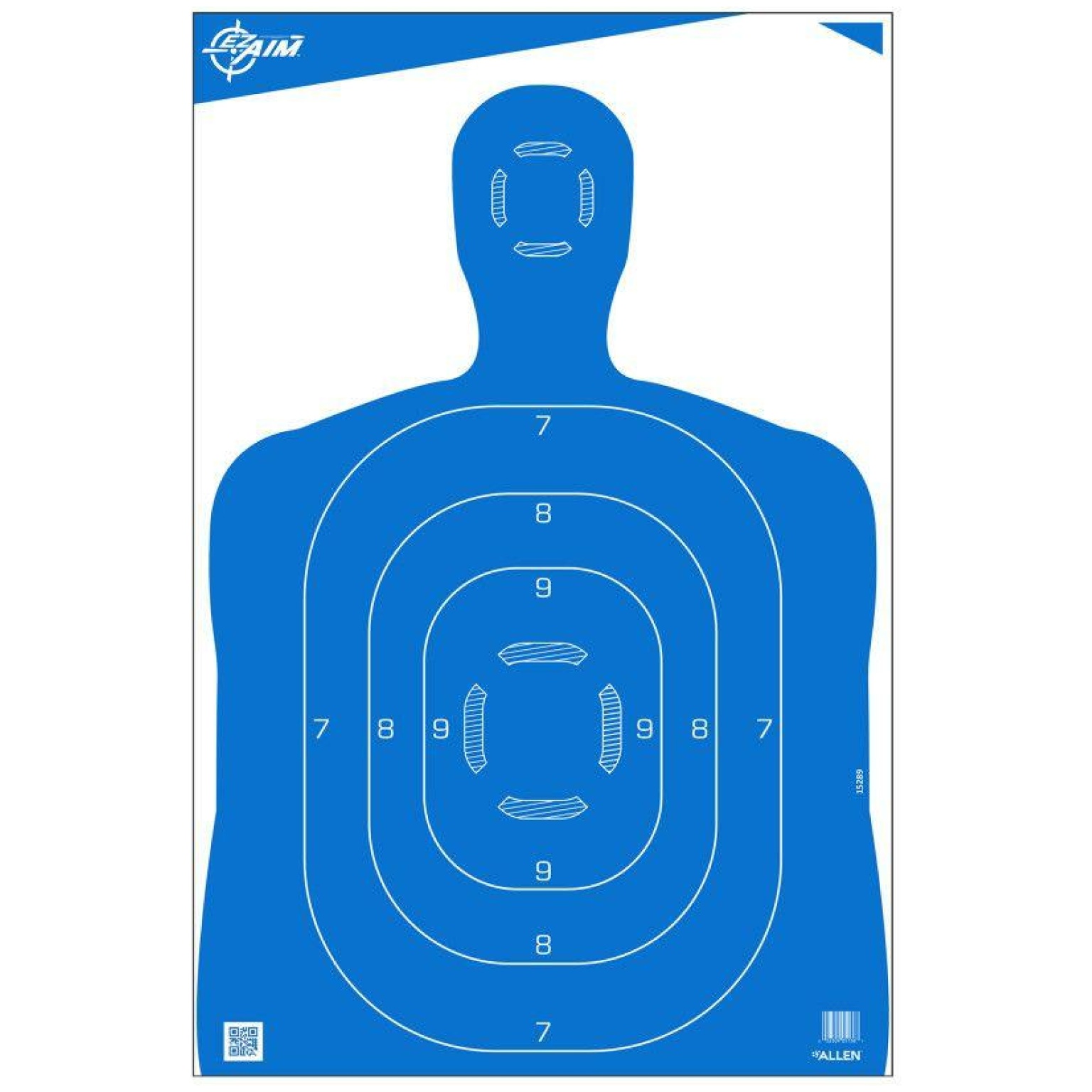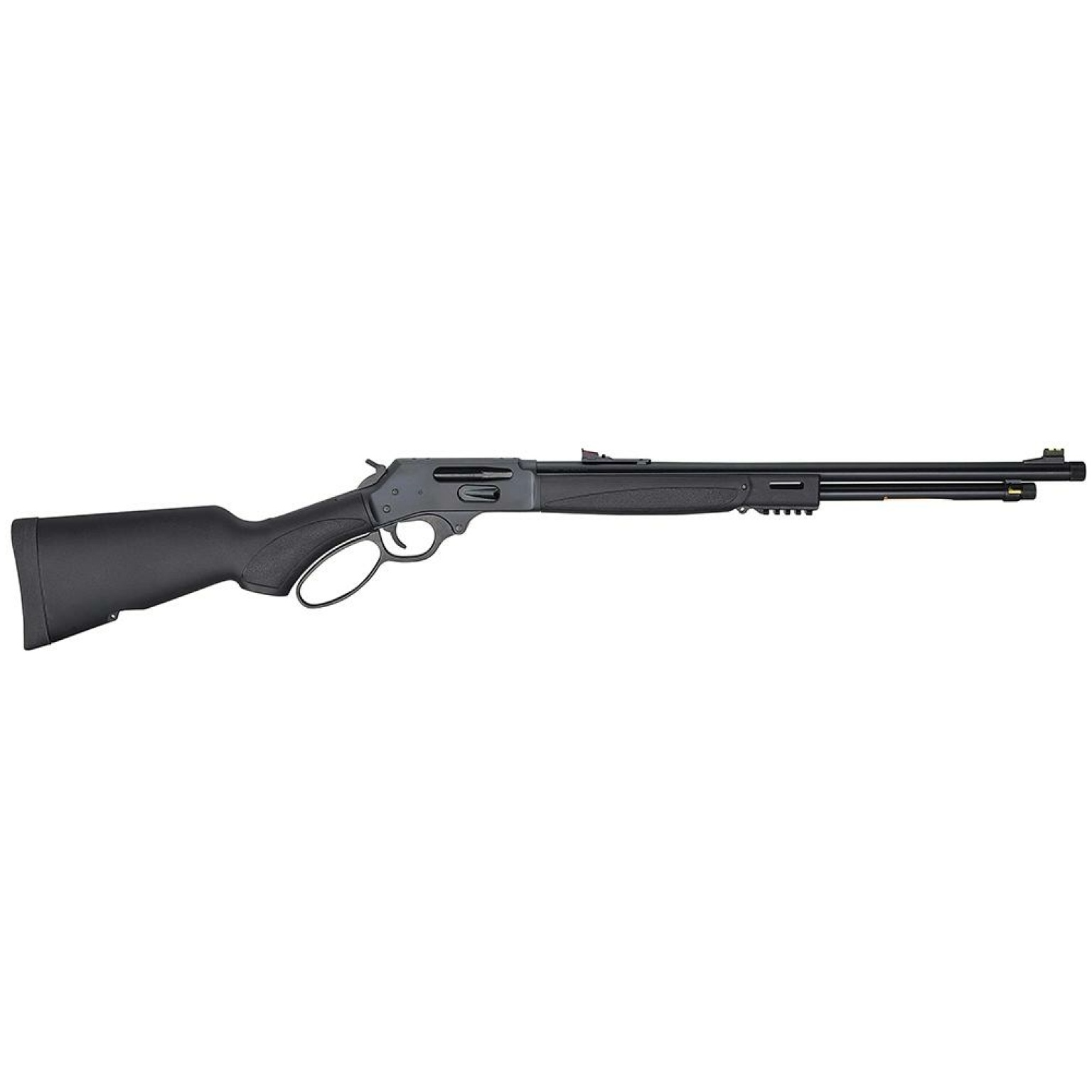
The .308 Winchester is the cartridge that taught the world how to build a modern short-action rifle. Born from a military experiment and handed to the civilian market in 1952, it became the yardstick against which every medium-power hunting and target round is measured. Seventy years later it is still on the bench in more American gun safes than almost any other centerfire rifle cartridge — and for good reason. It is accurate, versatile, widely available, and genuinely capable from the whitetail woods to the 1,000-yard line.
This guide walks through where the .308 came from, what it actually does on paper and in the field, which bullets to run for which job, and — just as important — where the marketing hype and the common misconceptions fall apart. Every specification here is tied to a primary or near-primary source, and every estimate is labeled as one.
Origin and History: From the Battlefield to the Deer Camp
The .308 Winchester did not start life as a hunting cartridge. It began as the U.S. military’s T65 experimental round, developed at Frankford Arsenal by trimming down the .300 Savage case to create a shorter, more efficient .30-caliber cartridge that could feed a new generation of battle rifles. (Source: Wikipedia, .308 Winchester — secondary.)
Winchester took that military work and commercialized it in 1952, chambering it in the Winchester Model 70 bolt-action rifle. (Source: Wikipedia — secondary.) That date matters, because a persistent bit of internet folklore claims the .308 is a “2016 cartridge.” It is not. The .308 Winchester is a 1952 design, and the 2016 date has no basis in any source reviewed here. If you see it repeated, it is wrong.
The military adopted the parent cartridge as 7.62×51mm NATO in 1954, and the two have been tangled together ever since. The .308’s real innovation was proving that a short action could deliver full .30-caliber performance. Before 1952, serious .30-caliber power meant a long-action rifle — the .30-06 Springfield and its cousins. The .308 shrank the case, kept the bullet, and changed the geometry of the entire industry. Every modern short-action cartridge — 6.5 Creedmoor, 6.5mm PRC, .260 Remington — is standing on the shoulders of the .308.
Specifications: The Verified Numbers
The following dimensions are drawn from the CIP TDCC technical drawing for the .308 Winchester (CIP drawing 84-06-14), which is a primary source. (Source: CIP TDCC, tabical-en-page125.pdf — CONFIRMED.)
| Specification | Value | Status |
|---|---|---|
| Bullet diameter | 7.85 mm (.308″) | CONFIRMED (CIP) |
| Bore / land diameter | 7.62 mm (.300″) | CONFIRMED (CIP) |
| Case length | 51.18 mm (2.015″) | CONFIRMED (CIP) |
| Max overall length (OAL) | 71.12 mm (2.800″) | CONFIRMED (CIP) |
| Neck diameter | 8.72 mm | CONFIRMED (CIP) |
| Shoulder angle | 36° / 35° | CONFIRMED (CIP) |
| Base diameter | 11.96 / 12.01 mm | CONFIRMED (CIP) |
| Rim diameter | 12.01 mm | CONFIRMED (CIP) |
| Twist rate | 305 mm (1:12″) | CONFIRMED (CIP) |
| CIP max pressure (Pmax) | 4,150 bar (~60,191 psi) | CONFIRMED (CIP) |
| CIP proof pressure (PK) | 4,773 bar (~69,222 psi) | CONFIRMED (CIP) |
| CIP acceptance date | 14 June 1984 | CONFIRMED (CIP) |
| SAAMI max average pressure | 62,000 psi | SECONDARY (SAAMI doc not reached) |
| Case capacity | ~56 gr H₂O | SECONDARY (Wikipedia; CIP omits) |
| Primer | Large rifle | UNVERIFIED (primary) |
A note on the CIP date: the CIP drawing was formally accepted in 1984, but that is the standardization paperwork date, not the cartridge’s birth. The .308 itself is a 1952 cartridge. The CIP simply codified what already existed.
.308 Winchester vs 7.62×51mm NATO: Same Drawing, Different Pressure
This is the single most misunderstood pairing in modern centerfire shooting, so let’s be precise.
Dimensionally, the CIP treats them as one family. The CIP technical drawing lists “7,62 x 51” as an alternative designation on the same .308 Winchester drawing. (Source: CIP TDCC page125 — CONFIRMED.) The external geometry is effectively identical.
The difference is pressure. Commercial .308 Winchester is loaded to a higher SAAMI maximum average pressure (~62,000 psi, secondary source) than 7.62×51 NATO service ammunition, which is loaded to a lower, more conservative pressure for reliability across a wide range of military rifles and conditions. The exact NATO EPVAT service-pressure figure could not be reached from a primary source in this research and is marked UNVERIFIED.
Can you fire .308 in a 7.62 NATO chamber? The general answer from secondary sources is that SAAMI does not consider it inherently unsafe, but there are real caveats: different headspace gauges, and some military chambers have a thinner web that was never designed for full-pressure commercial .308. The authoritative SAAMI text was not reached, so this is UNVERIFIED at the primary level. The honest advice: have a qualified gunsmith verify chamber compatibility before mixing the two in any specific rifle.
Can you fire 7.62 NATO in a .308 chamber? Generally regarded as safe, because the NATO round is lower-pressure and the .308 chamber is tighter. This is field consensus rather than a loaded primary source.
The practical takeaway: in a modern commercial .308 rifle, shoot .308. In a military-surplus FAL or M1A, the rifle was built for 7.62 NATO, and while .308 will usually work, hot +P .308 loads in a worn military rifle warrant caution.
Ballistics: What the .308 Actually Does
The Real Factory Bullet Weights (and the 200gr Myth)
First, a correction that saves you from a common mistake. The .308 factory spread is 110 to 180 grains, not the narrow 150/168/175 that most people assume. Here is the honest lineup:
| Weight | Real factory .308? | Example loads |
|---|---|---|
| 110 gr | Yes (varmint) | Federal/Hornady V-Max ~3,300 fps |
| 123 gr | Yes (mil-surp) | PPU/Sako FMJ ~3,000 fps |
| 150 gr | Yes (universal) | Winchester/Federal/Hornady SP, SST, Partition 2,810–2,840 fps |
| 155 gr | Yes (target/varmint) | Hornady A-Max 2,850 fps |
| 165 gr | Yes | Federal GameKing 2,700; Hornady SST/InterBond 2,700–2,840 |
| 168 gr | Yes (match/hunt) | Hornady A-Max/BTHP 2,700; Winchester Match 2,670–2,680 |
| 175 gr | Yes (match) | Federal Gold Medal SMK ~2,600; Sako TRG 2,625 |
| 178 gr | Yes | Hornady ELD-X / BTHP Superformance 2,775 fps |
| 180 gr | Yes (heavy hunt) | Winchester Power-Point 2,620; Nosler Partition 180 |
| 200 gr | No — misconception | 200gr is a component bullet only; that niche lives in .30-06 / .300 Win Mag |
(Source: BallisticStudies factory-load list, Ballistic Buddy chart — CONFIRMED as aggregator-published.)
The 200-grain “factory .308” is a myth. The .308 case is too short and low-capacity to drive a 200-grain bullet to useful velocity. That weight belongs to the longer .30-06 and the magnums. You can buy a 200gr .308 component bullet for handloading, but no mainstream manufacturer loads it as factory .308.
Factory Load Data (Manufacturer-Stated)
Velocities and ballistic coefficients below are manufacturer-stated values republished by near-primary aggregators (the manufacturers’ own pages could not all be loaded this pass). Test barrel is 22″ where noted. (Sources: BallisticStudies, Ballistic Buddy — CONFIRMED as published.)
| Bullet | Line | MV (fps) | G1 BC | G7 BC |
|---|---|---|---|---|
| 110 gr | V-Max | 3,300 | 0.290 | — |
| 150 gr | Hornady SST (Superformance) | 3,000 | 0.415 | — |
| 150 gr | Winchester Power-Point | 2,820 | — | — |
| 168 gr | Hornady ELD Match | 2,700 | 0.523 | 0.263 |
| 168 gr | Winchester Match | 2,680 | 0.453 | — |
| 175 gr | Sako TRG Scenar-L | 2,625 | 0.490 | 0.247 |
| 175 gr | Prime OTM Match+ | 2,592 | 0.547 | 0.283 |
| 178 gr | Hornady ELD-X Superformance | 2,775 | 0.552 | 0.278 |
Honest caveat: G7 BCs are sparse in the reached chart, and Nosler/Barnes factory .308 BCs are UNVERIFIED this pass. Do not treat a specific Nosler or Barnes .308 BC as fact without a primary check.
Trajectory and Energy Retention (Calculator Estimates)
Using the 168gr ELD Match, 2,700 fps, G7 0.263, 100-yard zero as the benchmark. These are calculator-model estimates, not manufacturer drop tables — true them to your own chronograph. (Source: Ballistic Buddy calculator — COMPUTED.)
| Range (yd) | Velocity (fps) | Energy (ft·lb) | Drop (in) | Energy retained |
|---|---|---|---|---|
| 100 | 2,527 | 2,383 | 0.0 | ~88% |
| 200 | 2,360 | 2,078 | −4.0 | ~76% |
| 300 | 2,200 | 1,806 | −14.2 | ~66% |
| 500 | 1,899 | 1,345 | −57.3 | ~49% |
| 800 | 1,486 | 824 | −199.3 | ~30% |
| 1,000 | 1,237 | 571 | −369.7 | ~21% |
The .308 stays supersonic to roughly 1,000 yards, but its predictable drag window ends sooner than a 6.5mm’s. Energy is solid through 300 yards (~66% of muzzle) but thins to ~49% at 500 and ~30% at 800. The honest read: the .308 is a 300–500 yard precision cartridge; beyond that it is fighting both drop and a shrinking energy margin.
Wind Drift vs 6.5 Creedmoor and .30-06
At 10 mph full-value crosswind, 100-yard zero (COMPUTED from Ballistic Buddy calculators):
| Range (yd) | .308 168gr drift | 6.5 CM 140gr drift | .30-06 168gr drift |
|---|---|---|---|
| 300 | 7.6 in | 5.4 in | 7.6 in |
| 500 | 21.6 in | 16.2 in | 21.6 in |
| 800 | 60.5 in | 46.1 in | 60.5 in |
Two honest points. First, the 6.5 Creedmoor drifts ~23–25% less past 500 yards — that is the well-known reason it took over precision work. Second, the .30-06 and .308 drift the same with the same 168gr bullet, because the .30-06’s extra case capacity buys velocity, not a better ballistic coefficient. And at under 300 yards, the .308’s wind disadvantage vs 6.5 CM is within shooter error — it only becomes a real dialing factor past 500.
Recoil (Computed Estimates)
Free-recoil energy in an 8-lb rifle, computed with estimated powder charges (COMPUTED — estimates, not manufacturer specs):
| Load | Recoil energy (ft·lb) |
|---|---|
| .308 150gr SP | ~16.0 |
| .308 168gr ELD Match | ~16.5 |
| .308 178gr ELD-X Superformance | ~20.5 |
| 6.5 Creedmoor 140gr | ~13.0 |
| .30-06 150gr SP | ~18.5 |
In an 8-lb rifle the .308 kicks roughly 25% more than a 6.5 Creedmoor and sits just below the .30-06. It is a noticeable but very manageable step up from 6.5mm and a small step down from the .30-06. A heavier rifle, a good recoil pad, or a muzzle brake closes most of the gap.
Bullet Types: Which One for Which Job
The .308’s real strength is the sheer variety of bullets available for it. Here is what is actually offered, with one important correction.
Match / target: Sierra MatchKing (168/175/220), Hornady ELD Match (155–225), Hornady A-Tip Match (176/177/230/250), Federal Gold Medal SMK/OTM, Berger VLD Target. (CONFIRMED via Hornady catalog + prior verified file.)
Hunting bonded / controlled-expansion: Nosler Partition (180/220), Nosler AccuBond (150/165/180), Federal Fusion (150/165/180), Hornady InterLock SP/BTSP (150/165/180). (CONFIRMED.)
Important correction: The Hornady InterBond is NOT listed in the current Hornady .308 catalog. InterBond is Hornady’s adhesive-bonded line, but it does not appear for .308. The .308 bonded-style option is InterLock, which uses a mechanical jacket-core lock ring, not adhesive bonding. If you specifically want a bonded Hornady in .308, it is effectively not offered — the bonded alternatives are Nosler AccuBond or Federal Fusion. (CONFIRMED via Hornady catalog read.)
Copper solids / monolithic: Hornady CX (110/150/165/180/190), Hornady ECX (125/150/165), Barnes TSX (150/165), Barnes LRX. (CONFIRMED.)
ELD-X / ELD-VT: Hornady ELD-X (178/200/212/220) and ELD-VT (174) are both offered in .308. (CONFIRMED.)
Hunting: Honest Per-Species Assessment
The .308 is a standard U.S. hunting cartridge for medium-to-large game, but bullet choice matters more than raw caliber. (CONFIRMED lineups; terminal behavior = general knowledge.)
| Species | Good bullets | Honest caveats |
|---|---|---|
| Whitetail / mule deer | 150–165gr InterLock, SST, AccuBond, Fusion, Barnes TSX | Squarely in the .308’s wheelhouse; any expanding bullet with good placement is adequate |
| Elk | 165–180gr bonded, Partition, ELD-X 178/200, Barnes TSX 165+ | Use bonded/partition/monolithic for penetration on heavy bone; 150gr is marginal on a big bull at angle |
| Pronghorn | 110–150gr V-Max/SST/ELD-VT 174 | Thin-skinned; explosive-expansion bullets give quick kills; avoid over-built solids at close range |
| Feral hog | 150–180gr bonded, Partition, Barnes TSX, CX | Hog shoulder bone is tough; bonded or solid copper preferred over soft FMJ |
| Black bear | 150–180gr bonded/Partition/monolithic | Adequate with proper placement; bonded/partition for penetration on a heavy-shouldered bruin |
| Long-range big game | ELD-X 178/200/212/220, Barnes LRX | High-BC bullets extend range; expansion reliability at distance is the limit, not energy |
Honest limits: The .308 is not a dedicated dangerous-game cartridge. For grizzly or other dangerous game, professional outfitters generally recommend .375 H&H and up — the .308 is a “bear” cartridge, not a “grizzly stopper.” And energy alone never guarantees a clean kill; shot placement on vitals governs the outcome more than foot-pounds. (General knowledge; specific regulatory minimums vary by region = UNVERIFIED.)
Target and Competition: The .308 vs 6.5 Creedmoor
The .308 is the long-standing 600–1,000 yard military and competition baseline, and it is still fully competitive in PRS and NRL stages at 100–600 yards. But the honest comparison to 6.5 Creedmoor is unavoidable:
- 6.5 Creedmoor stays supersonic and accurate past ~1,200 yards, while .308 with 168gr match bullets is listed at ~975 yards supersonic. (CONFIRMED, Wikipedia 6.5 Creedmoor.)
- 6.5mm bullets have higher sectional density and BC for their weight, giving less wind drift and a flatter trajectory at long range.
- Where the .308 still wins: brass and ammunition availability, military-surplus heritage, a wider heavy-bullet ceiling for target bullets (Hornady lists .308 ELD Match up to 225gr and A-Tip to 250gr), and a massive installed base of short-action rifles and AR-10 platforms.
For pure long-range target work beyond ~800 yards, 6.5 Creedmoor has a measurable edge. For 100–600 yard stages, the .308 remains fully competitive and is cheaper to feed. (CONFIRMED comparison data; “cheaper to feed” = general knowledge, exact pricing UNVERIFIED.)
Rifle Platforms
The .308 is the canonical short-action cartridge, and it lives across a wide range of platforms:
| Platform | Type | Notes |
|---|---|---|
| Bolt-action (short) | Bolt | The .308’s home turf — Winchester Model 70 and every modern short-action |
| AR-10 / SR-25 | Semi-auto | The .308/7.62 NATO AR pattern |
| FN FAL | Semi-auto | A 7.62×51 NATO battle rifle; .308 is the commercial counterpart |
| M14 / Springfield M1A | Semi-auto | 7.62×51 NATO family |
Action-length note: Long heavy bullets (200gr+) may need a long-action or single-feed magazine to seat them without intruding into the powder column. And semi-autos (FAL, M1A, AR-10) are gas-system sensitive — very light or very heavy bullets can affect cycling, so match the load to the rifle’s gas setting. (General knowledge; UNVERIFIED per-rifle.)
Home Defense: An Honest “Probably Not”
Bottom line: the .308 is generally overpowered and over-penetrating for typical home defense. (General field consensus; specific penetration test data UNVERIFIED this session.)
A .308 retains far more energy than 5.56 NATO or 9mm and will pass through interior walls with significant residual energy — the single biggest reason it is discouraged for home defense. An AR-10 in .308 is longer and harder to maneuver in hallways than an AR-15, the muzzle blast is severe in enclosed spaces, and the recoil slows fast follow-up shots. If a .308 is the only long gun available, a controlled-expansion bullet (bonded, TSX, ELD-X) reduces through-and-through risk versus FMJ, but no bullet is “safe” against over-penetration in a thin-walled home. More predictable choices are 5.56 NATO, 12ga reduced-recoil buckshot, or a 9mm PCC.
Honest caveat: There is no loaded primary-source overpenetration dataset in this guide. Treat the over-penetration claims as well-established field consensus, not as measured, citable numbers.
Availability and Reloading
The .308 is loaded by Federal, Hornady, Winchester, Remington, Browning, Sako, Norma, and others, and is one of the most widely stocked centerfire rifle cartridges in the country. (CONFIRMED multi-manufacturer lineups; current shelf availability = UNVERIFIED.) It is also one of the most popular bottleneck cartridges to reload, with abundant new and once-fired brass and published data from every major bullet maker.
Exact current pricing is UNVERIFIED — live pricing could not be confirmed this session. As a general rule, .308 runs more expensive per round than 5.56 NATO but cheaper than magnums, and surplus 7.62 NATO can be a low-cost option where legal and safe for the rifle.
The Bottom Line
The .308 Winchester is the cartridge that defined the modern short action. It is a genuinely capable medium-game hunter to 500–600 yards, a precision cartridge to 800 yards, and one of the most versatile, available, and reloadable rounds you can own. It is not the flat-shooting long-range king it once was — the 6.5mm cartridges have taken that crown — but it is a do-everything workhorse that rewards good shot placement and honest load selection.
Run the right bullet for the job, respect the energy and wind limits past 500 yards, and the .308 will still earn its place in the safe for another seventy years.
Verification & Honesty Notes
- CONFIRMED (CIP primary): all cartridge dimensions, CIP Pmax 4,150 bar / PK 4,773 bar, CIP acceptance 14 Jun 1984, and the “7,62 x 51” alternate designation come from the CIP TDCC technical drawing.
- CORRECTED: the .308 was introduced in 1952 (Winchester Model 70), not 2016 as some internet folklore claims. The 200-grain “factory .308” is a myth — that weight is a component bullet only and lives in the .30-06 / .300 Win Mag. The Hornady InterBond is not in the current .308 catalog; the bonded-style .308 option is InterLock (mechanical lock), with Nosler AccuBond / Federal Fusion as true bonded alternatives.
- SECONDARY (not primary): SAAMI MAP 62,000 psi and case capacity ~56 gr H₂O come from Wikipedia/aggregators because the SAAMI document and Hornady PDF were not reached this pass.
- COMPUTED ESTIMATES: trajectory, energy retention, wind drift, and recoil are calculator-model figures, not manufacturer drop tables — verify with your own chronograph and ballistic app.
- UNVERIFIED: exact NATO service pressure, primer spec, per-species terminal adequacy, regulatory minimums, current shelf pricing, and home-defense over-penetration figures are field consensus or general knowledge, not measured citable data.
- SOURCES: CIP TDCC drawings (primary), Wikipedia (secondary), BallisticStudies / Ballistic Buddy (near-primary aggregators). Manufacturer pages and the SAAMI document could not all be loaded this session; product availability and specs can change.