The 7mm Remington Magnum: A Flat-Shooting American Classic for the Long Shot
Few cartridges capture the romance of the Western hunt like the 7mm Remington Magnum. Introduced in 1962 alongside the Remington Model 700, it gave American hunters something they had never really had before: a factory round that could reach across a mountain meadow, shrug off the crosswind, and still hit an elk-sized target with authority — without the punishing recoil of the big Weatherby magnums of the day. For more than sixty years it has been the go-to magnum for deer, elk, and long-range shots, and it remains one of the most popular hunting cartridges in North America.
This guide covers everything you need to know about the 7mm Rem Mag: where it came from, what the numbers actually say, which bullets to run, and — just as importantly — where it shines and where it falls short. Every specification is source-checked, and where a figure is a model estimate rather than a manufacturer table, it is labeled as such.
What the Name Means
The “7mm” in the name refers to the nominal bullet diameter — precisely .284 inches (7.2 mm). This is a classic case of metric naming sitting on top of an imperial measurement: the rounded metric “7mm” and the inch designation “.284” describe the same projectile. The “Remington Magnum” suffix marks it as a Remington-branded belted magnum, not a short-action or wildcat round.
It is worth being clear about this up front, because the 7mm Rem Mag is frequently confused with other 7mm cartridges. It is not the same as the 7mm-08 Remington (a short-action round based on the .308 Winchester), and it is not a “short magnum” — that label belongs to the 7mm SAUM and 7mm WSM. The 7mm Rem Mag is a full-size, long-action, belted magnum, and treating it like a smaller round is a recipe for a wrong rifle or a wrong reload.
Origin and History: Born for the Long Guided Hunt
The 7mm Remington Magnum was introduced in 1962, launched together with the Remington Model 700 bolt-action rifle. The corporate attribution is straightforward — Remington Arms Company developed and released it — but the human story behind it is more interesting than the marketing.
The cartridge’s development is credited to Les Bowman, a Wyoming outfitter and hunting editor who needed a round that could handle long-range guided elk hunts without the heavy recoil that was wearing out his clients. Bowman’s insight was that a smaller-diameter, high-velocity bullet with a sleek ballistic profile could reach farther and kick less than the big .30 and .338 magnums then in favor. Remington took that concept and built the 7mm Rem Mag around it.
A common myth worth busting: You will sometimes read that Warren Page or Rifles magazine designed the 7mm Rem Mag. That is not supported by the sources. Warren Page popularized the 7mm Mashburn wildcat in Field & Stream — a different cartridge. The Page attribution appears to be a confusion that has been repeated online for years. The real development driver was Les Bowman and Remington’s in-house team.
The timing was no accident. The 7mm Rem Mag arrived in 1962 and substantially usurped the market share of the .264 Winchester Magnum, which had been the 6.5mm magnum of choice. The 7mm’s slightly larger bullet diameter, combined with Remington’s powerful Model 700 platform and aggressive marketing, made the .264 a near-obsolete round almost overnight.
Specifications: The Numbers Behind the Magnum
The 7mm Rem Mag is a long-action, belted magnum cartridge. Here are the verified dimensions and pressure figures:
| Specification | Value | Status |
|---|---|---|
| Bullet diameter | .284 in (7.2 mm) | CONFIRMED |
| Neck diameter | .315 in (8.0 mm) | CONFIRMED |
| Shoulder diameter | .491 in (12.5 mm) | CONFIRMED |
| Base diameter | .512 in (13.0 mm) | CONFIRMED |
| Rim diameter | .532 in (13.5 mm) | CONFIRMED |
| Case length | 2.500 in (63.5 mm) | CONFIRMED |
| Overall length (COAL) | 3.290 in (83.6 mm) | CONFIRMED |
| SAAMI max pressure | 61,000 psi (52,000 CUP) | CONFIRMED |
| CIP max pressure | 4,300 bar (~62,366 psi) | CONFIRMED |
| Action length | Long action | CONFIRMED |
| Rifling twist | 1:9 to 1:10 in (common 1:9.49) | UNVERIFIED (single source) |
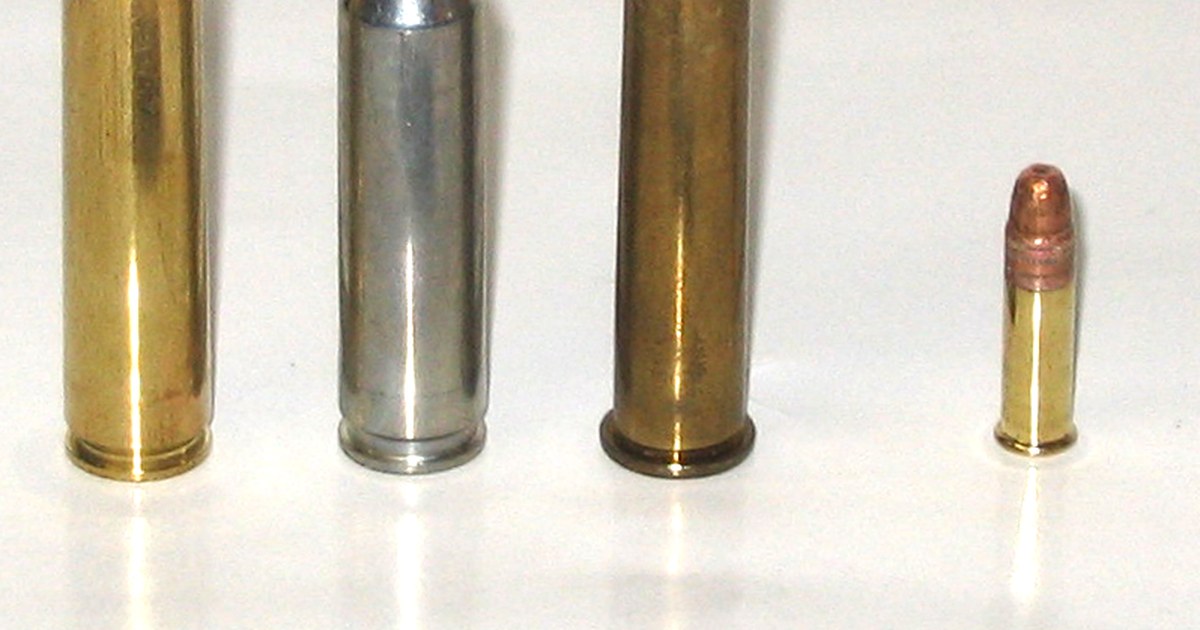
The belt is the defining visual feature — the raised ring just ahead of the rim. The belt serves as a headspace datum and is a hallmark of the magnum family this cartridge descends from. The 3.290″ COAL is what forces it into a long-action magazine; it will not fit a short action.
Note on the twist rate: The commonly cited 1:9 to 1:10 twist (with 1:9.49 being a frequent figure) comes from a single source and could not be cross-checked against a manufacturer spec sheet, so it is marked UNVERIFIED. In practice, the twist is fast enough to stabilize everything from 120-grain varmint bullets to 190-grain match bullets.
Parent Case and Lineage: The H&H Family
The 7mm Rem Mag belongs to the belted magnum family descended from the Holland & Holland case. Here is where the research gets a little contested, and honesty demands we say so:
- The Wikipedia infobox and Grokipedia name the .375 H&H Magnum as the parent.
- Rifle Magazine describes it as a shortened .300 H&H Magnum.
The technical reality is that the .300 H&H and .375 H&H share the same case body — they differ only in neck diameter. The 7mm Rem Mag is that H&H body shortened to 2.50″ and necked down to .284. So whether you call it a shortened .300 H&H or a shortened .375 H&H, you are describing the same family. The most accurate phrasing is that the 7mm Rem Mag is derived from the .375 H&H / .300 H&H belted magnum family.
Its siblings in that shortened-and-necked family include the .264 Winchester Magnum, .338 Winchester Magnum, and .458 Winchester Magnum — all shortened H&H cases necked to different calibers. The 7mm Rem Mag is the one that survived and thrived.
Misconceptions to Clear Up
| Misconception | Reality |
|---|---|
| “It’s a necked .30-06” | False. It is a belted magnum on the H&H case, not the .30-06 family. |
| “It’s the same as the 7mm-08” | False. The 7mm-08 is a short-action round based on the .308 Winchester. |
| “It’s a short magnum” | False. It is a full-size long-action belted magnum. |
| “Warren Page designed it” | False. Page popularized the 7mm Mashburn wildcat, a different cartridge. |
Ballistics: What the Numbers Actually Do
The 7mm Rem Mag’s reputation is built on its ballistics, and the numbers back it up. Here are representative factory loads:
| Bullet | Muzzle Velocity | Muzzle Energy | G1 BC | Status |
|---|---|---|---|---|
| 140 gr | 3,175 fps | ~3,133 ft-lb | 0.409 | Velocity/BC CONFIRMED; energy COMPUTED |
| 150 gr | 3,110 fps | 3,221 ft-lb | 0.436 | CONFIRMED |
| 160 gr | 2,950 fps | 3,091 ft-lb | 0.531 | CONFIRMED |
| 175 gr (ELD-X) | 2,910 fps | ~3,287 ft-lb | 0.32 (G7) | Velocity/G7 CONFIRMED; G1 ~0.52 UNVERIFIED |
Velocity and Energy Retention
The 175-grain ELD-X retention figures are CONFIRMED from a published manufacturer table:
| Distance | Velocity (fps) | Energy (ft-lb) |
|---|---|---|
| 100 yd | 2,766 | 2,974 |
| 200 yd | 2,626 | 2,680 |
| 300 yd | 2,489 | 2,408 |
| 400 yd | 2,356 | 2,158 |
| 500 yd | 2,227 | 1,928 |
The 140/150/160-grain retention figures are COMPUTED (model estimates calibrated to the confirmed 175-grain table, matching within ~1%):
| Distance | 140 gr (fps / ft-lb) | 150 gr (fps / ft-lb) | 160 gr (fps / ft-lb) |
|---|---|---|---|
| 100 yd | 2,977 / 2,754 | 2,927 / 2,852 | 2,804 / 2,794 |
| 200 yd | 2,787 / 2,415 | 2,750 / 2,519 | 2,664 / 2,522 |
| 300 yd | 2,608 / 2,114 | 2,583 / 2,223 | 2,529 / 2,272 |
| 400 yd | 2,436 / 1,844 | 2,424 / 1,956 | 2,400 / 2,045 |
| 500 yd | 2,274 / 1,607 | 2,272 / 1,719 | 2,275 / 1,839 |
The takeaway: the heavier, higher-BC 160- and 175-grain bullets hold energy and velocity far better at distance than the 140-grain. At 500 yards the 175-grain still carries ~1,930 ft-lb while the 140-grain has dropped to ~1,600 ft-lb.
Trajectory and Point-Blank Range (COMPUTED)
With a 100-yard zero and 1.8″ sight height, the drop is remarkably flat for a hunting round:
| Distance | Drop (in) |
|---|---|
| 200 yd | ~2.6 |
| 300 yd | ~10.5 |
| 400 yd | ~23.8 |
| 500 yd | ~43.4 |
Point-blank range (COMPUTED): with a 100-yard zero, the 7mm Rem Mag stays inside a ±6″ kill zone out to about 160 yards, and inside a ±8″ zone to about 180 yards. A 200-yard zero extends the ±6″ point-blank window to roughly 250 yards.
Wind Drift (COMPUTED, 10 mph full-value crosswind)
| Distance | 140 gr | 150 gr | 160 gr | 175 gr |
|---|---|---|---|---|
| 200 yd | 2.2 in | 2.1 in | 1.8 in | 1.9 in |
| 300 yd | 5.2 in | 5.0 in | 4.3 in | 4.4 in |
| 400 yd | 9.7 in | 9.3 in | 7.9 in | 8.2 in |
This is where the 7mm earns its keep. The high-BC 160- and 175-grain bullets drift noticeably less than the 140-grain in a crosswind — at 400 yards the 160-grain drifts ~7.9″ versus ~9.7″ for the 140-grain. If you hunt open country with wind, the heavier bullets are the smarter choice.
Recoil (COMPUTED)
Free-recoil energy in an 8-lb rifle, calibrated to a confirmed 21.7 ft-lb anchor at 9 lbs:
| Cartridge | Recoil Energy (ft-lb) |
|---|---|
| 7mm Rem Mag 140 gr | ~19.6 |
| 7mm Rem Mag 150 gr | ~21.3 |
| 7mm Rem Mag 160 gr | ~22.0 |
| 7mm Rem Mag 175 gr | ~24.7 |
| .308 Win 150 gr | ~13.4 |
| .30-06 150 gr | ~15.1 |
| .270 Win 130 gr | ~13.8 |
The honest read: the 7mm Rem Mag is a true magnum and kicks roughly 40–50% harder than the .308, .270, and .30-06 in a comparable rifle. It is manageable with a good recoil pad and proper technique, but it is not a soft-shooting round. If you are recoil-sensitive, the 7mm-08 delivers similar ballistics with far less bark.
Hunting Applications: Honest Per-Species Verdicts
Deer (whitetail and mule deer): Ideal. The 7mm Rem Mag is a premier deer cartridge. Run 140–160 grain premium bullets (AccuBond, ELD-X, Tipped GameKing, Fusion, Barnes TTSX BT) inside 400 yards. It is flat-shooting, accurate, and more than enough for any deer in North America. The only caution: at very close range (under 50 yards), a 140-grain polymer-tip bullet can over-expand on a small deer — a bonded or heavier bullet gives a cleaner kill and less meat damage.
Elk: Adequate with the right bullet, inside ~350 yards. A 160-grain Partition or 175-grain AccuBond Long Range carries 2,500–2,800 ft-lb at the muzzle and stays above the 1,500 ft-lb guideline out to about 350–450 yards. The honest caveat: the 7mm is not a margin-of-error round on quartering-to shots on elk. Bullet construction matters enormously — use bonded, partition, or all-copper bullets, and pass on 120–140 grain cup-core bullets on elk. For heavy-shouldered, quartering shots, the .300 Win Mag and .338 Win Mag give a wider safety margin.
Moose: Adequate with premium bullets on a perfect broadside. Moose are large, tough animals, and most guides prefer the .30-06, .300 Win Mag, or .338 Win Mag for a comfortable margin. The 7mm Rem Mag with a 160-grain Partition, 175-grain A-Frame, or 175-grain Barnes TSX will take a moose with perfect shot placement, but it has less penetration margin through heavy muscle and bone than a .30-06 with a 180–220 grain bullet. State/provincial energy requirements for moose are UNVERIFIED — check your specific agency.
Black bear: Adequate with 160-grain+ bonded, partition, or all-copper bullets. Black bears have thick hide, dense muscle, and heavy bone. The Nosler Partition, Barnes TSX (near-100% weight retention), and Swift A-Frame all work well, and Alaska hunters regularly take black bear with 160-grain Partitions and Barnes TSX bullets. Use all-copper or bonded construction — not cup-core.
Grizzly / dangerous game: Marginal — not a first choice. The 7mm Rem Mag can take a grizzly with perfect placement, but it is not a first-choice dangerous-game round. Alaska’s ADFG regulations and hunter consensus favor the .338 Win Mag, .375 H&H, and larger as minimum calibers for brown bear. The 7mm lacks the diameter, weight, and momentum of a .338 or .375 for a reliable stop on a charging bear. If grizzly are on the menu, bring a bigger gun.
Long-range target shooting: Strong. The 7mm Rem Mag has a real match-line pedigree. Sierra’s 180-grain HPBT MatchKing and Berger’s 180- and 190-grain Hybrid Target bullets are built for it, and the high-BC hunting bullets (ELD-X 175, AccuBond Long Range 175, Barnes LRX) push the round to 600+ yards in skilled hands. Some extreme shooters have taken it beyond 2,400 yards. It is not the dominant F-Class caliber the 6.5mm and .30 calibers have become, but it is a capable long-range performer.
Bullet Types: What to Run
The 7mm (.284) bullet lineup is deep. Here is the construction map:
| Construction | Examples | Best For |
|---|---|---|
| Soft point (cup-and-core) | Hornady 139 InterLock SP, Sierra JSP | Budget deer, moderate ranges |
| Bonded | Nosler AccuBond / ABLR, Swift A-Frame, Federal Fusion | All-around deer/elk, weight retention |
| Polymer-tipped | Hornady ELD-X, Sierra TGK, Barnes TTSX BT | Long-range all-around, high BC |
| All-copper | Barnes TSX / LRX, Hornady CX / ECX | Lead-free, deep penetration, ~95-100% retention |
| Partition (dual-core) | Nosler Partition 140/160 | Deep penetration, big game |
| Match / target | Sierra MatchKing, Hornady ELD Match, Berger LRHT | F-Class, long-range precision |
For a single do-it-all elk/deer bullet, the 160-grain bonded or partition is the sweet spot. For long-range open-country deer and elk, the 175-grain ELD-X or AccuBond Long Range is hard to beat. For lead-free hunting, the Barnes TSX BT or Hornady CX deliver deep penetration with near-full weight retention.
UNVERIFIED: The current production status of the Nosler 160-grain Partition and 175-grain Partition could not be confirmed (forum threads suggest possible discontinuation). Verify current availability before relying on a specific bullet.
Platforms: The Rifles That Chamber It
The 7mm Rem Mag is a long-action cartridge, so it lives in long-action bolt rifles. The Remington Model 700 is its native home — the rifle it was launched with. It is also chambered in the Winchester Model 70, Ruger Model 77, Browning X-Bolt, and many other long-action bolt platforms. Because it is a long-action round, it will not fit a short-action rifle, which is a key consideration if you are buying a rifle specifically for this cartridge.
Home Defense: Probably Not
The 7mm Rem Mag is not recommended for home defense, and the reasons are practical:
- Over-penetration: A 150–175 grain bullet at 2,800–3,000 fps is a high-velocity rifle round that will punch through drywall and interior barriers with ease. (The exact drywall penetration depth is UNVERIFIED — no controlled test was found — but the over-penetration concern is well established for high-velocity rifle rounds.)
- Muzzle blast: A magnum rifle in an enclosed hallway is deafening and disorienting.
- Over-match: The 7mm Rem Mag is built for 500+ yard distances. Home-defense encounters happen under 25 yards. The round’s advantages are wasted, and its disadvantages (recoil, blast, over-penetration) are amplified.
If you want a rifle for the home, a 5.56 carbine or a 12-gauge is a far better fit.
Comparison: 7mm Rem Mag vs .270 vs .30-06 vs 7mm-08
| Attribute | 7mm Rem Mag | .270 Win | .30-06 | 7mm-08 |
|---|---|---|---|---|
| Action | Long | Long | Long | Short |
| Common bullet weights | 120–190 gr | 100–160 gr | 150–220 gr | 120–175 gr |
| Typical muzzle velocity (150 gr) | ~2,900–3,050 fps | ~2,900–3,060 fps | ~2,700–2,800 fps | ~2,600–2,700 fps |
| Typical muzzle energy (150 gr) | ~2,800–3,100 ft-lb | ~2,700–2,900 ft-lb | ~2,500–2,600 ft-lb | ~2,200–2,400 ft-lb |
| Recoil (typical) | ~15–18 ft-lb | ~13–15 ft-lb | ~15–18 ft-lb | ~10–12 ft-lb |
| Best use | Long-range big game | All-around deer/elk | Wide bullet range, big game | Low-recoil 7mm, smaller-framed shooters |
The honest summary: the 7mm Rem Mag wins on long-range BC and flat trajectory; the .30-06 wins on bullet-weight range for the heaviest game; the .270 is a lighter-recoiling all-rounder; and the 7mm-08 gives you 7mm ballistics in a short action with dramatically less recoil — ideal for smaller-framed shooters or lighter rifles.
Market and Availability
The 7mm Rem Mag is widely available at all major retailers (MidwayUSA, CTD, Ammo.com, Sportsman’s Warehouse, Wideners) in standard Remington, Federal, Hornady, Nosler, Winchester, and Browning loads. Pricing runs roughly:
- Budget (Power-Shok, Core-Lokt): ~$1.50–$2.25/round
- Mid-range (Fusion, Hornady): ~$2.00–$3.00/round
- Premium (ELD-X Precision Hunter, AccuBond, Barnes TSX): ~$3.00–$5.00/round
- Match (Berger, Sierra MatchKing): ~$0.50–$1.00/bullet (reloading)
Reloading brass is plentiful from Remington, Nosler, Hornady, Winchester, and Starline. Note that newer 7mm magnums like the 7mm PRC and 7mm Backcountry are encroaching on the 7mm Rem Mag’s long-range territory with even higher BCs in modern short-action designs — but the 7mm Rem Mag’s sixty-year head start means the rifle and ammo ecosystem is unmatched.
Final Word
The 7mm Remington Magnum earned its place in American hunting history for a simple reason: it does exactly what it was designed to do. It reaches far, it bucks the wind, and it hits hard — and for the open-country deer and elk hunter who values a flat trajectory and a high-BC bullet, it remains one of the smartest choices you can make. Respect its recoil, pick the right bullet for the animal, and it will serve you across a lifetime of hunts.
Ready to gear up? Browse our full selection of 7mm Remington Magnum rifles and ammunition at PatrioticFirearms.com — premium brands, honest prices, and the loaded knowledge to match.
📬 Join the newsletter for weekly firearms guides, load data, and hunting tips delivered straight to your inbox.
Disclaimer: Ballistic figures marked COMPUTED are model estimates and should be verified with your own chronograph and rifle. Always confirm local hunting regulations, minimum energy requirements, and legal calibers with your state or provincial wildlife agency before hunting. This guide is for informational purposes and does not constitute a safety or legal guarantee.